

There’s nothing quite like sinking into a fresh, clean outdoor cushion on a sunny afternoon. But after a season of barbecues, pool days, and afternoon thunderstorms, your Sunbrella cushions can start looking tired. Pollen settles into the weave, sunscreen leaves greasy marks, and that mysterious dark spot near the armrest is probably mildew.
Here’s the good news: Sunbrella fabric is engineered to be cleaned, and bringing it back to life is easier than you think. With the right technique and a few basic supplies, you can restore your cushions to their original vibrancy—without damaging the fabric or voiding the warranty. For more on this, see our guide on how to clean sunbrella outdoor cushions.
This guide walks you through everything from everyday spot cleaning to a full deep clean, plus the mistakes to avoid and how to protect your investment for years to come.

Credit: www.youtube.com
Understanding Sunbrella Fabric
Before you mix any cleaning solution, it helps to understand what makes Sunbrella different from ordinary outdoor fabric. This knowledge directly influences how you clean it—and what you should never do. For more on this, see our guide on how to clean sunbrella cushions with mildew.
What Makes Sunbrella Special
Sunbrella is made from solution-dyed acrylic fibers. Unlike fabrics that are dyed after being woven, the color is built into the fiber itself. This means the pigment runs all the way through each strand, so it resists fading from sunlight far better than most outdoor textiles.
The fabric is also breathable, which prevents moisture from getting trapped against the cushion foam. That breathability is one of the main reasons Sunbrella resists mildew better than vinyl or polyester alternatives. It’s naturally water-repellent, but it’s not waterproof—so standing water left on the surface can still lead to problems over time. For more on this, see our guide on how to clean sunbrella chair cushions.
Why Cleaning Matters
Dirt is an abrasive. When you sit on a cushion covered in gritty dust, you're grinding those particles into the fibers with every move. Regular cleaning isn't just about looks—it's about protecting the fabric's structural integrity. A clean cushion lasts longer and feels softer against your skin.
Supplies You'll Need
Gathering your supplies before you start makes the entire process smoother. You likely already own most of these items.
| Supply | Purpose |
|---|---|
| Mild liquid soap (like Dawn or Woolite) | Primary cleaning agent |
| Soft-bristle brush | Gently lifts dirt without damaging fibers |
| Spray bottle | Applies cleaning solution evenly |
| Bucket with lukewarm water | For mixing solution and rinsing |
| Clean white towels | Blotting and drying |
| Vacuum with brush attachment | Removes loose dirt before washing |
| White vinegar | Natural mildew treatment |
| Sodium percarbonate (oxygen bleach) | For stubborn stains on white/light fabric |
Avoid anything labeled as chlorine bleach, as it can weaken the acrylic fibers and cause yellowing.
Pre-Cleaning: The Vital First Step
Jumping straight to soap and water is the most common mistake people make. Pre-cleaning removes the surface layer of debris that would otherwise turn into mud when mixed with water.
Remove Loose Dirt
Use a soft-bristle brush or a vacuum with an upholstery attachment to remove dust, pollen, and crumbs. Pay extra attention to seams and corners where debris collects. Brush in one direction to work dirt out of the weave rather than grinding it deeper.
Read the Care Tag
Sunbrella cushions usually have a care tag that includes a cleaning code. This tells you which cleaning methods are safe. Most Sunbrella products are code "W" (water-based cleaning) or "WS" (water or solvent-based). Following the code ensures you don't use a solvent that could stain or discolor the fabric.
Spot Cleaning for Everyday Stains
When a spill happens, speed matters. The sooner you treat a stain, the better your chances of removing it completely.
Food and Drink Stains
- Blot, don't rub. Rubbing pushes the liquid deeper into the fibers and spreads the stain.
- Mix 1/4 teaspoon of mild dish soap with one cup of lukewarm water.
- Apply the solution to the stain with a soft cloth or brush.
- Work it in with gentle circular motions for about two minutes.
- Rinse the area thoroughly with clean water.
- Blot away excess moisture with a dry towel.
Mildew and Mold
Mildew is Sunbrella's most common enemy, especially in humid climates. It appears as dark spots or a musty odor.
- Mix one cup of white vinegar with one gallon of water in a spray bottle.
- Spray the affected area and let it sit for 10 to 15 minutes.
- Scrub gently with a soft-bristle brush.
- Rinse thoroughly and dry in direct sunlight—UV rays help kill lingering spores.
- For stubborn cases, use a solution of 1 cup of bleach and 1/4 cup of mild soap per gallon of water. While Sunbrella can tolerate diluted chlorine bleach, test it on an inconspicuous area first and rinse thoroughly to prevent fading.
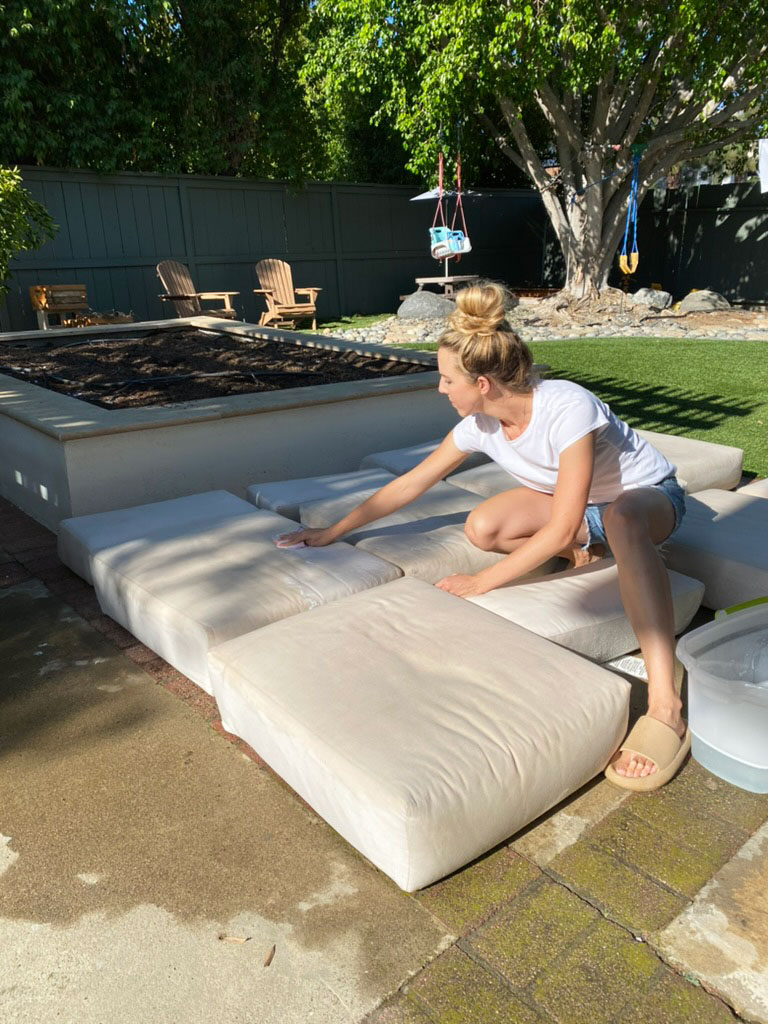
Credit: acleanbee.com
Deep Cleaning: The Full Refresh
If your cushions look dull overall or have multiple stains, it's time for a comprehensive clean. Plan to do this every 1 to 3 months during the outdoor season, or whenever the fabric starts to look tired.
Mix Your Deep Cleaning Solution
For a full clean, mix a gentle detergent with lukewarm water. Use roughly one tablespoon of mild soap per gallon of water. If you're dealing with heavy grime, add a product specifically designed for outdoor fabrics.
The Cleaning Process
- Pre-clean the surface to remove loose dirt and debris.
- Apply the solution using a soft brush or sponge, working in small circular motions.
- Allow dwell time—let the solution sit for 5 to 10 minutes. This gives the soap time to break down grease and grime trapped in the fibers.
- Rinse thoroughly with a hose or bucket of clean water. All soap residue must be removed, as leftover detergent can attract new dirt.
- Remove excess water by blotting with a towel or squeegee.
- Air dry completely before using or storing. Damp fabric is a breeding ground for mildew.
Drying Your Cushions
Proper drying is just as important as washing. Cushions that stay damp for too long can develop mildew in both the fabric and the foam core.
Best Drying Practices
- Air dry in a shaded, well-ventilated area. Direct sunlight can cause fading over time, even with solution-dyed fabric.
- Stand cushions on edge if possible to allow air to circulate around all sides.
- Flip them periodically to ensure both sides dry evenly.
- Never use a tumble dryer, heater, or hair dryer. High heat can shrink or distort the fabric.
Depending on humidity, cushions can take anywhere from several hours to a full day to dry completely. Test by pressing your palm against the fabric—it should feel completely dry to the touch.
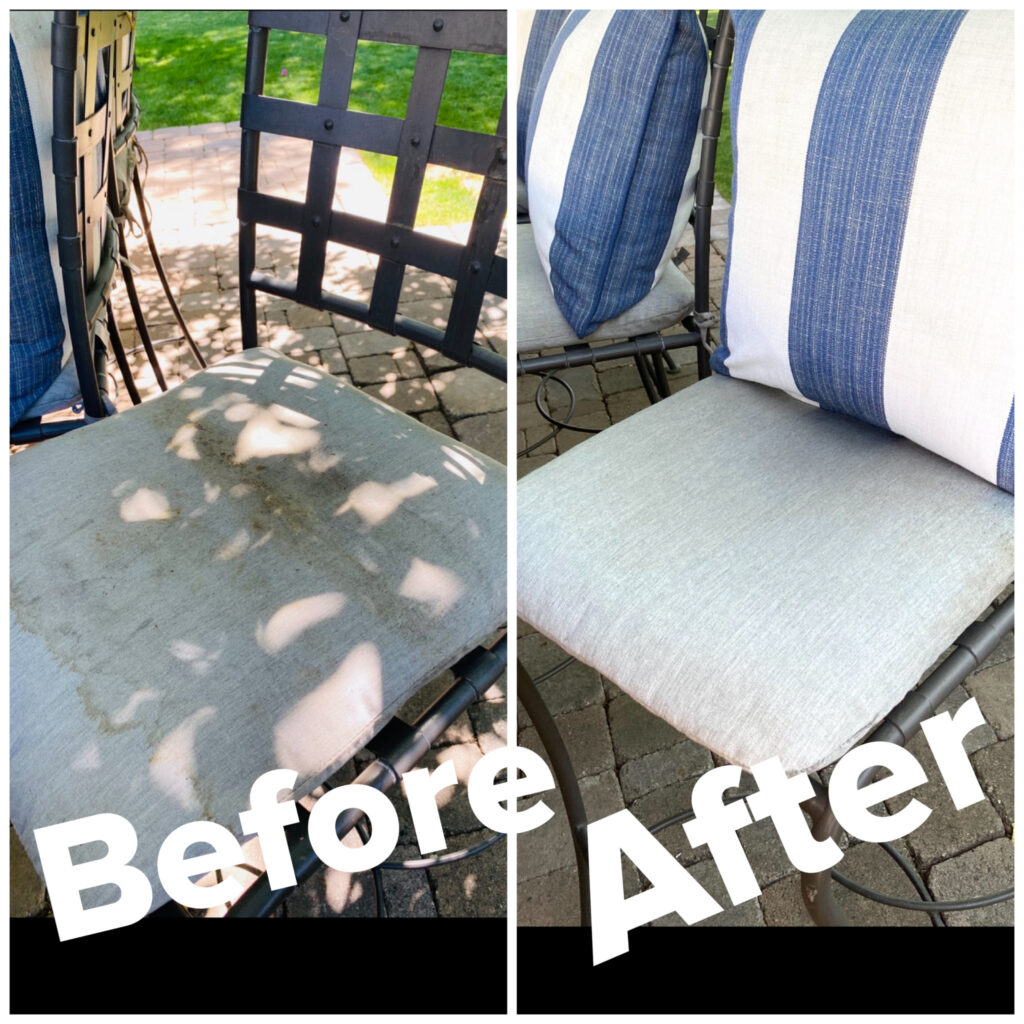
Credit: tohavetohost.com
Routine Maintenance Between Deep Cleans
You don't need to deep clean every week. Simple habits between cleans keep cushions looking great and reduce the workload later.
- Brush off debris after each use to prevent dirt from grinding into the fibers.
- Wipe up spills immediately. The longer a stain sets, the harder it is to remove.
- Use washable cushion covers as a protective layer. They're easier to remove and machine wash than full cushion cleanings.
- Store cushions indoors during winter or extended rainy periods. If that's not possible, use a waterproof storage box.
- Apply a fabric protector after cleaning. Products like 303 Fabric Guard add an extra layer of resistance against stains and UV damage. Reapply after every deep clean or at the start of each season.
Common Mistakes to Avoid
Even experienced homeowners make these errors. Avoid them and your cushions will last significantly longer.
Using Harsh Chemicals
Chlorine bleach, undiluted household cleaners, and degreasers can damage acrylic fibers. They may cause discoloration, weaken the fabric, or break down the water-repellent finish. Stick to mild soap or cleaners specifically formulated for outdoor fabrics.
Scrubbing Too Aggressively
You don't need elbow grease to clean Sunbrella. Firm, gentle pressure with a soft brush is sufficient. Aggressive scrubbing can fray fibers and create a worn, fuzzy appearance.
Overwetting the Cushions
While the fabric itself is water-resistant, the foam padding underneath is not. Pouring buckets of water over your cushions can saturate the foam, leading to mold and a lingering damp smell. Use a hose on a gentle setting and avoid excessive soaking.
Machine Washing Without Checking Materials
While Sunbrella fabric is generally machine washable, the full cushion—including the foam core—is not. Only machine wash removable covers, and always follow the manufacturer's instructions for water temperature and detergent.
Frequently Asked Questions
Can I machine wash my Sunbrella cushion covers?
Yes, but only if the covers are removable. Use cold water, a mild detergent, and the gentle cycle. Avoid bleach and fabric softeners. Air dry or tumble dry on the lowest heat setting. Never machine wash the foam insert or the entire cushion.
How often should I clean my Sunbrella cushions?
For normal use, a deep clean every 1 to 3 months is sufficient. During the off-season, clean the cushions one last time before storing them away. Spot clean spills and stains as they occur.
Will vinegar damage Sunbrella fabric?
No, white vinegar is safe and highly effective at neutralizing odors and killing mildew. It's a natural alternative to chemical cleaners. Just be sure to rinse thoroughly afterward to remove the vinegar smell.
What should I do if my cushions turn orange or yellow?
Yellowing stainless steel frames often causes rust stains on white cushions. The rust transfers onto the fabric and can be stubborn to remove. Try a commercial rust remover, then follow with your regular cleaning routine. Test any stain remover on a hidden area first.
Protecting Your Investment
Your Sunbrella cushions are an investment in comfort and outdoor living. With regular care, they can maintain their performance and appearance well beyond a decade.
A clean outdoor space invites you to spend more time in it—reading, relaxing, or hosting friends on a warm evening. And after hours spent scrubbing and drying, there's real satisfaction in sitting down on a cushion that looks like the day you brought it home.
For more ways to make your home more restful and enjoyable, explore our latest home and lifestyle ideas. And if you're looking to improve your overall comfort and sleep, check out our practical relaxation tips to help you unwind after a long day outdoors.
Final Thoughts
Cleaning Sunbrella cushions doesn't require professional equipment or expensive products. A little mild soap, water, and a soft brush handle most situations. The real keys are consistency—cleaning before stains set—and patience, letting cushions dry completely before storage.
Start with a quick spot clean today. See how fresh your outdoor space looks, and you'll quickly appreciate the value of a simple routine. Your cushions will look better, last longer, and keep your patio inviting season after season.

Daniel Hart is a consumer product analyst who specializes in mattress technology, smart bedding, and home comfort innovation. Before joining Royal Comport, Daniel worked with several e-commerce research teams, testing and comparing sleep products for quality, value, and long-term performance. He brings data-driven insight and real-world testing to every review he writes.


