

Outdoor cushions take a beating—sun, rain, pollen, bird droppings, and the occasional barbecue sauce spill. The good news is that Sunbrella fabric is engineered to handle it. With the right technique, you can bring even tired-looking cushions back to life without harsh chemicals or expensive professional services.
This guide walks you through the complete process, from everyday maintenance to tackling stubborn stains like mildew and grease. You'll learn exactly which cleaning agents are safe, which ones will ruin your fabric, and how to keep your cushions looking brand-new for years to come. For more on this, see our guide on how to clean sunbrella outdoor cushions.
What Makes Sunbrella Different From Regular Outdoor Fabric
Before you start scrubbing, it helps to understand what you're working with. Sunbrella is a solution-dyed acrylic fabric, meaning the color is mixed into the fiber itself rather than printed on the surface. This is why it resists fading so well—the pigment runs through the entire thread, not just the outer layer.
This construction also makes the fabric naturally water-resistant and breathable. Water beads up and rolls off rather than soaking in, which is why quick blotting after a spill often prevents stains from ever forming. And unlike polyester or olefin, Sunbrella is less prone to mildew growth because moisture can evaporate through the weave. For more on this, see our guide on how to clean dining chair cushions.
However, Solution-dyed acrylic still has its limits. Oil-based substances like sunscreen, cooking oil, and certain food dressings can penetrate the fibers if left sitting. Knowing how to clean Sunbrella chair cushions properly means understanding which products work with the fabric's chemistry instead of against it.
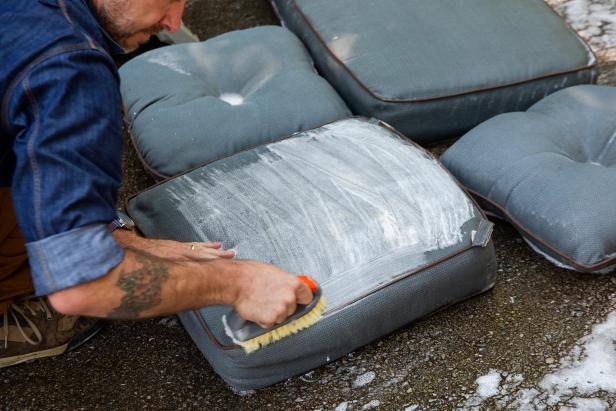
Sunbrella's woven acrylic construction resists water and fading, but still needs gentle cleaning to stay at its best.
What You'll Need Before You Start
Most of these items are probably already in your kitchen or laundry room. The key is avoiding anything with chlorine bleach, which strips the color from acrylic fibers.
Essential supplies:
- Soft-bristle brush or a non-abrasive sponge
- Mild liquid soap—dish soap or a dedicated fabric cleaner works well
- Oxygen-based bleach (color-safe) for tough stains
- Spray bottle filled with lukewarm water
- Clean towels for blotting
- Vacuum with an upholstery attachment
- Bucket for mixing your cleaning solution
The right soap-to-water ratio: Mix 1 teaspoon of mild liquid soap with 1 quart (about 1 liter) of lukewarm water. That's roughly 1/4 teaspoon per cup. More soap doesn't mean cleaner results—excess residue actually attracts dirt.
Keep these supplies together in a small caddy near your patio door. When a spill happens, you can respond in under a minute instead of hunting through the house.

A simple cleaning kit with brush, mild soap, spray bottle, and towels is all you need for most cushion stains.
Step-By-Step Cleaning Method
Follow this sequence for a thorough clean. It works for most outdoor dirt, pollen dust, and everyday grime.
Step 1: Remove Loose Debris
Vacuum both sides of the cushion using an upholstery attachment, or shake it vigorously outdoors. Pay attention to seams and crevices where crumbs and sand collect. Skipping this step means you're rubbing grit into the fabric as you clean, which can cause micro-scratches visible over time.
Step 2: Spot Test
Mix a small amount of your soap solution and apply it to a hidden area—underneath the cushion or along a seam where it won't be visible. Wait 30 minutes and check for color bleeding or fading. Solution-dyed fabric rarely reacts badly, but why risk a visible patch?
Step 3: Apply the Cleaning Solution
Working in sections, spray or sponge the soapy water onto the fabric. Use gentle circular motions with your soft brush. Don't press hard—the goal is to lift dirt from the surface, not push it deeper into the weave.
Step 4: Rinse Thoroughly
This is the step most people skip, and it's the most important one. Soap residue left in the fabric actually attracts dirt faster than the original stain did. Use a spray bottle filled with plain water, or a garden hose on a gentle setting, and rinse until the water runs clear. If you have a pressure washer, keep it at a low setting and hold the nozzle at least 18 inches away.
Step 5: Blot and Air Dry
Press clean towels into the wet fabric to absorb as much moisture as possible. Let cushions dry completely in a well-ventilated area—sunlight speeds up the process, but shade works fine too. Never put wet Sunbrella cushions in a dryer or into storage. Trapped moisture is the number one cause of mildew growth.

Working in small sections with a soft brush lets you clean thoroughly without damaging the acrylic weave.
How to Remove Specific Stains
Different stains need different treatments. Here's a quick reference guide for the most common outdoor cushion problems:
| Stain Type | Recommended Treatment |
|---|---|
| Food and drink spills | Blot immediately, then clean with mild soap and water |
| Oil, grease, or sunscreen | Apply dish soap directly to the spot, work in gently, then rinse |
| Mildew or algae | 1 cup oxygen bleach per gallon of water, let sit 15 minutes, rinse |
| Ink or dye transfer | Isopropyl alcohol on a cloth, blot (don't rub), then soap and water |
| Rust stains | Commercial rust remover safe for fabrics, or consult a professional |
For mildew specifically, act as soon as you spot it. While Sunbrella is mildew-resistant, the same isn't true for the dirt, pollen, and organic matter that accumulates on the fabric's surface. That buildup is what actually feeds mildew growth. A mixture of oxygen bleach and water kills the spores effectively without damaging the dye.
For oil stains, patience matters. Apply dish soap directly to the spot and let it sit for 15 minutes before working it in. This gives the soap time to break down the oil rather than spreading it across the fabric.
Machine Washing: When It's Safe
Many Sunbrella cushion covers have removable zippers, making machine washing a convenient option for deeper cleaning. But not all covers are designed for this—check the care label first.
If the label says machine washable:
- Remove the cover and close all zippers and Velcro fasteners
- Use cold water on a gentle cycle
- Add mild liquid detergent—never chlorine bleach or fabric softener
- Run an extra rinse cycle to remove all soap residue
- Air dry the cover completely before putting it back on the cushion
For non-removable cushions, stick with the spot-cleaning method. You can also use a handheld upholstery extractor if you have one—just be careful not to over-saturate the foam underneath.
A common question is whether you can put Sunbrella in a tumble dryer. Low heat is technically safe for some covers, but air drying is always better for maintaining the fabric's shape and water resistance. High heat can shrink or distort the weave.

Removable cushion covers with zippers can be machine washed on a gentle cycle, then air dried completely.
Drying, Protection, and Off-Season Storage
How you dry and store cushions matters as much as how you clean them.
Drying tips:
- Leave zippers open while covers dry so both the cover and the inner cushion dry evenly
- Lift the cushion to check that no moisture is trapped underneath
- In humid climates, bring cushions indoors to dry rather than leaving them out overnight
Fabric protection: Sunbrella doesn't strictly need additional water repellant, as the acrylic fibers are naturally resistant. However, if you live in a very wet climate, you can apply a fabric protector specifically designed for acrylic fabrics after cleaning. Follow the manufacturer's instructions and allow the protector to cure fully before use.
Storage best practices:
- Store cushions in a dry, ventilated space
- Use breathable cotton or canvas bags rather than plastic—plastic traps condensation, which leads to mildew
- If storing outdoors, use a waterproof furniture cover with ventilation panels
- Stack cushions vertically if possible, or lay them flat without heavy objects on top
In practice, most cushion damage happens during off-season storage. Cushions left outside under a tarp in a humid climate will develop mildew within weeks. A little extra effort in the fall saves you hours of deep cleaning in the spring.
Letting cushions dry completely before storage prevents mildew growth during the off-season.
Simple Maintenance Habits That Prevent Buildup
The best cleaning strategy is prevention. Establish a simple routine and you'll rarely need to do a deep clean.
Weekly (5 minutes):
- Brush off loose debris with a dry cloth or brush
- Shake cushions to remove pollen and dust
- Blot any fresh spills immediately
Monthly (15 minutes):
- Vacuum both sides with an upholstery attachment
- Rinse cushions with a hose on a gentle setting to wash away accumulated dust
- Allow them to dry fully before use
Seasonally (1 hour):
- Do a full wash with soap and water
- Inspect for mildew spots or developing stains
- Rotate cushions to even out sun exposure
A quick monthly rinse is the single most effective habit I've seen. It takes five minutes, keeps the fabric's water resistance functional, and prevents the need for intensive scrubbing later.
Common Mistakes to Avoid
Even experienced homeowners make these errors. Here's what not to do:
Using chlorine bleach. This is the fastest way to ruin Sunbrella fabric. Chlorine strips the color from acrylic fibers, leaving faded patches that are permanent. Always use oxygen-based bleach instead.
Scrubbing with abrasive tools. Steel wool, hard-bristle brushes, and rough scouring pads fray the fabric's weave. Once the threads are broken, the fabric loses its water resistance and becomes prone to tearing. Always use a soft-bristle brush or sponge.
Storing damp cushions. Sealed plastic bins and damp covers create the perfect environment for mildew. Even if you think cushions are dry, give them that extra day in the sun before storing.
Skipping the spot test. A cleaner that's safe for most fabrics can still affect a specific dye lot differently. Spot testing takes 30 seconds and prevents costly mistakes.
Using fabric softener in the wash. Softeners coat the acrylic fibers and reduce their water resistance. Your cushions will become a sponge after a few washes.
Frequently Asked Questions
How often should I clean Sunbrella cushions?
Spot-clean spills immediately and do a light cleaning every few months. A deep clean once or twice a year, before summer and before winter storage, is typically enough to keep fabric in top condition.
Can I use bleach on Sunbrella fabric?
Never use chlorine bleach on Sunbrella. It permanently strips the color. Oxygen-based bleach is color-safe and effective for mildew and deep stains—just follow the dilution instructions on the product label.
Is Sunbrella worth the higher cost compared to regular outdoor fabric?
For most people, yes. Sunbrella's solution-dyed construction means the color runs through the entire fiber, not just the surface. This gives it much better fade resistance than polyester or olefin fabrics. When cared for properly, Sunbrella cushions can last a decade or longer.
Will my Sunbrella cushions shrink or fade after washing?
Sunbrella is designed to resist shrinking and fading when you follow the care instructions. The main risks are high-heat drying and chlorine bleach, both of which can distort the weave or affect the dye. Air drying and mild detergents keep the fabric stable.
What's the fastest way to treat a spill?
Blot, don't rub. Rubbing pushes the liquid deeper into the fabric and spreads the stain. Use a clean white cloth, press down on the spot to absorb as much as possible, then clean with mild soap and water.
Keep Your Cushions Looking New for Years
Cleaning Sunbrella chair cushions doesn't require special products or professional services. A mild soap, soft brush, thorough rinse, and proper air drying handle the vast majority of stains and everyday grime. The trick is consistency—respond to spills quickly, give cushions a rinse each month, and ensure they're completely dry before storage.
Start with a light cleaning this weekend. Tackle any visible stains, then commit to the monthly rinse routine. You'll notice the difference in how fresh your outdoor space looks and how much less effort future cleanings take. Your patio furniture is an investment—protecting it with a simple care routine means years of outdoor enjoyment ahead.

Daniel Hart is a consumer product analyst who specializes in mattress technology, smart bedding, and home comfort innovation. Before joining Royal Comport, Daniel worked with several e-commerce research teams, testing and comparing sleep products for quality, value, and long-term performance. He brings data-driven insight and real-world testing to every review he writes.


