

Mildew spots on your prized outdoor cushions are frustrating, but they don't mean the end of your furniture. Sunbrella fabric is engineered to resist moisture and stains, yet even this durable acrylic material can develop mildew when cushions sit damp for extended periods in shaded, humid spots.
The good news: removing mildew from Sunbrella is a straightforward process that requires only common household supplies, a bit of patience, and the right technique. In this complete guide, you'll learn exactly how to identify mildew early, remove it safely without damaging the fabric, and stop it from coming back. Restore your cushions to their original vibrancy and get your outdoor living space back. For more on this, see our guide on how to clean sunbrella outdoor cushions.
Mildew often first appears as small, dark patches along the seams and corners of outdoor cushions.
Understanding Sunbrella Fabric and Mildew
Sunbrella is a solution-dyed acrylic fabric, meaning the color is infused into the fiber itself rather than printed on top. This gives it exceptional resistance to fading, water, and general wear. However, Sunbrella is not completely mildew-proof—it is mildew-resistant.
The fibers are coated with a finish that resists water absorption, but when dirt and organic matter accumulate on the surface, they create a food source for mildew spores. The spores themselves are everywhere in the air, just waiting for a damp, dirty surface to land on. In practice, mildew almost never develops on clean, dry Sunbrella fabric. Your best defense is regular maintenance and quick action when the cushions get wet.
How to Identify Mildew on Sunbrella Cushions
Early detection is the key to a fast cleanup. Mildew that's given time to penetrate the fibers is significantly harder to remove and may leave permanent discoloration.
Visual Signs
Mildew appears as small, fuzzy patches that can be dark green, gray, black, or even brown. These spots typically cluster in areas where moisture collects: along seams, around zippers, on the underside of cushions, and in the folds where the cushion meets the frame. Mildew on light-colored fabric can sometimes look like dirty smudges, so inspect carefully in bright natural light.
Olfactory Cues
A distinctive, musty odor is one of the most reliable indicators. Even a faint, cellar-like smell coming from your cushions is worth investigating. This odor persists even after the fabric surface appears dry.
Tactile Inspection
Run your fingers over the suspected area. Mildew patches feel slightly raised, rough, or powdery compared to the smooth surface of clean fabric. In more advanced cases, the area can feel slimy.
Differentiating Mildew from Dirt
The simplest test is to brush the stain gently with a dry, soft brush. Mildew will produce a fine, dust-like powder; ordinary dirt usually doesn't. You can also dab the mark with a damp cotton swab—if the result looks fuzzy under magnification, it's active mildew growth.
Gather Your Cleaning Supplies
Before you begin, assemble everything you need. Having all tools on hand makes the process smoother and quicker.
| Supply | Purpose | Notes |
|---|---|---|
| Mild liquid soap or detergent | Breaking down mildew and lifting soil | Use a non-bleach, non-abrasive formula |
| White vinegar | Natural mildew killer and deodorizer | Household strength (5% acidity) |
| Baking soda | Absorbing odors, gentle abrasive | Regular supermarket baking soda |
| Soft-bristled brush | Agitating the fabric fibers | A plastic scrub brush or a soft deck brush |
| Spray bottle | Evenly applying solutions | Clean, with adjustable nozzle |
| Clean towels or cloths | Blotting and drying | Microfiber cloths work best |
| Oxygen bleach | Heavier mildew stains, whitening | Optional — see below for safe usage |
| Garden hose with spray nozzle | Thorough rinsing | Cold water only |
Cleaner Safety — What to Avoid
Never use chlorine bleach on Sunbrella fabric. While it can remove mildew, it will break down the acrylic fibers over time and irreversibly alter the color. Similarly, avoid harsh solvents like acetone, paint thinner, or furniture strippers. These can damage both the fabric and the water-repellent finish.
Step-by-Step: Cleaning Sunbrella Cushions with Mildew
Follow this sequence for the best results. It's the method recommended by fabric experts and upholstery professionals because it's thorough without being harsh.
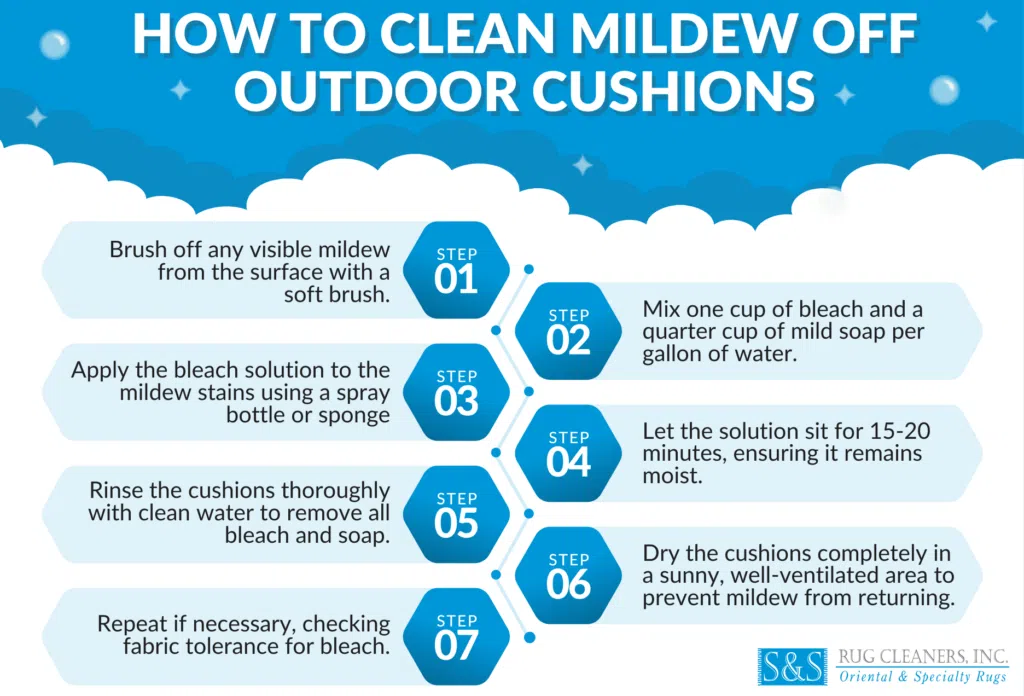
Step 1: Dry Brush and Remove Debris
Start by taking the cushions outdoors. Using your soft-bristled brush, gently dry-brush the entire surface. This loosens and removes surface dirt, dead spores, and debris that could interfere with your cleaning solution. Pay special attention to seams and creases where dirt accumulates.
A brush with synthetic bristles is preferable, as natural bristles can be too stiff and cause abrasion on the fibers. Work in one direction, then make a second pass perpendicular to the first to lift dirt from all sides of the fibers.
Step 2: Prepare Your Cleaning Solution
Mix a solution of warm water and a mild liquid soap. Use about a quarter-cup of soap per gallon of water. The water should be barely warm, not hot—excess heat can set stains and stress the fibers.
For stubborn mildew, consider the vinegar option: mix one part white vinegar with three parts water. Vinegar is naturally antifungal. For heavy mildew situations, you can combine both approaches—a few drops of liquid soap added to the vinegar solution gives you the cleaning power plus the mildew-killing acid.
Step 3: Test on an Inconspicuous Area
Always test your cleaning solution on a hidden spot first—under a seam or inside the cushion flap. Apply the solution, wait five minutes, and check for color bleeding or fiber distortion. Sunbrella is colorfast, but this test protects you against unexpected chemistry issues with your specific soap or water hardness.
Step 4: Apply the Solution
Using a spray bottle for even coverage, apply the cleaning solution generously to the affected areas. Let the solution sit for about 10–15 minutes so it can effectively break down the mildew at the fiber level. Agitate the solution into the fabric with your soft brush, using circular motions. For dense mildew spots, let the solution soak longer, adding more mixture as needed to keep the area damp.
Step 5: Scrub Gently
With your soft-bristled brush, scrub the area in a circular motion. The goal is to lift the mildew and soap residue from the fabric. Apply moderate pressure—enough to work the solution in, but not so much that you flatten or roughen the fibers. Work in small sections to ensure thorough coverage. A common mistake is rushing this step; mildew removal requires time for the solution to break down the spores.
Step 6: Rinse Thoroughly
Rinse the cushions with a garden hose using plain, cold water. This step is critical—any soap residue left in the fabric acts like a magnet for dirt and creates conditions that make mildew regrowth more likely.
Continue rinsing until the water runs clear and you no longer see suds. Run your hand over the fabric; it should feel clean, with no slippery soap film. A final rinse with a strong spray helps force out deeply embedded residue.
Step 7: Dry Completely in the Sun
Sunlight is your best ally here. It not only dries the fabric but also delivers ultraviolet rays that kill remaining mildew spores.
Place the cushions in direct sunlight in a well-ventilated area. Prop them upright or on their edges to promote airflow on all surfaces. Avoid stacking them or leaving them folded while drying.
Drying time expectations: In warm, dry conditions with good airflow, Sunbrella cushions typically dry in 4–8 hours. In humid conditions, expect a full day. Be patient—completely dry fabric is your number one mildew prevention.

Rinsing until the water runs clear is essential for preventing dirt and mildew from returning.
Disinfecting and Treating Heavy Mildew
For mildew that has persisted or is especially heavy, you have two additional options.
Oxygen Bleach Solution
Oxygen bleach (sodium percarbonate) is safe for Sunbrella and effective against stubborn mildew stains. Mix according to the product label—generally one scoop per gallon of warm water. Apply it in the same fashion as your regular cleaning solution, let it sit for 15 minutes, then scrub and rinse thoroughly.
Oxygen bleach is color-safe and breaks down into water and oxygen after use, making it an environmentally friendly choice.
Commercial Mildew Removers
There are commercial products specifically formulated for outdoor fabrics. Look for ones marked "safe for Sunbrella" or "fabric-safe" mildew removers. The Sunbrella brand itself provides a "Fabric Cleaner" that is effective and safe for the material. For truly difficult cases, checking the manufacturer guidelines is wise, as they are available as a professional resource.
If you use a commercial product, always follow the label instructions and do a spot test first. These products are formulated differently, and their interaction with your specific soap or local water chemistry can vary.
What Not to Do: Protecting Your Fabric
Avoid these common errors to keep your cushions in good condition:
- Never use chlorine bleach — it degrades acrylic fibers and destroys the fabric's color.
- Do not dry clean — the chemicals are too harsh and strip the protective finish.
- Do not use a washing machine unless the manufacturer explicitly states it is safe. The agitation can damage zippers, seams, and foam filling. If you do machine wash, use a front-loading machine on a gentle, cold-water cycle.
- Do not iron Sunbrella fabric — heat will melt and fuse acrylic fibers.
- Never store cushions when damp — even slightly damp fabric in a stuffy shed is a recipe for a full-scale mildew outbreak.
How to Prevent Future Mildew Growth
Prevention is far easier than deep cleaning. Making a few habits part of your outdoor furniture routine will keep mildew at bay.
Keep Cushions Clean
Since dirt is the primary food source for mildew, regular cleaning is your first line of defense. Give your cushions a quick wipe-down every couple of weeks and a deeper cleaning every 2–3 months, especially during humid weather. A simple rinse with plain water removes dust and pollen before they give mildew a foothold.
Ensure Proper Air Circulation
Mildew thrives in still, damp air. Prop cushions up during periods of rain or heavy dew so air can reach all sides. When you're not using the furniture, store cushions in a spot with good airflow, away from walls.
Use Breathable Storage Solutions
During the off-season, store cushions in a breathable cotton or canvas bag, not a plastic bin. Plastic traps condensation, creating the damp conditions mildew loves. If you must use a plastic container, make sure the cushions are 100% dry, and leave the lid ajar for ventilation. Add a silicone desiccant packet to absorb any residual moisture.
Consider Protective Covers
Covers are helpful but they need to be breathable. Non-breathable vinyl covers trap moisture between the cover and the cushion—a perfect breeding ground for mildew. Look for covers labeled "breathable" that are water-resistant but allow vapor to escape.
Stop Mildew at Your Patio with a Thoughtful Setup
Where you place your cushions matters more than you might think. A shaded corner with poor airflow is a mildew hotspot, even for Sunbrella. This principle extends beyond your outdoor furniture—your sleep environment operates on the same logic. A space that's stuffy, humid, and poorly circulated can harbor allergens and mold that disrupt your rest. Adjusting the airflow on your patio can help you sleep more soundly, much like paying attention to the sleep environment inside your home supports better rest. If you're prone to allergies, the connection is direct: managing moisture where you relax and sleep reduces the irritants that can cause allergies and sleep problems.
Restoring Water Repellency After Cleaning
Sunbrella fabric is treated with a water-repellent finish from the factory, and cleaning can gradually strip it. After a deep cleaning, you may notice that water no longer beads up on the fabric surface. This is normal.
To restore water repellency, use a fabric waterproofer specifically designed for outdoor fabrics. Sunbrella offers its own "Fabric Guard" product. Apply it to clean, completely dry fabric in a well-ventilated space, following the manufacturer's instructions. Typically, this means spraying evenly from about 6–8 inches away and allowing it to dry.
As a rule of thumb, reapply after every 2–3 deep cleanings or once a year before the rainy season begins. This restores the fabric's ability to shed moisture and gives you an extra layer of mildew protection.
When to Seek Professional Help
Most mildew cases are manageable at home, but certain situations warrant professional intervention.
Deep or Structural Infiltration
If mildew has penetrated the cushion's foam filling, home cleaning won't solve the problem. The foam will continue to harbor spores and produce odors no matter how well you clean the outer fabric. A professional cleaner can assess whether the filling is salvageable or needs replacement.
Persistent Stains After Multiple Cleanings
After you've cleaned the cushion 2–3 times following the steps above, any remaining discoloration is likely a permanent stain rather than live mildew. Professional equipment can sometimes lift these set-in stains better than home tools can.
Health Concerns
If you or someone in your household has allergies, asthma, or a compromised immune system, avoid tackling severe mildew yourself. Stirring up dry mildew spores releases them into the air. A professional cleaning service has the equipment to handle mold safely and thoroughly. Creating a cleaner outdoor space and reducing allergen exposure is important for your overall rest and wellbeing.
Fabric Damage
If you notice the fabric is thinning, tearing, or coming apart at the seams, the cushion may be beyond cleaning. Professional repair or replacement might be the more cost-effective answer.
How Often Should You Clean Sunbrella Cushions?
Here's a simple schedule to keep your cushions in fine shape:
- Weekly: Brush off dust and debris, rinse with plain water if needed.
- Monthly: Wipe down cushions with mild soap and water; check for early mildew development.
- Seasonally: Perform a deep cleaning with the full rinsing process.
- Before storage: Clean, dry completely, and apply a fabric protectant.
Sticking to this preventative schedule means you'll rarely encounter stubborn mildew, and when you do, it will be a quick fix.
Frequently Asked Questions
Can I use bleach on Sunbrella cushions?
Yes, but only oxygen bleach (color-safe) and never chlorine bleach. Mix oxygen bleach per label directions, test in a hidden area first, and rinse thoroughly. For most mildew, a soap-and-water solution is all you need.
Is Sunbrella fabric naturally mold-resistant?
Sunbrella is mildew-resistant but not mildew-proof. The fabric's finish resists moisture, but accumulated dirt and extended dampness can still allow mildew to develop. Regular cleaning is the best way to maintain its resistance.
How long does Sunbrella fabric take to dry?
In direct sunlight with good airflow, most Sunbrella cushions dry within 4–8 hours. In humid weather, expect up to a day. Do not attempt to machine-dry them.
Can I use a pressure washer on Sunbrella cushions?
Not recommended. The high-pressure stream can damage the acrylic fibers and force water into the seam stitching, causing more problems than it solves. Use a garden hose with a spray nozzle instead.
Will mildew ruin a Sunbrella cushion forever?
Not necessarily. If you treat it quickly with the method described above, you can usually restore the fabric fully. Allowing mildew to sit for months increases the likelihood of permanent staining.
Final Thoughts on Caring for Sunbrella
Mildew on Sunbrella cushions is a common issue, but it's also one of the most preventable and fixable problems in outdoor furniture care. With the right supplies, a sensible technique, and consistent habits, you can keep your cushions looking vibrant and fresh for years.
Start with dry brushing, use a mild soap-and-water solution, rinse thoroughly, and finish under the sun. For stubborn stubborn spots, reach for vinegar or oxygen bleach. And remember that prevention—regular cleaning, good airflow, and breathable storage—is always better than a cure.
Now is the perfect time to give your outdoor cushions some attention. Head outside, inspect your cushions, and follow these steps to restore them to their clean, inviting state. Your patio will thank you, and you'll be able to sleep better knowing your living space is clean and well-cared-for.

Daniel Hart is a consumer product analyst who specializes in mattress technology, smart bedding, and home comfort innovation. Before joining Royal Comport, Daniel worked with several e-commerce research teams, testing and comparing sleep products for quality, value, and long-term performance. He brings data-driven insight and real-world testing to every review he writes.


