

It’s late, you’re exhausted, and the moment your head touches the pillow your nose starts to run. You toss, you turn, you reach for another tissue, and somewhere around 2 a.m. you give up and stare at the ceiling. Sound familiar?
Allergies and sleep problems go together far more often than people realize. Millions of people with hay fever, dust mite allergies, or pet allergies spend their nights battling symptoms that seem to get worse the harder they try to rest. The good news: with the right approach, you can reduce those symptoms enough to sleep more soundly — often within a few nights. You can also read our guide on tempur pedic memory foam.
This guide explains exactly why allergies flare at night, how to identify your personal triggers, and how to set up your bedroom, bedding, and bedtime routine so that allergy relief and quality rest can finally coexist.
How Allergies Disrupt Your Sleep
The Lying-Down Congestion Effect
When you stand or sit, gravity helps mucus drain from your nasal passages. The moment you lie flat, blood pools in the veins of your nose, the tissue swells, and your airway narrows. What felt like a mildly stuffy nose during the day turns into full congestion within minutes of getting into bed.
This is why most people with allergies report their worst symptoms at bedtime — not because the allergens suddenly multiplied, but because your body changed position.
Histamine Rises At Night
Histamine, the chemical that drives sneezing, itching, and mucus production, follows a circadian rhythm. Levels rise in the evening and peak during the night — precisely when you need to sleep. Your nasal tissues are already more swollen at night, and your allergic response becomes more active. It's a biological double whammy.
Constant Micro-Arousals
Even if you never fully wake up, mild breathing difficulty from a blocked nose can pull your brain out of deep sleep many times per hour. These small breaks in sleep prevent you from reaching the restorative stages where the body repairs tissue, consolidates memory, and balances hormones.
The result is a night that feels long but leaves you exhausted, unfocused, and irritable the next day — what many people describe as fragmented sleep patterns.
The Allergy–Snoring–Sleep Apnea Connection
Nasal congestion forces you to breathe through your mouth, which makes snoring more likely. In people who are already at risk for obstructive sleep apnea, a congested nose increases the vacuum pressure in the airway, making the throat more likely to collapse during sleep.
If you notice loud snoring, gasping, or excessive daytime sleepiness alongside your allergies, talk to a doctor. Allergies can sometimes mask — or contribute to — a more serious sleep disorder.
The Most Common Nighttime Allergens
You cannot fight what you cannot see. Most nighttime allergy symptoms come from a handful of sources, and each one has a specific weak spot. The indoor air quality guidance from the U.S. Environmental Protection Agency points to dust mites, pet dander, and mold as the primary indoor triggers — so targeting those three, plus pollen, covers most cases.
Pollen: The Seasonal Intruder
In spring, summer, and fall, tree, grass, and weed pollens drift into your home through open windows, cling to your clothing, and settle into your hair and bedding. Pollen counts tend to be highest in the early morning and on dry, breezy days.
If you have seasonal allergies, a shower and change of clothes before bed makes an immediate difference. It keeps the day's pollen out of your sheets.
Dust Mites: The Bedroom Specialists
Dust mites are microscopic creatures that feed on the dead skin cells you shed every night. They thrive in warm, humid bedrooms and live in mattresses, pillows, comforters, and carpets.
The allergic reaction is not caused by the mites themselves, but by proteins in their droppings, which float into the air whenever you move. One practical rule: if your symptoms are worst in the bedroom and continue year-round, dust mites are the prime suspect.
Pet Dander: Love Them, Sleep Better Without Them
Cats and dogs shed tiny flakes of skin called dander, which stay airborne and settle deep into carpets and mattress fibers. Many people are allergic to proteins in the dander, saliva, or urine.
The most effective fix — keeping pets out of the bedroom — is also the least popular. If that feels non-negotiable, at least wash pet bedding regularly and keep your pet off your pillow and mattress.
Mold: The Damp-Problem
Mold spores grow in humid corners of the home: bathrooms, basements, windowsills, and anywhere moisture lingers. In the bedroom, mold often hides behind headboards, inside air conditioning units, or under a mattress that sits against a damp wall.
Fix leaks, keep humidity in the 30–50% range, and use a dehumidifier in spaces that never fully dry out.
| Allergen | Where It Hides | Best Countermeasure |
|---|---|---|
| Pollen | Hair, clothing, bedding, open windows | Shower before bed; keep windows closed on high-count days |
| Dust mites | Mattresses, pillows, carpets, upholstery | Zippered encasements, hot-water washing, lower humidity |
| Pet dander | Carpets, bedding, furniture | Pets out of the bedroom; HEPA filter; frequent vacuuming |
| Mold spores | Damp walls, bathrooms, AC units | Fix moisture sources; dehumidifier; scrub visible mold |
Since you spend about a third of your life in this one room, adjusting your sleep space is one of the highest-impact changes you can make for allergy relief.
How to Identify Your Personal Triggers
Keep a Symptom Diary
Before spending money on air purifiers and new bedding, spend one week tracking your symptoms. Each morning, jot down your congestion level, whether your eyes or throat itch, how many times you woke up, and what the weather was like.
Patterns emerge quickly. Maybe you are fine on weekdays but congested on weekends (outdoor exposure). Maybe you are congested year-round no matter the season (dust mites or pet dander). A simple notebook is enough — consistency matters more than detail.
Professional Allergy Testing
If at-home changes do not solve the puzzle, an allergist can pinpoint your triggers with skin prick testing or blood tests. The National Institute of Allergy and Infectious Diseases provides patient-focused guidance on how allergy testing works and what the results mean.
Knowing you are allergic to dust mites rather than cats, for example, completely changes your management plan — and can save you years of guessing.
Build an Allergy-Proof Bedroom
Your bedroom is where the battle is won or lost. You might be exposed to allergens all day outdoors, but it is the eight straight hours of breathing in this one room that determines how you feel every morning.
 Simple changes around your bed often reduce nighttime allergen exposure more than any pill. Credit: thesleepcharity.org.uk
Upgrade Your Bedding
Start with the two things your face touches all night: your pillow and your mattress.
Wash sheets, pillowcases, and pajamas at least once a week in hot water — 130°F (55°C) or above — to kill dust mites. If that sounds fussy, remember that dust mites multiply fastest in unwashed bedding, and every wash physically removes the allergen proteins they leave behind.
For the mattress and pillows themselves, add allergen-blocking mattress covers. Zippered encasements keep dust mites and dander from getting into the core, and keep old allergens from getting back out. If you have carpet, vacuum it twice a week with a HEPA-filter vacuum — or remove it entirely.
Choose the Right Mattress and Pillow
Some materials hold allergens better than others. A mattress with a smooth, wipeable surface and minimal fabric crevices is far easier to keep clean than a heavily quilted model. Foam mattresses are naturally less welcoming to dust mites than traditional innersprings with soft padded tops, which is one reason many allergy-prone sleepers prefer them — though comfort preference matters just as much as material.
Pillows follow the same logic: choose washable or replaceable options rather than decorative pillows you can never clean.
If your mattress is well past its prime, no amount of washing will fix what is living inside the upholstery. Swapping it for a fresh, encased model gives you a genuinely clean foundation — and you will likely notice the difference in your sinuses within the first week.
Clean the Air You Breathe
A HEPA air purifier placed near your bed removes airborne allergens such as pet dander, pollen, and mold spores. Be realistic about what it can do: it will not help much with dust mites settled deep inside your mattress or carpet, so it complements — not replaces — regular cleaning.
Choose a purifier sized for your room, run it continuously, and replace the filter on schedule. Keep windows closed when pollen counts are high, and use your air conditioner instead — making sure its filter is clean.
Control Humidity
Dust mites need humidity to survive, so do not give it to them. Keep bedroom relative humidity between 30% and 50%. In humid climates or rainy seasons, a dehumidifier helps.
In very dry conditions, a small humidifier can soothe irritated nasal passages — but keep it clean and avoid over-humidifying, which simply trades one problem for another.
Set Ground Rules for Pets
The simplest rule is the most effective: pets sleep outside the bedroom. If that is not happening, at least wash their bedding weekly, vacuum the areas where they sleep, and brush them outside — never in the bedroom.
Medications and Treatments That Actually Help
Even with a clean bedroom, allergy symptoms sometimes overpower prevention. That is where medication and nasal care come in.
Antihistamines: Know the Difference
Antihistamines fall into two families, and the difference matters for sleep.
| Type | Examples | Effect on Sleep |
|---|---|---|
| First-generation | Diphenhydramine, chlorpheniramine | Drowsy, but can reduce sleep quality and cause next-day grogginess |
| Second-generation | Cetirizine, loratadine, fexofenadine, levocetirizine | Less sedating; better for regular daily use |
First-generation antihistamines have a reputation as sleep aids, but they block more than just histamine — which is why they cause drowsiness in the first place. In practice, a common mistake is relying on them every night for weeks. Tolerance develops, and they can suppress the deeper stages of sleep, leaving you foggy the next morning.
Use them occasionally for acute flares if your doctor agrees, and prefer a second-generation option for daily symptom control.
Nasal Steroid Sprays Are the First-Line Choice
For nasal congestion, corticosteroid sprays such as fluticasone, mometasone, and triamcinolone are the standard first-line treatment for allergic rhinitis. They reduce inflammation at the source, work well alongside antihistamines, and — unlike decongestants — are safe for long-term use.
The catch is that they take several days to reach full effect. They work best when used consistently, not on the night of a crisis. Aim the spray away from the center of your nose to avoid irritation and nosebleeds.
Decongestant Sprays: Three Days Only
Nasal decongestant sprays like oxymetazoline open your airways fast. But using them for more than three consecutive days can cause rebound congestion — your nose becomes dependent on the spray and swells up worse than before.
Reserve them for short-term situations: travel, a bad cold, or a sudden flare. Do not make them part of your nightly routine.
Saline Rinses: Safe and Surprisingly Effective Nasal saline rinses do something no pill can do: they physically flush allergens, pollen, and excess mucus out of your nasal passages. Many allergy sufferers find that a nightly rinse before bed dramatically reduces congestion, allowing them to breathe clearly without medication.
The technique is simple — a neti pot or squeeze bottle filled with saline solution, tilted over the sink while you pour the liquid through one nostril and let it drain out the other. It can feel strange the first few times, but most people adapt quickly.
Two practical rules matter:
- Use distilled, sterile, or previously boiled (then cooled) water. Never use straight tap water for nasal irrigation.
- Clean the device after every use and let it air dry to prevent bacterial growth.
With daily use, rinses reduce the allergen load inside your nose so your body has less to react to — and that translates directly to easier breathing when you lie down.
Natural Remedies Worth Trying
Some people prefer to limit how many medications they use daily. A few natural approaches genuinely help — and none of them require a prescription.
Herbal Teas With Anti-Inflammatory Benefits
- Chamomile tea is mildly sedating and can make it easier to relax before bed.
- Peppermint tea contains menthol, which temporarily cools and opens up the nasal passages.
- Ginger tea has anti-inflammatory properties that may help soothe irritated airways.
These are gentle supportive tools, not cures. The warmth and steam help too.
Steam Inhalation
A bowl of hot water, a towel over your head, and a few slow breaths of steam can help loosen thick mucus and soothe irritated nasal passages. This works for temporary relief before bed, especially during a flare.
Local Honey? Manage Expectations
The theory that local honey works like a natural vaccine against pollen is appealing — but the evidence is thin. Honey mainly reflects the pollen that bees collect from flowers, whereas most seasonal allergies come from wind-pollinated trees, grasses, and weeds. You can enjoy local honey for its taste; just do not count on it as a primary allergy treatment.
Sleep Hygiene Tips for Allergy Sufferers
Good sleep hygiene matters even more when allergies are fighting you. The easier it is to fall asleep, the less time your symptoms have to keep you awake.
Keep a Consistent Schedule
Go to bed and wake up at roughly the same time every day — including weekends. A consistent schedule anchors your circadian rhythm, which also controls the nightly rise in histamine. An irregular schedule amplifies that nocturnal allergy effect. For more on building steady routines, these practical sleep habits cover the basics well.
Wind Down With Relaxation Techniques
Allergy symptoms get worse when you are tense because stress raises histamine levels. A short relaxation routine before bed — deep breathing, progressive muscle relaxation, or gentle stretching — can break that cycle.
Keep your wind-down screen-free and quiet. The goal is to lower your body's overall stimulation level so that mild congestion does not tip into insomnia. Small, consistent efforts to protect your rest compound night after night.
When to See a Doctor
Persistent Symptoms
If your allergies are disturbing your sleep multiple nights a week, and basic measures — clean bedding, an air purifier, antihistamines — are not enough, it is time to see a doctor. This is not a failure of effort; some allergic inflammation requires prescription-strength treatment.
Specialist Consultation
An allergist can perform testing to identify exactly what you are reacting to and build a treatment plan tailored to you. That may include:
- Prescription antihistamines or nasal sprays
- Allergy immunotherapy, which gradually desensitizes your immune system to specific allergens
- A referral for evaluation of snoring or possible sleep apnea
Allergies that erode sleep quality night after night are worth taking seriously. Good treatment exists, and you do not need to suffer indefinitely. The same applies if you sleep with chronic discomfort — underlying sleep concerns deserve equal attention.
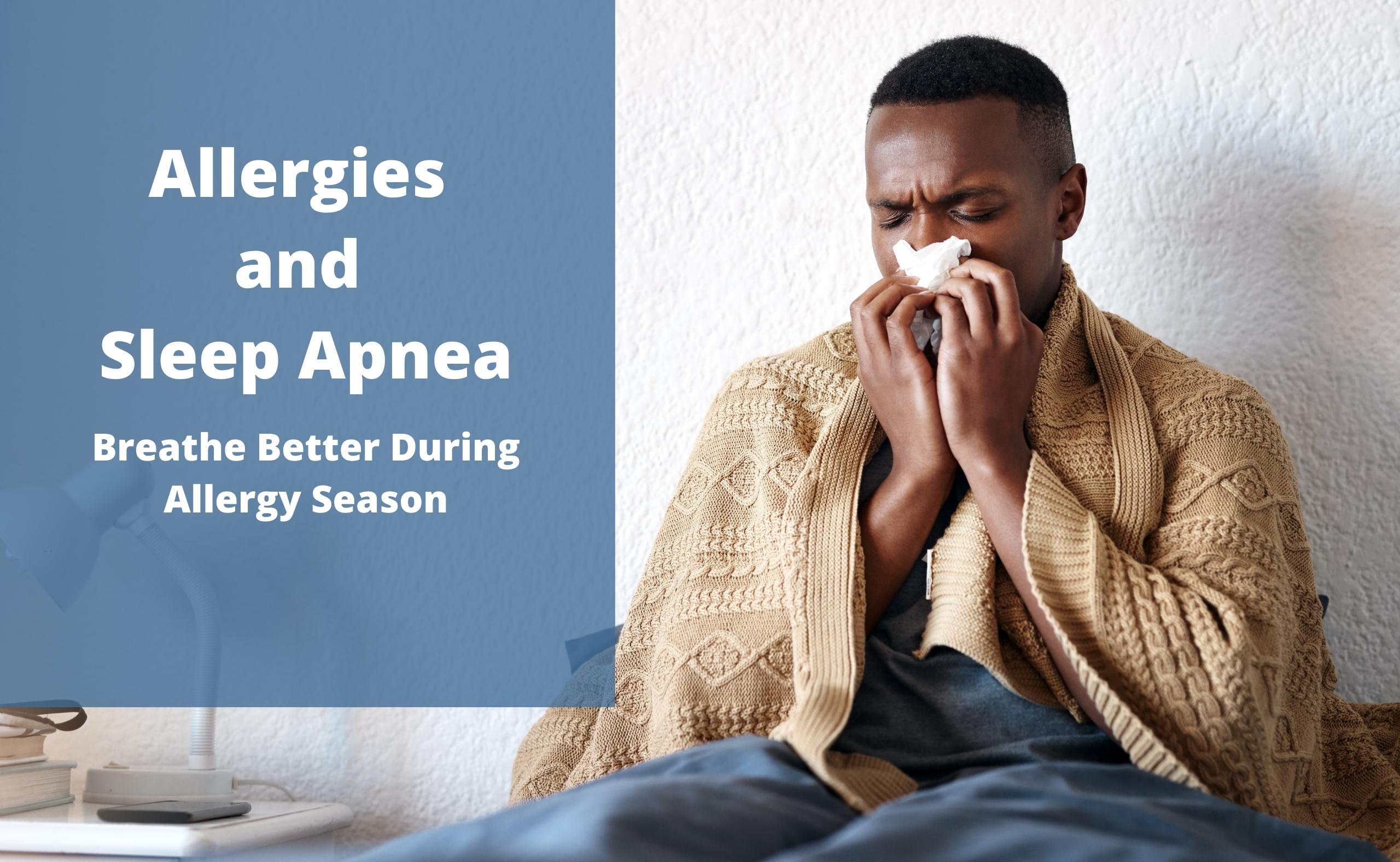 Congestion-driven apnea episodes are often worse during allergy season. Credit: sleepcenterinfo.com
Frequently Asked Questions
Can allergies cause insomnia?
Yes. The congestion, itching, and sneezing that allergies trigger can make it hard to fall asleep and cause repeated wakings throughout the night. Over time, this can develop into a pattern of poor sleep that persists even on nights when symptoms are mild.
What allergens most commonly disrupt sleep?
Dust mites, pet dander, mold, and pollen top the list. Dust mites matter most in the bedroom because they live in mattresses, pillows, and bedding. If your symptoms are year-round and worst at night, dust mites are the most likely culprit.
What is the fastest way to reduce allergy symptoms at night?
Take a shower before bed to rinse off pollen and dander, put fresh bedding on the pillow, and use a saline rinse to clear your nasal passages. For acute congestion, a steroid nasal spray used regularly provides more reliable long-term relief than a quick-decongestant spray.
Is it safe to use allergy medication as a sleep aid?
Some first-generation antihistamines cause drowsiness, which is why they are sometimes used off-label as sleep aids. They are not a good long-term solution: they can reduce deep sleep quality and cause daytime grogginess. If you need daily allergy control, prefer a non-drowsy second-generation antihistamine and address your bedroom environment instead.
How do I know whether it is allergies or a cold?
Allergies usually cause itchy eyes and nose, clear mucus, and symptoms that last longer than a cold. Colds often come with fever, body aches, and symptoms that peak within a few days. If you have had the same seasonal pattern for years, allergies are the more likely explanation.
Conclusion
Nothing ruins a good night's sleep faster than a stuffy nose and itchy eyes. The right fixes — allergen-blocking bedding, HEPA air purification, humidity control, and the right medication — reduce the load on your immune system so your body can devote itself to rest instead of defense.
Start with the changes that cost nothing today: shower before bed, keep pets off the pillow, and wash your sheets in hot water. Then add the tools that matter most for your particular triggers.
It will not happen in a single night, but within a week, most people notice real improvement. Consistent, small adjustments add up to nights that actually restore you — and a clearer head during the day. Your pillow should be a place of rest, not a battleground. Choose one root-cause fix you have been putting off — whether it is an allergy-proof mattress cover or a HEPA purifier — and commit to the first small step tonight.

Daniel Hart is a consumer product analyst who specializes in mattress technology, smart bedding, and home comfort innovation. Before joining Royal Comport, Daniel worked with several e-commerce research teams, testing and comparing sleep products for quality, value, and long-term performance. He brings data-driven insight and real-world testing to every review he writes.


