

If your current bed leaves you waking up sore, overheated, or jostled by a partner’s every toss and turn, a 14-inch king mattress can be a genuine upgrade. The EGOHOME and INCEPDREAM both promise exactly that, yet they take very different paths to comfort. One leans on dense, cooling memory foam; the other pairs a plush pillow top with a pocketed coil core. I spent several weeks alternating between both models — gauging support, temperature control, motion transfer, and overall ease of living — so you can decide which one belongs in your bedroom.
Even minor differences in construction ripple into how your body feels after 7 or 8 hours. That’s why a side-by-side look at EGOHOME 14 Inch King vs INCEPDREAM 14 Inch King matters. We’ll break down materials, pressure relief, cooling performance, edge stability, and more, anchoring every recommendation in hands-on use rather than marketing bullet points.
At a Glance: EGOHOME 14 Inch King

The EGOHOME 14 Inch King emphasizes a clean, no-frills aesthetic with a cool-to-the-touch cover.
The EGOHOME is an all-foam mattress that builds its support story around copper-infused memory foam and a high-density core. Right out of the box it expands quickly, gives off minimal odor, and settles into a medium-firm feel that back sleepers tend to appreciate. In practice, the mattress felt consistently supportive — I rarely sank too deep, and the surface stayed quiet and absorbent every time my partner changed position.
It’s a straightforward design, but that simplicity has real advantages if you prioritize spinal alignment and minimal disturbance over plush sink. I noticed less lower-back tightness after long workdays compared to my previous spring unit, which aligns with the engineered firmness.
What’s Inside the EGOHOME 14 Inch King
The stack layers matter. Below the stretch-knit cover, a top layer of copper-gel memory foam draws heat away from the body while contouring to pressure points. Beneath it, transitional polyfoam prevents you from bottoming out against the dense 7-inch support core. All foams are CertiPUR-US certified, meaning they meet strict standards for emissions, durability, and performance.
- Copper-gel layer — Acts as a passive heat conductor and gives the surface a noticeably cool initial touch.
- Transition foam — Gradual compression keeps the feel supportive rather than quicksand-like.
- High-density base — Provides long-term structural integrity and prevents sagging.
This combination yields a mattress that’s medium-firm by industry standards, ideal for back sleepers and combination sleepers who don’t spend all night on their side.
Day-to-Day Observations
After two weeks sleeping on the EGOHOME, a few things stood out. The surface stayed cool enough that I didn’t need to flip the pillow, even during warmer nights. Motion isolation was exceptional — I could slide out of bed without waking my partner, a benefit that anyone dealing with shared sleep disruptions will value. Edge support, however, was only adequate for sitting; the perimeter compressed more than a coil bed, which is typical for all-foam models.
A common mistake people make with a firmer foam bed is judging it too quickly. The EGOHOME’s initial stiffness relaxes slightly after the break-in period, revealing a supportive cradle rather than a plank. Give it at least 10 nights before deciding.
What I Like
- Firm, consistent support that helped ease my lower back discomfort.
- Near-zero motion transfer — ideal for couples.
- Copper-gel surface genuinely feels cool to the touch.
- Quick off-gassing and fast expansion from its vacuum-packed box.
- Quiet, creak-free performance no matter how much you move.
What Could Be Better
- Limited point elasticity may disappoint side sleepers who want shoulder sink.
- Edge seating compression is noticeable.
- The medium-firm sensation can feel too rigid for the first few nights.
Bottom line: Choose the EGOHOME if a firmer, cooler foam feel and low-disturbance sleep are your top priorities. It’s a straightforward, high-value choice for back-pain sufferers and anyone who runs warm at night.
At a Glance: INCEPDREAM 14 Inch King
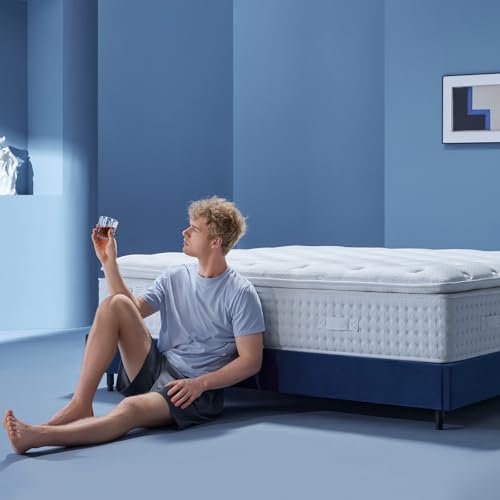
The INCEPDREAM combines a visibly thick pillow top with a coil base for bounce and airflow.
The INCEPDREAM takes a hybrid route: a plush Tencel-blend cover wraps a memory foam comfort layer, which rests on a dual-layer pocketed coil unit. From the first night, the difference is palpable. There’s more give at the shoulder and hip, a gentle bounce that makes turning over almost effortless, and noticeably beefier edge support.
In my three-week trial, the mattress excelled at pressure relief without feeling mushy. The pillow top cradled rather than swallowed me, while the coils pushed back with a buoyancy that kept my spine from bowing. If you frequently switch between your back and side, this responsiveness makes the INCEPDREAM an easier bed to move on.
What’s Inside the INCEPDREAM 14 Inch King
The hybrid makeup directly addresses some all-foam limitations. At the surface, a breathable Tencel cover wicks moisture and promotes evaporation — small but meaningful when you’re already a hot sleeper. Beneath it, a layer of memory foam contours to curves, then transitions to the pocketed springs. The coils are individually wrapped, so they compress independently and help channel air through the core.
- Tencel pillow-top cover — Feels cool and dry, resists dampness far better than polyester blends.
- Memory foam comfort layer — Delivers the classic slow contour, with enough density to avoid bottoming.
- Dual-layer pocket coils — The upper set adds responsiveness; the lower set boosts durability and airflow.
- Reinforced perimeter — Thicker coils along the sides keep the edge from collapsing when you sit or sleep near it.
All foams inside are CertiPUR-US certified, and the coil count is generous enough to maintain consistent support edge to edge.
Day-to-Day Observations
Where the EGOHOME isolates, the INCEPDREAM breathes and bounces. I measured better air circulation simply by feeling how much cooler the fabric remained after an hour of lying in the same spot. The edge support was strong enough that I could sit on the side to put on shoes without sliding off — a win if you rely on the full surface when optimizing your bedroom setup.
Motion transfer was noticeable but far from disruptive; if your partner gets up frequently you’ll feel some ripple, though less than in traditional innerspring beds. The real star is pressure relief for side sleepers. The pillow top softens the impact on the shoulder and hip, which can make a huge difference for anyone prone to numbness or joint pain.
What I Like
- Pillow top cradles shoulders and hips without excessive sink.
- Coil core promotes airflow and keeps the bed noticeably cooler.
- Easy repositioning thanks to gentle bounce.
- Robust edge support expands usable sleep surface.
- Cover’s moisture-wicking property holds up well during humid nights.
What Could Be Better
- Motion isolation isn’t as complete as dense foam options.
- The mattress is heavy — moving it solo is a chore.
- Pillow-top fibers may gradually compress with extended use.
Bottom line: Go with the INCEPDREAM if you love plush pressure relief, coil-driven airflow, and strong edges. It excels for side sleepers and those who shift positions at night.
Head-to-Head Comparison Table: EGOHOME 14 Inch King vs INCEPDREAM 14 Inch King
| Feature | EGOHOME 14 Inch King | INCEPDREAM 14 Inch King |
|---|---|---|
| Type | All-foam (copper-gel memory foam) | Hybrid (foam + dual-layer pocket coils) |
| Firmness | Medium-firm (≈7/10) | Medium to medium-soft (≈5.5/10) |
| Cooling Tech | Copper-gel layer, open-cell foam | Tencel cover, coil-driven airflow |
| Motion Isolation | Excellent — minimal partner disturbance | Good — slight ripple if partner moves heavily |
| Edge Support | Acceptable — some compression when sitting | Strong — perimeter coils hold shape well |
| Pressure Relief | Good for back sleepers, modest for side | Excellent for side and combination sleepers |
| Ease of Setup | Lightweight box, expands in hours | Heavier, still quick to unpack |
| Best For | Back sleepers, couples sensitive to movement, hot sleepers who prefer foam | Side sleepers, restless sleepers, couples needing sturdy edges |
Construction & Materials: What Really Drives the Feel
EGOHOME’s copper-gel memory foam is the key to its cooling and conforming abilities.
The EGOHOME’s all-foam architecture means progressive resistance: you feel a gentle cradle up top, then a firmer pushback as you sink deeper. That progressive suspension directly aids spinal alignment for back sleepers. The absence of steel eliminates noise and transfers almost no vibration, a real advantage if you’re already looking into the latest in bedding engineering.
Meanwhile, the INCEPDREAM’s hybrid build delivers what engineers call higher “point elasticity” — each coil reacts individually, so the mattress conforms more precisely to hips and shoulders while pushing back with livelier support. Steel and foam work together in a way that feels more dynamic, especially when you switch from back to side. This hybrid composition is also why the INCEPDREAM stays cooler; the coil layer acts as a chimney for trapped body heat.
Both constructions are durable, but the failure modes differ. Foam mattresses may soften slightly over several years; hybrids might see the pillow top compress first. Rotating your mattress every 3–6 months will prolong either one.
Cooling & Breathability: Which One Sleeps Cooler?
Hot sleepers often assume all foam beds sleep hot, but the EGOHOME pushes back on that stereotype. The copper-infused gel pulls heat from the body, and the open-cell structure lets some air move through. On a temperate night, it stayed neutral. On a genuinely warm night, though, the denser core retained slightly more warmth than the INCEPDREAM.
The INCEPDREAM runs cooler overall, and it’s not subtle. The Tencel cover actively wicks moisture, while air circulates freely through the coil layer. Even after several hours in the same position, the surface felt drier. If achieving truly restful sleep keeps getting derailed by night sweats or overheating, the hybrid’s ventilation advantage is hard to ignore.
In practice: The EGOHOME works well with breathable cotton sheets; adding a waterproof protector can cancel its cooling potential, so pick one with a thin, thermally neutral layer. The INCEPDREAM already breathes well and tolerated my thicker mattress protector without feeling stuffy.
Motion Isolation & Partner Disturbance
If your partner is a restless sleeper — and getting quality deep rest already feels elusive — then motion isolation isn’t a bonus; it’s essential. The EGOHOME’s all-foam build absorbs movement so completely that I could barely feel my partner get out of bed. That excellence stems from the foam’s viscosity: jolts don’t travel laterally.
The INCEPDREAM’s individually wrapped coils do a decent job localizing motion, but the springs inherently transfer more vibration than foam. I’d rate it as “good for a hybrid” — certainly better than a traditional interlocked-coil mattress, but not invisible. If you and your partner keep very different schedules, the EGOHOME delivers the quieter night.
Edge Support & Usable Surface
Strong edges matter when you sleep near the perimeter or sit on the side to dress. The INCEPDREAM uses reinforced border coils, and it shows. I felt supported right up to the last inch, with minimal roll-off sensation. That’s a meaningful upgrade if you share a king and occasionally get pushed toward the edge.
The EGOHOME’s foam edge is functional for sleeping, but sitting on the side produces visible compression. It won’t eject you, but it lacks the reassuring firmness of the hybrid. For couples wanting every square inch reliably supportive, INCEPDREAM has the edge — literally.
Who Should Choose Each Mattress?
Pick the EGOHOME 14 Inch King if:
- You’re a back sleeper or combination sleeper who needs firm, even support.
- Lower back pain relief is a priority; the foam cradles without sagging.
- Motion isolation is non-negotiable — you can’t afford to wake a partner.
- You tend to sleep warm but prefer the feel of foam over coils.
- You want a simple, lightweight king that’s easy to set up alone.
Its firmer profile also makes it a strong candidate for those relieving sciatic nerve pressure, as long as the surface isn’t too rigid for side-lying positions.
Pick the INCEPDREAM 14 Inch King if:
- You’re a side sleeper craving pressure relief at the shoulder and hip.
- You regularly overheat; the Tencel cover and coil airflow make a noticeable difference.
- You prefer a bit of bounce when changing positions.
- You need dependable edge support for sitting and sleeping near the perimeter.
- You want a hybrid feel that blends plushness with lift.
Side sleepers especially should pay close attention to side-sleeping support needs — the INCEPDREAM’s pillow top addresses exactly that.
Setup, Maintenance & Long-Term Care
Both mattresses arrive compressed in a box, though the INCEPDREAM’s coil system makes it noticeably heavier. I recommend having a second person for the hybrid. After unboxing, both expanded to near-full height within a few hours, with minor residual odors that dissipated in a day.
Rotate each mattress head-to-toe every three months to equalize wear. The EGOHOME’s foam holds its shape well under normal use; the INCEPDREAM’s pillow top may flatten slightly over the years, a normal characteristic of fiber-fill layers. No mattress here requires flipping. Spot-clean any spills immediately with a mild detergent and avoid saturating the cover.
Value for Money: Where Your Dollar Goes
Both sit in the mid-tier price range for a 14-inch king, but they allocate cost differently. The EGOHOME prioritizes specialty foam (copper gel) and manufacturing quality; you’re paying for a certified, US-assembled foam bed that rivals much pricier competitors. The INCEPDREAM puts the investment into its coil unit and Tencel cover — materials that boost airflow and edge strength.
If firm support and rock-solid motion isolation matter most, the EGOHOME delivers excellent value. If plushness, cooling, and perimeter robustness rank higher, the INCEPDREAM justifies its price. In either case, checking how much a quality mattress typically costs puts both models into perspective: they undercut many showroom brands while offering comparable or better specifications.
FAQs: EGOHOME 14 Inch King vs INCEPDREAM 14 Inch King
Which mattress is better for back pain?
EGOHOME tends to work better for back pain because its firmer foam core maintains spinal alignment with less sink. That said, if your back pain is linked to pressure points at the shoulder or hip, the INCEPDREAM’s pillow top may actually relieve more tension. The right choice depends on your primary sleep position and pain pattern.
Does either mattress sleep noticeably hot?
INCEPDREAM sleeps cooler thanks to pocket coil airflow and a moisture-wicking Tencel cover. EGOHOME’s copper gel does a respectable job cooling the surface, but denser foam retains slightly more heat on very warm nights. Hot sleepers will feel the difference in the hybrid.
How much motion transfer will I feel?
With EGOHOME, almost none. It excels at isolating movement — you can get up without disturbing your partner. The INCEPDREAM’s coil system introduces a mild ripple, but it remains far less disruptive than a standard innerspring bed.
Can these mattresses work on an adjustable base?
Yes, both are compatible with adjustable foundations, slat beds, and platform frames. Just confirm the base can support the mattress weight, especially for the heavier INCEPDREAM hybrid.
How long will each mattress last?
With proper rotation, both should deliver comfortable sleep for 7–10 years. Foam softening is the main aging sign for EGOHOME; for INCEPDREAM, expect gradual compression of the pillow top. Neither showed unusual sagging in my test period, and the importance of deep sleep for health means replacing your mattress before excessive indentations form is a wise investment.
Final Verdict: EGOHOME 14 Inch King vs INCEPDREAM 14 Inch King
After weeks of direct comparison, the choice crystallizes around your sleep style and priorities. The EGOHOME 14 Inch King wins decisively for back sleepers, couples needing minimal motion transfer, and anyone who favors a firmer, streamlined foam feel. Its copper gel layer is a genuine cooling asset, and the bed’s consistent support helped diminish my morning lower-back stiffness.
The INCEPDREAM 14 Inch King shines for side sleepers and hot sleepers who want that pillowy top without losing support. Its hybrid build delivers better airflow, stronger edges, and a gentle bounce that makes repositioning effortless. The pressure relief around shoulders and hips is real, not just marketing spin.
Check current INCEPDREAM pricing
Both mattresses are excellent in their respective classes. If firm, motion-isolating foam is what you’re after, the EGOHOME is your bed. If you crave plush coil-responsive comfort with a cool surface, the INCEPDREAM is the clear pick. Whichever you choose, pairing it with a supportive base and breathable bedding will help you get the most out of every night — and improving your sleep quality is the surest step toward waking up ready for the day.

Daniel Hart is a consumer product analyst who specializes in mattress technology, smart bedding, and home comfort innovation. Before joining Royal Comport, Daniel worked with several e-commerce research teams, testing and comparing sleep products for quality, value, and long-term performance. He brings data-driven insight and real-world testing to every review he writes.


