

A decade ago, buying a luxury hybrid mattress meant spending well over $2,000. DreamCloud flipped that script by packing premium materials into a direct-to-consumer bed that often costs less than half of what you’d pay in a showroom. Now in 2026, the DreamCloud mattress continues to be one of the most searched names in sleep—combining memory foam contouring, sturdy coil support, and a genuinely opulent top cover at an aggressive price. In this review, we break down exactly how it feels, who it works for, where its limits lie, and whether it still deserves the hype.
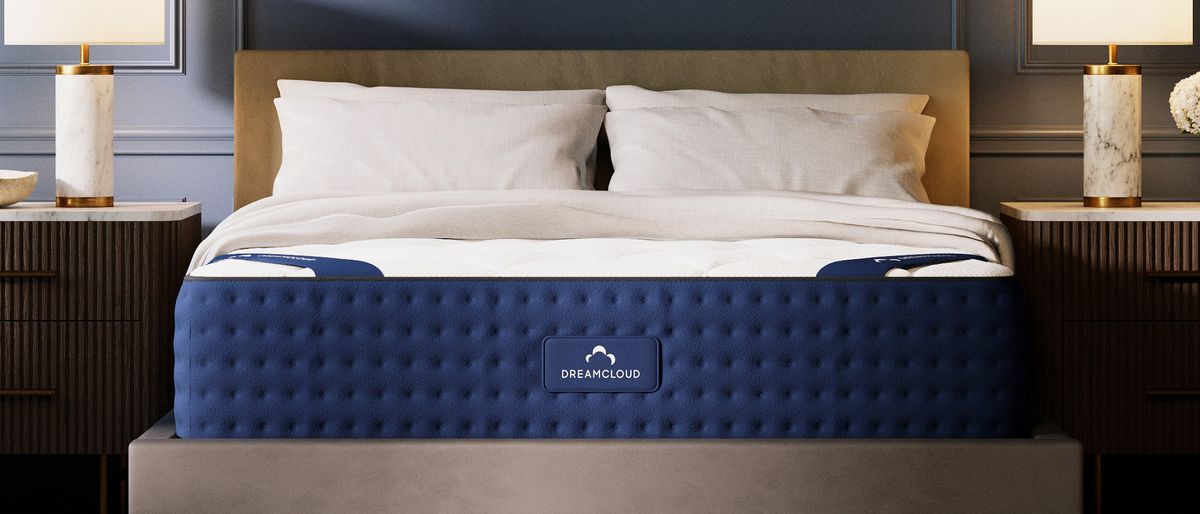 The DreamCloud hybrid’s quilted cashmere-blend cover gives it an immediate plush, hotel-bed look that sets expectations high before you even lie down.
Image source: DreamCloud
What’s New in the 2026 DreamCloud Mattress?
Rather than reinventing a winning formula, DreamCloud in 2026 sticks with the same multi-layer hybrid architecture that earned it multiple sleep awards. The cover still uses a cashmere blend for softness and moisture management, and the foam layers remain CertiPUR-US certified. The biggest change isn’t structural—it’s that DreamCloud has continued to hold the line on price while many competitors have raised theirs, keeping the mattress one of the best values in the luxury hybrid category. Minor fabric tweaks have improved breathability on the surface, but the core experience remains unchanged: a gently contouring, medium-firm feel that targets the widest possible audience.
Construction and Materials: A Closer Look
DreamCloud’s build reads like a checklist of what you’d want in a modern hybrid. Each layer serves a distinct purpose, from instant cushioned relief to deep structural support.
- Cashmere Comfort Cover: Soft to the touch, breathable, and moisture-wicking, it helps you stay dry and cool at the surface.
- Quilted Gel Memory Foam: Directly under the cover, this adds pressure relief and a responsive contour—no quicksand sensation.
- Quilted Supportive Foam: A secondary cushioning layer that reinforces the quilted top and helps bridge the transition to the deeper coil unit.
- Therapeutic Gel Memory Foam: Denser memory foam infused with cooling gel; it adapts to your shape and dissipates heat more effectively than standard memory foam.
- Dynamic Transition Layer: A firmer polyfoam that prevents you from crashing through to the coils and promotes healthy spinal alignment.
- Individually-Wrapped Coils: The heart of the mattress. Eight inches of pocketed coils provide targeted support, reduce motion transfer, and enhance airflow.
- Stability Base Layer: A high-density foam foundation that keeps the entire upper system stable and extends mattress longevity.
- Shift-Resistant Lower Cover: A grippy base fabric that minimizes sliding on a foundation or adjustable base.
All foam layers are CertiPUR-US certified, meaning they meet strict standards for low VOC emissions, no heavy metals, and no ozone-depleting chemicals. For anyone concerned about indoor air quality, this is a meaningful reassurance that often gets glossed over in mattress marketing.
Firmness and Feel: How It Actually Sleeps
On a firmness scale of 1 to 10, where 1 is a marshmallow and 10 is a hardwood floor, the DreamCloud lands around a 6.5—a true medium-firm. What that translates to in practice is a pronounced “hug” when you first settle in, followed by a supportive pushback that keeps your spine aligned.
If you expect a pillow-top cloud where you sink deeply, you may be surprised. DreamCloud’s quilted top is plush, but the underlying memory foam and transition layer quickly firm up under your pressure points. The result is a floating sensation that works well for both back and side sleepers who need relief without losing structural support. Stomach sleepers under about 180 pounds will likely find it comfortable; heavier individuals may want a slightly firmer, less conforming surface—more on that later.
A common first-night mistake is judging the mattress before it fully expands. In practice, it takes 24 to 48 hours for the foam to decompress completely after unboxing. During that window, the bed can feel firmer and slightly misshapen. Give it the full break-in period before drawing conclusions.
Cooling and Temperature Regulation
Hybrids generally sleep cooler than all-foam mattresses, and DreamCloud leans into that advantage. The coil layer acts as a ventilation shaft, constantly pulling heat away from your body. Meanwhile, the gel-infused memory foam and breathable cashmere cover work together to prevent the surface from becoming a heat trap.
In warmer climates, a common observation is that the mattress performs noticeably better when paired with breathable sheets—cotton percale or linen rather than synthetic microfiber—and a slatted foundation that doesn’t block airflow. While a few users still report mild heat retention on very humid nights, the overwhelming experience is one of temperature neutrality. If you’re someone who has avoided memory foam beds because of heat issues, DreamCloud likely won’t scare you off.
Edge Support and Motion Isolation
Edge support matters most when you sit on the side of the bed to tie your shoes or sleep near the perimeter. DreamCloud reinforces its edges with higher-gauge coils and a foam perimeter. The result is solid but not industrial-grade. You’ll feel some compression when sitting directly on the edge, but the mattress doesn’t collapse; while lying down near the edge, you won’t roll off.
Motion isolation is where hybrid designs often face trade-offs. The individually-wrapped coils and memory foam layers do a very good job of absorbing movement. If your partner changes positions or gets up, you’re unlikely to feel more than a gentle ripple. It isn’t as dead-quiet as a dense all-foam mattress, but for a bed with an eight-inch coil unit, the isolation is commendable and keeps disrupted sleep patterns to a minimum.
Sleeping Position Performance
Back Sleepers
DreamCloud excels here. The dynamic transition layer and pocketed coils work together to support the lumbar curve without letting your hips sink too deep. Most back sleepers report waking up with noticeably less stiffness, especially those under 230 pounds. If you’re specifically seeking relief from alleviating nighttime back pain or sciatica, the gentle but firm pushback can help maintain alignment and reduce pressure on irritated nerves—though for severe sciatica, you may want to explore a mattress that eases sciatic discomfort with targeted zoning.
Side Sleepers
The quilted gel memory foam and supportive foam layers deliver ample pressure relief on the shoulder and hip. Most side sleepers between 130 and 230 pounds will find the mattress cushions impact points without letting the spine bow. Lighter side sleepers under 130 pounds, however, sometimes report that the top doesn’t yield enough for a deep contour—these individuals may want a softer mattress. For a deeper dive into alternative builds, our guide for side sleepers hunting for targeted cushioning can help narrow the field.
Stomach Sleepers
Stomach sleepers need a firm surface that keeps the hips from dipping, which can torque the lower back. DreamCloud’s medium-firm feel and strong transition layer work well for stomach sleepers under about 200 pounds. Above that weight, the hips may sink enough to cause a slight arch. In that case, a dedicated sturdy mattress option with a higher-density coil unit is worth considering.
Couples
Combination sleepers and couples who don’t share the same position often land on DreamCloud because it splits the difference between soft and firm. Motion isolation is good enough for most couples, and the reinforced edges give you more usable surface area, which can be a relationship-saver in a queen-size bed.
Unboxing and First Impressions
DreamCloud ships compressed in a box roughly the size of a mini fridge, delivered via standard ground carriers. The box is heavy—a Queen tips the scales around 100 pounds—so having a second person to maneuver it is strongly advised.
Once you haul the mattress onto your frame, cutting the plastic wrap sets expansion in motion immediately. You’ll notice a mild “new mattress” scent, similar to fresh paint or new carpet, which comes from the foam off-gassing. It’s harmless and typically dissipates within 48 to 72 hours in a well-ventilated room. A common practical tip is to unbox the mattress in the morning, open a window, and let it air out all day before making the bed.
Pricing, Discounts, and Value
DreamCloud’s pricing strategy remains one of its strongest selling points. While retail prices fluctuate with promotions, the mattress is consistently positioned far below comparable luxury hybrids. A Queen often hovers around $799 after standard discounts, with deeper markdowns during holiday sales—sometimes bringing a Twin down to $299. This is a fraction of what you’d pay for similar constructions from legacy brands.
Financing is available at 0% APR for qualified buyers, dropping the monthly commitment to a very manageable level. When you stack the price against the 365-night trial and lifetime warranty, the overall package is hard to beat if you want to understand the typical investment for a quality mattress.
Trial, Warranty, and Delivery
DreamCloud offers one of the most generous risk-free trials in the industry: 365 nights. That means you can sleep on the mattress through all four seasons before deciding if it’s right for you. If you return it during the trial, the process is free and the mattress is typically donated or recycled.
The lifetime warranty covers defects like visible indentations greater than 1.5 inches, split or cracked foam, and manufacturing flaws in the cover zipper. As with any lifetime warranty, it’s prorated after a defined period—meaning after a certain number of years you may be responsible for a portion of the repair or replacement cost. It’s still far above the typical 10-year warranty.
Shipping is free within the contiguous United States, and returns are also free during the trial.
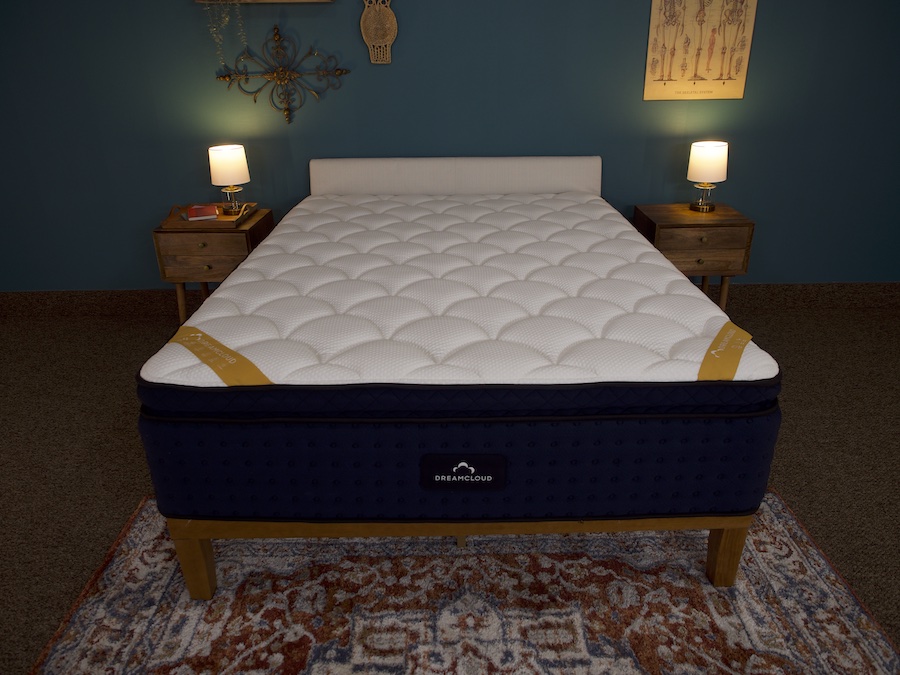 The side profile showcases the deep coil core and multiple foam layers that define DreamCloud’s hybrid performance.
Image source: www.sleepadvisor.org
Durability and Long-Term Performance
The use of high-density foam in the base and transition layers, paired with robust pocketed coils, suggests the DreamCloud should comfortably last seven to ten years for most sleepers. The cashmere cover holds up well with a mattress protector—without one, body oils and moisture can gradually degrade the top quilting.
Heavier individuals (consistently above 250 pounds) may notice some softening in the foam layers sooner than lighter users. While the coils provide lasting support, the comfort layers can compact slightly over time, leading to a slight body impression. Rotating the mattress every six months helps even out wear and is a simple habit that extends usable life.
Who Should (and Shouldn’t) Buy the DreamCloud
Ideal For
- Value-first luxury seekers who want a hybrid with premium touches without the showroom markup.
- Back sleepers and combination sleepers needing a medium-firm surface that supports spinal alignment.
- Couples who benefit from good motion isolation, solid edge support, and a year-long trial to be sure.
- Hot sleepers who want the pressure relief of memory foam but need the airflow of coils.
- Anyone upgrading from an older innerspring or basic foam mattress will notice a dramatic improvement in pressure relief and motion control.
Not Ideal For
- Very lightweight side sleepers (under 130 pounds) who may find the surface too firm for deep cushioning.
- Stomach sleepers over 230 pounds who might experience slight hip sink and lower back strain.
- Buyers sensitive to off-gassing—the foam scent, while temporary, is noticeable in the first few days.
- Those who want a pillow-top, cloud-like softness—DreamCloud’s “hug” is responsive, not marshmallowy.
- Extremely heavy individuals (over 300 pounds) may want a mattress specifically engineered for higher weight capacity; our breakdown of sturdy mattress options for heavier builds offers better alternatives.
How DreamCloud Compares to Other Popular Options
In the direct-to-consumer hybrid space, DreamCloud competes closely with the Saatva Classic and the Helix line. Where DreamCloud leans heavily on memory foam contouring with a cashmere finish, Saatva delivers a more traditional innerspring “pillow top” feel with dual coil layers. Our detailed look at Saatva’s lineup highlights those distinctions, and a side-by-side comparison of how Saatva stacks up against rivals can help you decide if a firmer, luxury innerspring suits you better.
If you’re considering a Helix model for a more customized fit, our Helix mattress comparison guide and in-depth look at the Helix Dusk Luxe walk through the differences. DreamCloud appeals to those who want a single, broadly appealing design; Helix lets you dial in firmness and feel based on your body type and sleep position.
When comparing trial periods, DreamCloud’s 365 nights is the longest of the three, while lifetime warranty coverage exceeds both Saatva and Helix (which typically cap warranty at 15 years). If a long, risk-free trial period is a top priority, DreamCloud is the clear winner.
 A visual comparison of DreamCloud next to another popular hybrid underscores differences in layer thickness and cover design.
Image source: originmattress.co.uk
Frequently Asked Questions
Is the DreamCloud mattress good for back pain?
Yes. The combination of gel memory foam layers and individually-wrapped coils provides targeted lumbar support and pressure relief, which many users with back pain report as beneficial. The dynamic transition layer promotes proper spinal alignment, but severe or chronic conditions benefit from consulting a physician and matching the mattress to your specific support needs—guidance we cover in our resources on optimizing your sleep environment and improving sleep health.
How firm is the DreamCloud mattress?
It’s a medium-firm to firm mattress, typically rated around 6.5 out of 10. That gives it a balanced feel that works for most sleeping positions without being overly rigid.
Does the DreamCloud sleep hot?
Generally, no. The cashmere cover, gel-infused foam, and coil layer work together to promote airflow and dissipate heat. While no mattress is actively “cold,” DreamCloud avoids the heat-trapping reputation of traditional all-foam beds.
How long does the DreamCloud take to expand?
Full expansion takes 24 to 48 hours, though it’s safe to sleep on after a few hours. The mattress reaches its intended shape and comfort faster if unboxed in a warm room.
Can you use a DreamCloud mattress on an adjustable base?
Yes. Its hybrid construction is flexible enough to work with adjustable bases, and the shift-resistant lower cover keeps it stable.
Does DreamCloud have a weight limit?
DreamCloud does not publish a strict weight limit, but as with most hybrids, sleepers over 250 to 300 pounds may experience faster foam softening. Those nearing 300 pounds are better served by a mattress designed for higher capacity, and we’ve rounded up dedicated sturdy mattress options for that purpose.
What’s the difference between DreamCloud and DreamCloud Premier?
The Premier adds a pillow top and additional foam layers for a slightly softer, more luxurious feel. The original DreamCloud reviewed here remains the firmer, more supportive of the two, with a lower price.
Conclusion
DreamCloud in 2026 continues to deliver what made it a breakout success: a carefully engineered hybrid with a plush cashmere cover, multi-layer foam contouring, and a robust coil unit—all at a price that genuinely undercuts competitors. The 365-night trial and lifetime warranty put meaningful skin in the game, signalling confidence in the product.
It’s not a one-size-fits-all miracle. Lightweight side sleepers wanting a deep sink may find it too firm; very heavy sleepers may push its durability limits. Yet for the bulk of sleepers—back, combination, couples, value shoppers—DreamCloud remains a top recommendation. If you’re intrigued, visit the DreamCloud website to check current offers, and explore our additional guides on modern mattress engineering and achieving truly restorative nights to build a sleep setup that works for you.

Daniel Hart is a consumer product analyst who specializes in mattress technology, smart bedding, and home comfort innovation. Before joining Royal Comport, Daniel worked with several e-commerce research teams, testing and comparing sleep products for quality, value, and long-term performance. He brings data-driven insight and real-world testing to every review he writes.


