

Couch cushions take a beating: crumbs, pet hair, sweat, and the occasional spill. If your cushions are stuffed with fiberfill or down rather than solid foam, cleaning them takes a little more care. This guide shows you how to wash couch cushions with stuffing — from reading the care tag to drying and fluffing — so they come out fresh, not lumpy. A clean sofa also supports a cleaner sleep environment, so it is worth doing right.
Know What’s Inside Your Cushion
Before you reach for any cleaner, find out what your cushion is made of. The filling matters more than the fabric.
- Polyester fiberfill — the most common stuffing; often machine-washable if the tag allows it.
- Down or feather — warm and soft, but it clumps easily and needs gentle handling.
- Shredded foam — should be spot-cleaned only; it can break apart in a washer.
- Solid foam — never put it in a washing machine. The agitation can tear it.
Most upholstered furniture uses a cleaning code printed on the tag. Check it before you do anything.
| Code | What it means |
|---|---|
| W | Water-based cleaners are safe. |
| S | Use solvent-based or dry-cleaning products only. |
| WS | Both water- and solvent-based cleaners are safe. |
| X | Professional cleaning only; vacuum and brush only. |
If the tag says X, do not wash the cushion yourself. Understanding how upholstery layers are built helps you predict how a cushion will react, so take two minutes to read the label before you start.
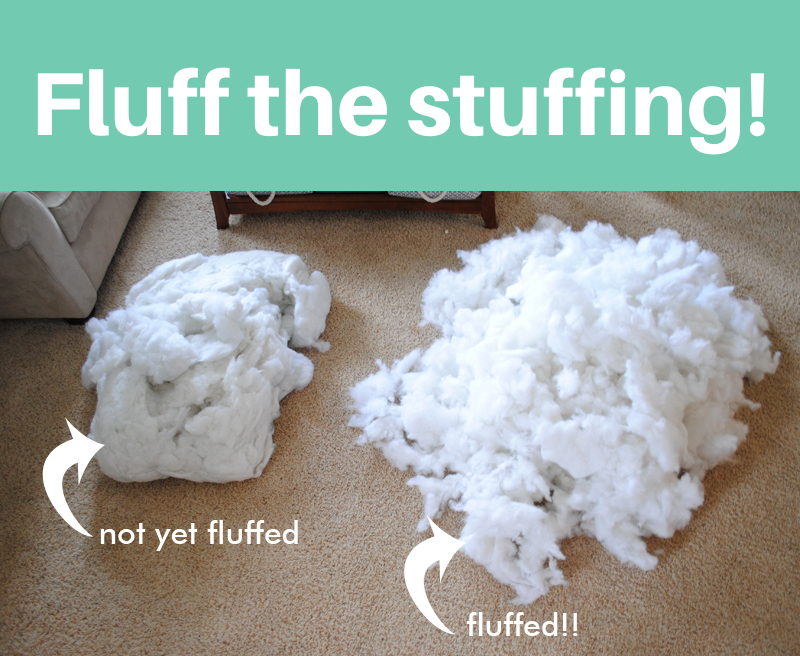
Check what’s inside before you decide how to wash it.
Image source: liftingitalia.com
What You’ll Need
Gather your supplies before you start. You probably already have most of these at home.
- Vacuum with a brush attachment
- Mild liquid detergent or upholstery cleaner
- Baking soda
- White vinegar, optional
- Soft brush or sponge
- Clean microfiber cloths and towels
- Enzyme cleaner or oxygen-based stain remover
- Front-load washing machine with a gentle cycle, if your cushions are machine-safe
- Drying rack, fan, or low-heat dryer with dryer balls
A front-load washer is gentler than a top-load model with a center agitator. If you only have a top-loader, hand-washing is often the safer choice.
Gather your supplies before you start.
Image source: reddit.com
Pre-Treat Stains Before Washing
Stains need attention before the full wash, not after.
- Blot fresh spills immediately with a clean cloth. Do not rub, or you will push the stain deeper.
- For dried stains, lightly dampen the area and apply a small amount of mild detergent.
- Let the cleaner sit for 10 to 15 minutes.
- Blot with a damp cloth until the stain lifts.
- Use an enzyme cleaner for pet urine, blood, or food stains.
Always test any cleaner on a hidden spot first. Some fabrics fade or warp even with gentle products.
Machine-Washing Removable Covers
If your cushions have zippered covers, machine-washing the covers is the easiest and safest method.
- Remove the covers and check the pockets for loose items.
- Turn each cover inside out and zip it closed. This stops the zipper teeth from snagging other fabric.
- Wash on a gentle cycle with cold or lukewarm water.
- Use a small amount of mild detergent. More soap does not mean cleaner.
- Run an extra rinse to remove all soap residue.
- Air-dry the covers or tumble dry on low heat.
Do not put damp covers back onto the cushions. Wait until they are completely dry.
Machine-Washing Whole Stuffed Cushions (When the Tag Allows)
Some fiberfill and down cushions can go into the washer whole, but only if the care label says machine washable.
- Wash one or two cushions at a time so they can move freely in the drum.
- Use a front-load washer on the gentle cycle with a low spin speed.
- Skip fabric softener. It coats the filling and reduces its loft.
- Add an extra rinse cycle to flush out detergent trapped in the stuffing.
- Never machine-wash solid foam or shredded foam.
The American Cleaning Institute publishes practical laundry guidance, and its first rule is to measure detergent carefully. Too much soap is one of the most common reasons stuffed cushions come out stiff or smelly.
Hand-Washing Stuffed Cushions
When a cushion is too delicate for the machine, hand-washing is the gentler alternative. It takes longer, but it protects both the fabric and the filling.
- Vacuum the cushion to remove loose dirt and crumbs.
- Fill a bucket or tub with lukewarm water and a small amount of mild detergent.
- Test a hidden area before cleaning the whole surface.
- Dip a sponge or soft cloth into the soapy water and work in small sections.
- Avoid soaking the cushion. You want the surface clean, not the stuffing wet.
- Rinse by wiping with a clean, damp cloth until no soap remains.
- Press towels against the cushion to absorb moisture. Do not wring or twist it.
Work in sections if the cushion is large. This keeps the fabric evenly damp and makes rinsing easier.
Use a sponge and light pressure to avoid soaking the stuffing.
Image source: bahekarhospital.com
Spot-Cleaning Stuffed Cushions
For small stains, you do not need to wash the whole cushion. Spot-cleaning is faster, safer, and the best way to test how the fabric reacts.
- Blot the stain with a small amount of upholstery cleaner.
- Work from the outside of the stain toward the center so it does not spread.
- Rinse the area with a clean, damp cloth.
- Dry the spot with a fan or by placing the cushion in a well-ventilated room.
If the spot reappears after drying, repeat the process. Stubborn stains may need a professional.
Drying and Reshaping Stuffed Cushions
Drying is where most people go wrong. Wet stuffing clumps, and damp fabric can develop mildew quickly.
- Press the cushion with clean towels to remove as much water as possible.
- Air-dry flat on a drying rack in a warm, airy room.
- Use a fan to speed up the process and flip the cushion every few hours.
- If the tag allows tumble drying, use low heat and add dryer balls or clean tennis balls to break up clumps.
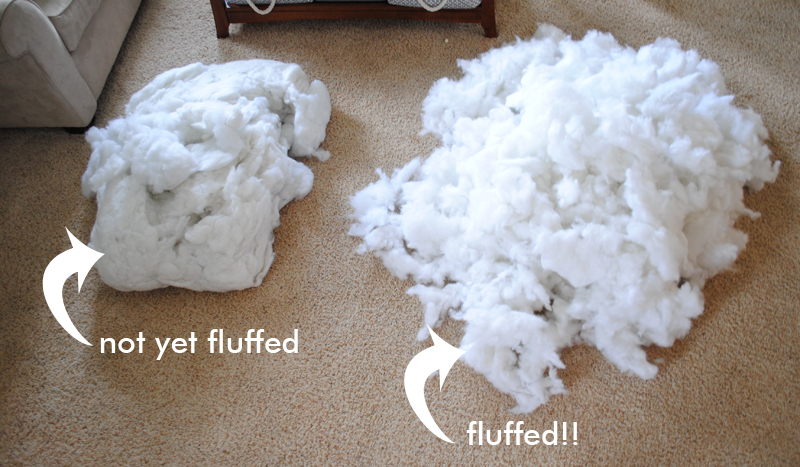
- Fluff and reshape the cushion as it dries. Pull the fabric into place and push the stuffing back into the corners.
- Check the seams for clumps and break them up with your hands or the handle of a wooden spoon.
Thick stuffed cushions can take 24 to 48 hours to dry completely. Do not put the covers back on until the stuffing is fully dry. Damp stuffing left to dry slowly can develop mildew, which is why the EPA’s mold guidance focuses on controlling moisture.

Fluff the filling as it dries so it doesn’t clump.
Image source: reddit.com
Deep-Cleaning and Deodorizing
Sometimes cushions need more than a surface wash. Here are the safest ways to remove odors and set-in grime.
- Baking soda — sprinkle it over the dry cushion, let it sit for one hour, then vacuum thoroughly.
- White vinegar mist — mix one part white vinegar with three parts water, lightly mist the fabric, and air-dry fully.
- Enzyme cleaners — use them on biological stains like pet accidents or food spills.
- Steam cleaning — works well on sturdy fabrics, but avoid soaking the stuffing with excess moisture.
- Professional cleaning — the best option for heavy odors, old stains, or delicate fabrics.
Regular deodorizing also keeps allergens that disrupt sleep from building up in the room, especially if you have pets or allergies.

Sometimes replacing worn stuffing is the real fix.
Image source: vixencomposites.com
Common Mistakes to Avoid
A few avoidable mistakes cause most cushion damage.
- Washing without checking the care tag.
- Using hot water or high heat, which shrinks fabric and ruins filling.
- Using too much detergent, which is hard to rinse out of stuffing.
- Wringing or twisting wet cushions.
- Putting solid foam in the washing machine.
- Reassembling damp cushions, which invites mildew.
A common mistake is using fabric softener on down cushions. It coats the feathers and destroys their loft, leaving the cushion flat and heavy.
High heat and harsh cycles are the usual culprits.
Image source: redlet.com
Care and Maintenance Tips
Regular small steps help you avoid deep washes and keep cushions comfortable for longer.
- Vacuum cushions weekly to remove dust, crumbs, and pet hair.
- Flip and rotate cushions every few weeks to keep the filling evenly distributed.
- Use washable throws or removable covers in high-traffic areas.
- Treat spills immediately with blotting and a mild cleaner.
- Air cushions outside on a dry day, but keep colored fabrics out of direct sun.
- Deep-clean every six to twelve months, depending on how much use they get.
Using washable throws is one of the best ways of protecting your cushions between full cleanings.

Regular fluffing and rotation extend the time between washes.
Image source: com.br
How Often Should You Wash Couch Cushions?
Vacuum weekly and spot-clean spills as soon as they happen. Plan a deeper clean every six to twelve months, or more often if you have pets, allergies, or young children.
If you notice a musty smell, visible stains, or cushions that feel flat and limp, do not wait for the next scheduled clean. Wash them as soon as you can.
Frequently Asked Questions
How do I know if my cushion stuffing is washable?
Check the care tag first. If the label says machine washable and the filling is fiberfill or down, it is usually safe. If the tag says dry clean only or X, do not machine wash it. When the tag is missing, test a hidden area or hand-clean only.
Can I put foam cushions in the washing machine?
No. Solid foam tears and breaks apart in a washing machine. Spot-clean foam cushions by hand and air-dry them gently. Shredded foam should also be spot-cleaned rather thanmachine-washed, since the tumbling action breaks shredded foam into smaller pieces and leaves the cushion lumpy.
How long does it take for stuffed cushions to dry?
Thick fiberfill and down cushions typically need 24 to 48 hours to dry completely when air-dried. Thin cushions may dry in 12 to 24 hours. Use a fan to speed things up and flip the cushion every few hours so moisture doesn’t settle in one spot. If the care tag allows, tumble dry on low heat with dryer balls — that can cut the time down to two or three hours.
Whatever you do, make sure the cushion is dry all the way through before you put it back on the sofa. Damp stuffing is the number one cause of mildew — the EPA’s mold guidance notes that wet materials can start growing mold within a day or two. When in doubt, give it one more hour.
Will washing cushions make them lose shape?
Only if you wash them wrong. High heat, over-soaking, and skipping the reshaping step are the usual culprits. Wash on a gentle cycle, reshape the stuffing into the corners as the cushion dries, and your cushions should come out fuller, not flatter.
Check how the cover and filling are connected before you wash.

See whether the filling is removable before you commit to a cleaning method.
If a cushion still comes out flat and lumpy after a correct wash, the stuffing itself may be worn out. Replacing the fill is often cheaper and easier than you think — and it beats living with a sagging sofa.
What if my cushion smells after washing?
A lingering smell usually means the stuffing is still damp or detergent residue is trapped inside. Dry the cushion completely, then sprinkle baking soda over the surface and leave it for an hour before vacuuming. If the odor comes from pet accidents or food spills, treat the area with an enzyme cleaner made for biological stains.
Persistent smells that won’t lift are worth a professional cleaning — especially if you have allergies, because trapped allergens and odors can affect your sleep quality over time. To keep odors from returning, follow the basic laundry advice from the University of Minnesota Extension: rinse thoroughly and dry completely before storing or reassembling anything.
Can I use bleach on couch cushions?
No. Bleach damages upholstery fabric and breaks down common cushion fillings. Stick with mild detergent, oxygen-based stain removers, or upholstery-safe cleaners. If a white cushion needs brightening, test an oxygen-based cleaner on a hidden spot first and follow the package directions.
Conclusion
Washing couch cushions with stuffing doesn’t have to be risky. Read the care tag, test your cleaner on a hidden area, choose the right method for the filling, and — above all — dry and reshape the cushions completely before putting them back on the sofa. Vacuum weekly, rotate the cushions, and treat spills immediately so deep cleans stay rare.
A fresh sofa also helps your whole bedroom feel cleaner. Removing dust, allergens, and odors from the fabric can improve the quality of your rest. And if waking up stiff is a regular problem, don’t stop at the couch — check the surface you sleep on as well. Your mattress is a major home investment, so it deserves the same care you give your cushions.
Start with one cushion this weekend. Once you see how much fresher the whole room feels, you may want to tackle the rest of the house. For more advice on keeping your home comfortable, browse the rest of our site.

Daniel Hart is a consumer product analyst who specializes in mattress technology, smart bedding, and home comfort innovation. Before joining Royal Comport, Daniel worked with several e-commerce research teams, testing and comparing sleep products for quality, value, and long-term performance. He brings data-driven insight and real-world testing to every review he writes.


