

A lumpy couch cushion is more than an eyesore. It makes every movie night uncomfortable, leaves visible dents, and can put real strain on your back. The good news: most lumpy cushions can be fixed in an afternoon, and some in as little as ten minutes.
I’ve spent years repairing sofas, rebuilding upholstered seats, and testing cushion fills, so I know which fixes last and which ones quietly fail. This guide walks you through why cushions turn lumpy, the quick fixes worth trying first, and the deeper repairs that restore firm, even support. You’ll also learn how to choose the right foam, what tools you actually need, and how to stop lumps from coming back. You can also read our guide on how to make couch cushions softer.
Why Couch Cushions Turn Lumpy
Cushions don’t lump overnight. The lump is the end of a slow process — and knowing which process is happening inside your cushion will tell you which fix will work.
Foam compression. Most sofa seats are built around a polyurethane foam core. Every sit compresses that foam slightly. Low-density foam, the kind used in many budget sofas, loses its spring-back power within a year or two. The result is a flat, permanent dip that feels lumpy under the fabric. You can also read our guide on how to fix sagging couch cushions.
Batting migration. Many cushions wrap the foam core in polyester batting to create a soft, rounded shape. That batting is held in place with adhesive or stitching. Once those bonds let go, the batting slides and balls up, creating ridges you can feel through the cover.
Filling shift. Cushions stuffed with down or polyester fiber behave differently: the filling migrates to the edges from repeated sitting, leaving a thin center and puffy, hard sides. For more on this, see our guide on how to fix attached couch cushions.
A failing base. Sometimes the cushion is perfectly fine and the deck underneath is the problem. Worn webbing, broken springs, or a cracked frame can make a good cushion look saggy and lumpy.
Use the squeeze test to narrow it down: press the center of the cushion with both hands. If it springs back but feels bumpy on top, the batting or filling has shifted. If it stays compressed or feels dead in the middle, the foam itself needs replacing. For more on this, see our guide on how to clean couch cushions from pee.

The classic failing cushion: compressed foam plus displaced batting creates that uneven, lumpy seat.
Image source: thistlewoodfarms.com
Quick Fixes To Try First (10-Minute Rescue)
Before you buy foam or rip any seams, try these fast fixes. In practice, half of all lumpy cushions improve with nothing more than fluffing, rotation, and a fresh layer of batting. These fixes cost little, take minutes, and tell you whether the problem is surface-level or structural.
Fluff and beat. Take the cushions outside and beat them with your hands or a clean stick, then shake vigorously. This loosens compressed clumps and removes dust that accelerates foam breakdown. For more on this, see our guide on how to clean feather couch cushions.
Rotate and flip. Switch the cushions' positions left to right, and flip them over if they are double-sided. This evens out wear patterns across all the seats.
Redistribute filling by hand. If the cushion has a zipper, open it and push the fill from the puffy edges back toward the flat center. Work in small handfuls and re-smooth as you go.
Add a batting wrap. A sheet of thin polyester batting laid over a still-springy foam core smooths out surface lumps and adds loft. Tuck it under the cover and smooth it flat.
Support the base. If the cushion feels fine alone but sags when placed on the couch, insert a piece of 1/2-inch plywood or a non-slip cushion support under it for instant lift.
After these steps, sit in the center and then on the edge for a few minutes. If the surface feels even but still lacks support, move on to the deep fix. If the cushion looks great but the whole seat dips, check the base before replacing any foam.

Fluffing outdoors shakes out dust and loosens compressed filling in minutes.
Image source: carolynsbloomingcreations.com
The Deep Fix: Rebuilding A Cushion Step By Step
When quick fixes aren’t enough, the problem is inside the cushion. Rebuilding a cushion sounds daunting, but it’s a straightforward job. Here is the complete process, from closed cover to a finished, even seat.
Step 1: Inspect Before You Cut
Remove the cover if it zips. Note how the filling is arranged before you disturb it — a quick photo helps. Check the seams, zipper, and fabric for wear. If the cover is torn or badly faded, plan for a reupholstery step, because new filling inside a damaged cover will still look bad.
Step 2: Open The Cover Carefully
If the cushion is sealed, use a seam ripper along one end seam. Work slowly and gently so you don’t tear the fabric. Leave most of the seam intact so you have a clear line to sew back later.
Step 3: Diagnose The Foam And Batting
Now that you can see inside, test each layer. Press the foam: does it spring back instantly or stay dimpled? Look for crumbling, yellowing, or cracked edges — all signs the foam is dead. Separate the batting from the foam and feel for clumps or thin spots.
Step 4: Replace Or Refresh The Batting
Unwrap the old batting and set it aside. Lay two layers of fresh polyester batting on a flat surface. Place the foam core in the center, fold the batting over it, and trim the corners. Secure the wrap with a light mist of spray adhesive so it doesn’t shift when you reinsert the cushion.
Step 5: Replace The Foam Core If Needed
If the foam is dead, cut a new piece to size. Measure the cover’s interior, then cut the foam about a half-inch longer and wider than your measurements so it fits snugly. Use an electric carving knife or a long serrated bread knife for a clean, even cut — don’t use scissors.
Step 6: Reassemble, Zip, And Test
Slide the wrapped foam back into the cover. Zip it closed, or hand-stitch the seam with an upholstery needle and strong thread using a simple backstitch. Set the cushion on the couch, press down in the center and both edges, and adjust until the surface feels even.
The step-by-step approach addresses the problem inside the cushion, not just the surface — which is why it works when fluffing alone doesn’t.

Opening the cover is the only way to see whether the foam or the batting is the real problem.
Image source: instructables.com
Choosing The Right Foam (And Getting It Right The First Time)
Foam is where most DIY cushion repairs succeed or fail. Two numbers matter: density and firmness.
Density is the weight of the foam per cubic foot. For seat cushions, aim for medium to high density — roughly 1.8 to 2.8 pounds per cubic foot. Higher density means more material in every block, which means longer life and better resistance to lumps.
Firmness is measured as ILD (Indentation Load Deflection). It tells you how much force it takes to compress the foam. Most adult seat cushions feel best in the 24–35 ILD range. A lower number feels soft and plush; a higher number feels firm and supportive.
| Foam Type | Feel | Best For | Typical Life |
|---|---|---|---|
| Standard polyurethane | Medium-firm | Budget refills | 2–4 years |
| High-resilience (HR) | Springy and supportive | Daily-use sofas | 5–8 years |
| Memory foam | Slow-recovery, plush | Comfort layer only | 3–5 years |
| Latex | Bouncy and dense | Long-term rebuilds | 8–10 years |
The same logic as matching support to your body applies on a smaller scale: heavier or taller people should choose firmer, denser couch foam. Oversized cushions also need firmer foam, otherwise they sag in the middle like a hammock.
Two practical mistakes cause most failed repairs. First, buying foam labeled only as “couch foam” without density or ILD numbers — you can’t judge quality without them. Second, cutting the foam too small. Cut it slightly oversize, then trim slowly for a snug fit inside the cover.
Never put bare foam directly inside the cover. Always wrap it in batting or a thin comfort layer. This keeps the foam from sliding, prevents the cover from rubbing against the foam, and gives the cushion a softer, smoother feel.
In the U.S., foam sold for upholstered furniture must meet flammability requirements. Ask your supplier whether the foam passes the applicable smolder test, and review current guidance from the Consumer Product Safety Commission before ordering.
New foam can also release a chemical odor for the first few days. Open windows and follow the EPA’s indoor-air guidance until the smell fades — this is normal and temporary.
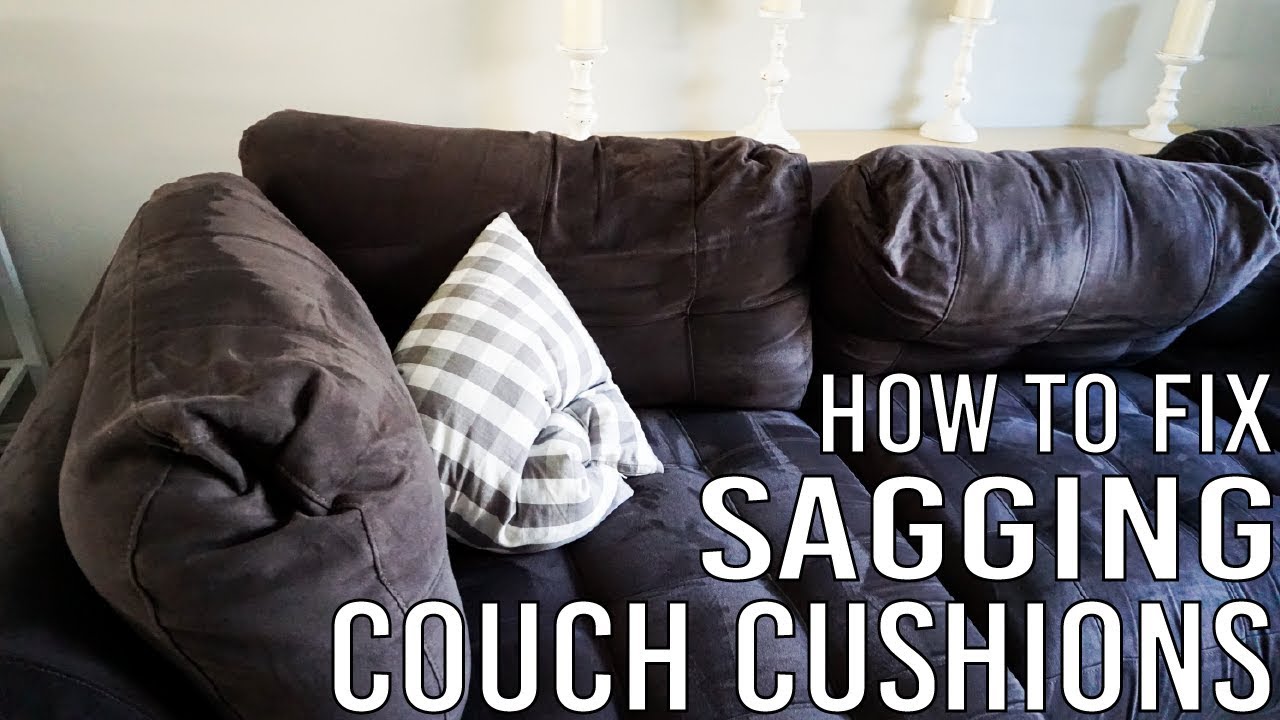
Side by side: old, crumbly foam versus a fresh high-density replacement.
Image source: youtube.com
Batting, Fiber, And Down: Choosing The Filling
The right filling depends on the feel you want and how much upkeep you’re willing to do.
Polyester batting is the most common choice. It’s cheap, easy to work with, and holds its shape reasonably well in cushions that get daily use. Over time, it compresses, but replacing it is quick and inexpensive.
Cotton batting breathes well and feels natural, but it flattens faster than polyester. Save it for light-use cushions or decorative seating.
Down and feather fills feel luxurious and mold to your body, but they need frequent fluffing to keep their shape, and they can trigger allergies. If you or your family are sensitive to feather dust, down-filled cushions can aggravate allergies overnight — a polyester or down-alternative fill is the safer choice.
Down-alternative fiber gives you that soft, cloud-like feel without the allergy risk. It’s a strong choice for living-room sofas where people take naps.
For most DIY repairs, replace old batting with new polyester batting and keep the existing foam core if it still springs back. Reserve down and fiber fills for cushions that started with them.
Preventing Future Lumps (So You Never Repeat This Fix)
Small habits keep cushions looking and feeling new. The goal is to spread out wear before it settles into one spot.
Rotate and flip weekly. In a busy family room, rotate cushions every week or two. Mark one corner with a fabric pen so you can track which side is up.
Sit in different spots. It’s natural to favor one end of the couch, but that’s exactly how permanent dents form. Shift your seating position now and then.
Avoid perching on the front edge. Edge-sitting concentrates all your weight on the front rail and crushes the front of the cushion. Sit back, with your weight spread across the full seat.
Vacuum the cushions monthly. Use the upholstery attachment to pull up dust, crumbs, and pet hair. Removing that grit keeps it from grinding into the foam fibers. It’s also part of keeping a cleaner, calmer room for relaxation and sleep.
Use washable covers. Fabric protects the cushion inside. Machine-washable couch cushion covers act as washable protective layers — the same idea as using a mattress protector, but for your sofa.
Check the base every few months. Lift the cushions and press on the webbing or springs. If the deck sags, tighten the webbing or replace it before it ruins your fresh cushions.
Fluff down and fiber cushions seasonally. Give them a good beating outdoors and redistribute the filling by hand so it doesn’t settle permanently.

Regular rotation spreads wear evenly and delays new lumps.
Image source: farmhouse1820.com
Tools And Materials Checklist
You don’t need a full upholstery shop to rebuild a cushion. Most of these tools cost little, and the total investment is far less than replacing a set of cushion inserts.
| Job | Tool Or Material |
|---|---|
| Opening covers | Seam ripper, small sharp scissors |
| Re-closing covers | Upholstery needle, strong thread, or a zipper repair kit |
| Cutting foam | Serrated bread knife or electric carving knife, marker, measuring tape |
| Wrapping foam | Polyester batting, spray adhesive |
| Reinforcing the base | Plywood, furniture webbing, staple gun, staples |
| Refreshing fiber fill | Fresh polyester fiber, gloves |
A quality new piece of foam and batting will often cost less than a single replacement cushion — and you get to keep your original cover, which usually fits better than a new one.
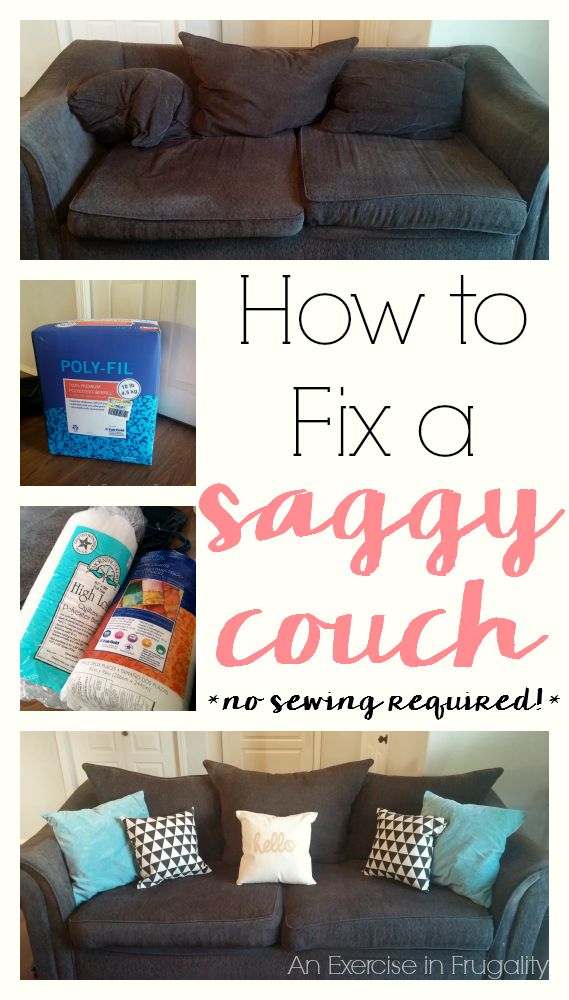
A basic upholstery kit costs far less than replacing the cushions.
Image source: centromedicoloira.com
Couch Repair Bench Notes: What Actually Works
After repairing dozens of cushions, a few lessons stand out.
Don’t replicate the original foam. If a cushion went lumpy in two years, the original foam was too soft or too low-density. Upgrade to a denser, firmer foam, and you’ll get years more life than the manufacturer gave you.
Always wrap the foam. Foam sliding around inside the cover is a common cause of lumpy cushions — and it’s an easy one to prevent with batting and a few sprays of adhesive.
Expect slightly loose covers. Years of lumps stretch the fabric. After you rebuild the cushion, the cover may not look factory-tight. If that bothers you, have the covers professionally tightened or reupholstered.
Know when to call a professional. If the frame is cracked, the springs are broken, or you’re not confident cutting foam and sewing seams, a professional can rebuild cushions quickly. In many cases, the labor cost is similar to buying new cushions — but with better materials.
Remember what the couch is for. If you nap on the sofa or sleep there overnight, a lumpy cushion isn’t just annoying. A sagging surface can worsen back pain at night, so fixing the seat is also a smart move for your sleep. Pair your refreshed couch with a calmer evening routine and you’ll feel the difference after the first night.
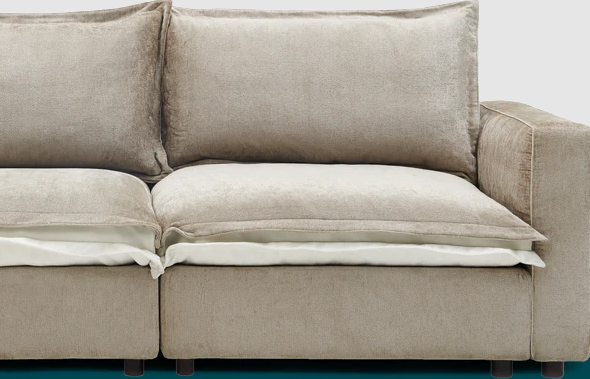
A rebuilt insert with fresh batting and foam looks and sits like new.
Image source: stayhomebody.com
Frequently Asked Questions
Why did my couch cushions go lumpy in less than a year?
Low-density foam, heavy daily use, and always sitting in the same spot are the usual culprits. Some budget sofas are built with foam that simply can’t handle daily use. Pet jumping and children bouncing accelerate the breakdown further.
Can I fix lumpy cushions without replacing the foam?
Yes, if the foam still springs back. Fluff the cushion, rotate it, add a batting wrap, or redistribute the filling — these often fix mild lumps. Replace the foam only when it is crumbly, permanently dimpled, or completely flat.
What foam density should I use for a couch seat?
Choose medium to high density, roughly 1.8 to 2.8 pounds per cubic foot, and pair it with an ILD in the 24–35 range for most adults. If the couch gets heavy use, choose the higher end of both ranges.
Is it worth reupholstering cushions instead of replacing them?
Reupholstering is worth it when the fabric is worn, torn, or badly faded. But if the foam inside is the problem, simply covering it with new fabric will not fix the lump. The most cost-effective path is replacing the filling and keeping the cover if it’s still in good shape.
How often should I rotate or flip couch cushions?
Every one to two weeks in a heavily used room. In a formal living room that sees little use, once a month is enough. Regular rotation evens out wear and dramatically reduces lumping over time.
Can I machine-wash cushion covers?
Check the care tag first. Many zippered cushion covers are machine-washable in cold water, but heat can shrink them, so air-dry whenever possible. Covers that are part of a cushion that can’t be unzipped should be spot-cleaned instead.
Conclusion
Lumpy couch cushions are almost always fixable. Start with the ten-minute fluff-and-rotate test — most cushions feel better immediately, and it tells you clearly whether the foam needs a deeper repair. If it does, the rebuild process takes an afternoon and costs less than replacing the cushions.
Small habits keep the problem from returning: rotate weekly, vacuum monthly, use washable covers, and check the base before it damages your fresh work. Try the quick fix today and see how much better your couch can feel. And if you’re ready to tackle the rest of your comfort setup, explore more home-comfort guides for mattress and sleep advice that picks up where the sofa leaves off.

Daniel Hart is a consumer product analyst who specializes in mattress technology, smart bedding, and home comfort innovation. Before joining Royal Comport, Daniel worked with several e-commerce research teams, testing and comparing sleep products for quality, value, and long-term performance. He brings data-driven insight and real-world testing to every review he writes.


