

You sink a little deeper every time you sit down. The cushion cover bunches, the seat tilts, and by the end of a movie your lower back is complaining. Before you price out a brand-new sofa, know this: most sagging couch cushions can be restored in an afternoon with simple materials and basic tools.
The fix is rarely a single magic trick. Sagging happens for a few different reasons, and the right repair depends on which one you have. Sometimes the foam inside has flattened. Sometimes the cover has stretched and lets the filling shift. Sometimes the frame underneath has quietly given up. This guide walks through all three cases and shows you how to fix sagging couch cushions so the seat feels firm, even, and comfortable again. If you often nod off on the sofa after dinner, a sagging seat also works against a better night's rest before you even reach the bedroom — so this repair is a small sleep upgrade too. For more on this, see our guide on how to fix attached couch cushions.
Why Couch Cushions Sag
Sagging is almost never sudden. It builds gradually as materials lose their spring. The fastest way to diagnose it is to take every cushion off the couch and set it side by side on the floor. Press the center of each one and watch how it bounces back. Then run your hand across the bare seat deck — the layer of slats, springs, or webbing underneath.
If the deck dips in the middle, the support structure is the problem. If the deck feels solid but the cushion stays flat, the problem is the cushion. In practice, most sagging cushions turn out to be tired foam, while the fabric and frame are still perfectly usable. For more on this, see our guide on how to fix lumpy couch cushions.
Check the Cushion Fillings
Three common fillings go flat in different ways:
- Polyurethane foam — the most common cushion core. It gradually compresses under years of weight, especially in the spot where you always sit.
- Polyester fiberfill — used in softer, budget cushions. It shifts and clumps, leaving thin patches and lumpy areas.
- Feather or down wrap — comfortable at first, but the feathers flatten and lose loft over time, leaving a pancaked cushion.
Press your palm into the center of the cushion. If the indentation stays visible for a second or two, the foam has lost its resilience. If you can feel a clump on one side and a hollow spot on the other, the filling has shifted and needs redistribution.
Inspect the Cushion Covers
A cushion cover does more than look good — it holds the filling in place. When a cover stretches out, the foam inside is free to slide around, which makes sagging worse. For more on this, see our guide on how to clean couch cushions from pee.
Open the zipper if there is one. Is the cover baggy around the foam? Are the seams strained or split? Has the fabric lost its shape entirely? A cover that no longer fits tightly needs to be tightened, replaced, or at least filled out with extra padding. Fixing the cover alone often removes 30 to 50 percent of the visible sag because the cushion suddenly looks structured again.
Assess the Frame and Seat Deck
Take the cushions off and push down on the seat deck. Listen for creaks and feel for weak spots. Common issues include:
- Cracked or loose wooden slats
- Webbing that has stretched like old elastic
- Coil springs that are bent, broken, or poking through the fabric
- A frame that flexes or bows in the middle
If the frame is damaged, new foam will not help — the cushion will just sag all over again within weeks. A cushion that tilts your hips can also aggravate support-related back trouble just like a mattress that has lost its firmness, so it is worth fixing the real cause rather than masking it. For more on this, see our guide on how to clean feather couch cushions.

The same couch, with the flattened cushions rebuilt instead of replaced.
Credit: thistlewoodfarms.com
How to Fix Sagging Cushions Step by Step
Once you know what is causing the sag, pick the repair that matches it. These methods go from cheapest to most involved, and most of them take under an hour.
Quick Fix: Fluff, Flip, and Rotate
This works best when the foam is only slightly tired, not completely flattened.
- Unzip the cover if possible and remove the foam or fiberfill core.
- Knead, punch, and pull the filling apart so it redistributes evenly.
- Leave the cushion to rest for an hour so the foam can recover its shape.
- Flip the cushion over and rotate it end to end before putting the cover back on.
Make this a habit. Fluffing weekly and rotating every one to three months prevents the same spot from absorbing all the weight. For more on this, see our guide on how to stop couch cushions from sliding.
Add a Foam Insert
If the original foam is still intact but has lost height, a new layer of foam can give it a second life.
- Measure the inside of the cushion cover — length, width, and depth.
- Buy a piece of high-density furniture foam slightly taller than the existing core, usually 4 to 5 inches thick.
- Cut it to size with an electric knife or a long serrated bread knife. Cut the top edges at a slight angle so the cushion looks soft rather than boxy.
- Wrap the foam in a layer of batting to keep it from rubbing against the fabric.
- Slide the new layer in above the old core, or replace the old core entirely if it crumbles.
This is the most reliable DIY fix for cushions that have lost their bounce. A firmer foundation restores the seat height and keeps you from sinking into the frame.

A high-density foam insert restores the lift the original core lost.
Credit: www.instructables.com
Restore a Thin or Clumped Cushion With Fiberfill
For cushions filled with polyester fiberfill, the fix is a refresh rather than a rebuild.
Open a seam with a seam ripper, pull out the clumped filling, and add several handfuls of fresh polyester fiberfill. Distribute it evenly around the corners and middle, then close the seam with a slipstitch so the opening disappears. This same technique works for a cushion with a foam core that feels rough against the fabric — wrap the foam in a sheet of batting before closing the cover.
A common mistake is overstuffing. The cushion should be full but still soft enough to sit comfortably. Add filling gradually and test the feel before sewing the seam completely shut.
Strengthen the Seat Deck With a Support Board
If the frame structure is sound but the seat deck sags slightly, a support board can add a flat, firm base under the cushions.
- Cut a piece of 1/2- to 3/4-inch plywood to fit inside the frame, resting on the springs, webbing, or slats.
- Sand the edges smooth so they do not tear the fabric.
- Cover the board with felt or fleece to prevent rubbing and noise.
- Lay it in place and put the cushions back on top.
Some important cautions: do not cover air vents or mechanisms, and do not use this trick on recliners or sofas with moving parts. A board that interferes with the mechanism can cause expensive damage.
When Replacing the Cushion Core Is Worth It
Not every cushion can be revived. Replace the core if:
- The foam crumbles when you press it
- A permanent crease has formed across the middle
- The sag returns within a few weeks of fluffing
- One corner is noticeably lower and no amount of padding fixes it
Replacing the core is more work, but it gives you a cushion that feels genuinely new.
Choose the Right Foam
Cushion foam is sold by density and firmness, and both numbers matter.
Density is the weight of the foam per cubic foot, and it determines durability. Higher-density foam holds its resilience much longer. Firmness is measured by ILD — indentation load deflection — and it determines how soft or hard the cushion feels. Most suppliers describe a comfortable middle ground for seats as foam in the 24 to 35 ILD range, and a denser foam in that firmness range usually outlasts a soft, low-density one. A reputable foam seller can tell you both numbers — ask for them before buying.
The same material logic that explains how mattress materials are built applies to sofa cushions: durability starts with the foam core, not the cover fabric. Suppliers in the U.S. commonly rate foam using test methods developed by ASTM International, so a product that discloses density and ILD is a more trustworthy purchase than an unlabeled block. Also check that the foam is labeled for use in upholstered furniture, which means it meets the flammability requirements overseen by the U.S. Consumer Product Safety Commission.
Memory foam is worth a mention. It feels supportive and molds to your body, but it sleeps warm and sinks slowly. That can feel amazing in a mattress but sluggish in a living-room seat. For most couches, a high-density polyurethane foam is the more practical choice.
Refit the Cover So the Cushion Holds Its Shape
A new core inside a baggy cover still looks saggy. After replacing the filling, check the fit:
- The zipper should close with a little resistance, not easily
- The seams should lie flat with no gaping
- Corners should be square, not rounded and empty
If the cover is simply stretched, take it in by sewing along the sides. If a seam has split, reinforce it with small, tight stitches in a matching thread. A cover that fits firmly is what keeps the filling from shifting and makes the cushion hold its shape for years.
Preventing Future Sagging
A repaired cushion will last much longer if you change how the couch is used and maintained. Prevention takes minutes and costs nothing.
Build a Simple Maintenance Routine
- Fluff cushions every week when you vacuum the room
- Rotate them every one to three months so wear is spread evenly
- Spot-clean spills immediately so moisture never reaches the foam
- Vacuum the cushions and crevices regularly to remove grit that grinds into the fibers
Think of the couch as part of your relaxation space. Even for a short nap, the role your surroundings play in sleep quality matters, and a lopsided cushion is an easy problem to fix before it becomes a permanent one.
Avoid Excessive Weight
The most common cause of sagging is repeated pressure on the same spot. Sit in the center of the cushion rather than always on the edge. Avoid using the armrests as seats. Ask kids not to jump on the furniture. If the couch gets daily use by heavier adults, look for replacement foam and frame options with support built for heavier loads, since standard budget cushions are not designed for that kind of repeated stress.
Buy Durable Materials From the Start
When you buy a new couch or replacement cushions, choose materials that resist sagging:
- High-density foam cores rather than soft, low-density foam
- Zippered covers so you can refresh the filling later
- Feather-and-foam combinations that use a firm core with a soft top layer
- Tight, reinforced seams and sturdy fabrics
These choices cost a little more up front, but they delay the next repair by years.
When to Call a Professional
Some problems are too big for foam and plywood. If the couch frame is damaged, a professional repair is safer and more economical in the long run than a series of quick fixes.
Signs of Structural Damage
- Loud creaks or cracks when you sit down
- A visible split in the wooden frame
- The couch wobbles or feels unstable
- Springs are broken, bent, or poking through the fabric
- The same sag returns immediately after the cushions are repaired
If you see any of these, stop using the couch until it is inspected. A broken spring can puncture fabric, and a cracked frame can fail suddenly under load.
Reupholstery vs. Replacement
Reupholstery is worth it when the frame is solid but the cushions and fabric are worn. A professional can replace the foam, rebuild the springs, and re-cover the whole piece. The result often looks and feels better than a similar new couch at a fraction of the price.
Before you spend thousands on a replacement sofa, compare it with what quality sleep support costs in a new bed. If your couch has good bones — hardwood frame, solid joinery, comfortable proportions — reupholstery usually wins on both cost and waste. If the frame is cheap, the cushions are too far gone, or the couch is simply uncomfortable by design, replacement is the smarter call.
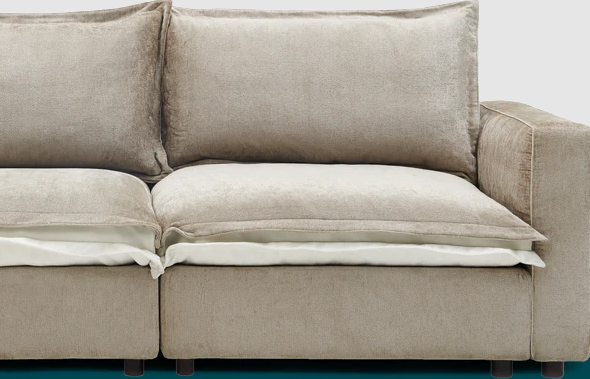
When the frame below the foam is damaged, new cushions alone will not solve the sag.
Credit: stayhomebody.com
Frequently Asked Questions
How do I fix sagging couch cushions quickly?
For a fast fix, remove the cushions, fluff them thoroughly, and flip them over. Rotating the cushions end to end redistributes the wear immediately. For a more lasting result, add a high-density foam insert or a support board under the cushions. The quickest visible improvement comes from refitting or tightening the cushion cover, since a baggy cover makes even good foam look saggy.
What is the best material to replace sagging couch cushion foam?
High-density polyurethane foam is the most practical choice for most couches. It holds its shape, resists compression, and is widely available at fabric and upholstery supply stores. Look for foam that lists its density and ILD so you know what you are buying. Avoid the cheapest foam on the shelf — low-density blocks flatten quickly and you will be repairing the same cushion again within a year.
Can I put plywood under my couch cushions?
Yes, on the right couch. A 1/2- to 3/4-inch sheet of plywood cut to fit the seat deck creates a firm, flat base that prevents cushions from sinking into worn springs or webbing. Sand the edges and wrap them in felt so they do not damage the fabric. Do not use this method on recliners, sleeper sofas, or any frame with moving parts, because the board can block the mechanism.
How often should I rotate couch cushions?
Rotate cushions every one to three months, depending on how often the couch is used. A couch that gets daily use should be rotated monthly. Fluffing the cushions weekly also helps redistribute the filling and slows uneven wear. The goal is to keep one spot from absorbing all the weight for months at a time.
Should I replace the couch or repair the cushions?
Repair the cushions if the frame and fabric are in good condition and the total repair cost is far below a new couch. Replace the couch if the frame is cracked or wobbly, the springs are failing, or the overall shape is uncomfortable. A good rule: if the couch has a solid, heavy frame, it is usually worth repairing. If it is lightweight, inexpensive, and several parts are failing at once, replacement is the better value.
Conclusion
A sagging couch does not mean the sofa is finished. In most cases, the fix is simple: identify whether the problem is the filling, the cover, or the frame, then match the repair to the cause. Fluff and rotate first, add a foam insert or fiberfill if the cushion has flattened, and use a support board when the seat deck needs help.
Regular maintenance keeps thosecushions feeling firm and comfortable for years. A little effort now saves you from buying a new couch, keeps your living room looking its best, and makes every seat as comfortable as the day you brought it home.
Try one of these fixes today. Your couch — and your back — will thank you.

Daniel Hart is a consumer product analyst who specializes in mattress technology, smart bedding, and home comfort innovation. Before joining Royal Comport, Daniel worked with several e-commerce research teams, testing and comparing sleep products for quality, value, and long-term performance. He brings data-driven insight and real-world testing to every review he writes.


