

Outdoor cushions turn a simple patio set into a cozy retreat. But nothing kills that comfort faster than discovering black spots spreading across your favorite seat. Mold on outdoor cushions is more than an eyesore—it can trigger allergies, create musty odors, and shorten the life of your furniture.
The good news? Mold is entirely preventable. With the right fabrics, smart habits, and a few simple products, you can keep your cushions fresh through rain, humidity, and everything in between. This guide walks through exactly how to protect your investment, season after season. For more on this, see our guide on how to keep outdoor cushions from sliding.

Patio cushions face constant exposure to moisture, making mold prevention an ongoing task.
Credit: www.parkwaydrycleaning.com
Why Mold Grows on Outdoor Cushions
Understanding mold means understanding what it needs to survive: moisture, organic food, and warmth. Outdoor cushions provide all three in abundance.
Moisture and Humidity
Moisture is the primary trigger. Rain, morning dew, sprinkler overspray, and spilled drinks all soak into cushion fabric. High humidity compounds the problem by slowing evaporation, keeping cushions damp long after the sun comes out. When water sits trapped inside foam and fabric, mold spores—which are always floating in the air—find a perfect home. For more on this, see our guide on how to keep outdoor cushions clean.
Dirt and Organic Debris
Mold doesn't just grow on fabric; it feeds on what's on the fabric. Pollen, leaf fragments, bird droppings, and food crumbs create a nutrient-rich film that mold loves. A cushion that looks clean but hasn't been wiped down in weeks is already carrying invisible food for spores.
Lack of Airflow and Sunlight
Mold thrives in shade. Cushions pressed flat against furniture retain moisture in their seams and zippers. Covered patios and areas under trees stay cooler and damper, giving mold more time to establish itself. Sunlight is nature's mold killer—it dries fabric and produces UV light that damages spores.
The Health Risks You Shouldn't Ignore
Mold on outdoor cushions isn't just a cleaning nuisance. When spores become airborne, they can be inhaled, especially when cushions are moved or shaken. For people with asthma, allergies, or weakened immune systems, exposure can cause itchy eyes, sneezing, congestion, and respiratory irritation. Indoor air quality matters too—bringing a moldy cushion inside distributes spores throughout your home. This is particularly relevant for those already managing allergies and sleep disruptions, since breathing in allergens at night can disturb rest.
If you notice a musty smell in your living space or find yourself congested after spending time on your patio, moldy cushions may be the culprit. Addressing the source protects both your furniture and your wellbeing.
Choosing Mold-Resistant Cushions from the Start
The best mold prevention begins before you ever bring a cushion home. Selecting the right materials makes maintenance dramatically easier.
Best Fabrics for Mold Resistance
| Fabric | Mold Resistance | Breathability | Durability |
|---|---|---|---|
| Acrylic | Excellent | High | Very good |
| Polyester | Good | Moderate | Good |
| Olefin | Excellent | High | Excellent |
| Cotton | Poor | High | Low |
| Canvas | Poor | Moderate | Low |
Solution-dyed acrylic is the gold standard. The color is added during manufacturing, which makes it fade-resistant and naturally water-repellent. It dries quickly and breathes well, reducing trapped moisture.
Olefin is another strong contender. It's tough, lightweight, and mildew-resistant by nature. Many outdoor furniture brands use it for budget-friendly options that still perform well.
Cotton and canvas should be avoided for uncovered outdoor use. They absorb water readily and hold it against the foam, creating ideal mold conditions.
Cushion Construction Matters
Look beyond the outer fabric. The filling plays a critical role in how quickly a cushion dries:
- Open-cell foam absorbs water easily and takes days to dry. Avoid for permanent outdoor use.
- Closed-cell foam repels water and dries in hours. Ideal for outdoor cushions.
- Quick-dry foam features a specialized structure that drains water rapidly—a premium option worth the cost.
- Removable, washable covers allow you to clean the fabric without soaking the foam inside.
Some cushions also feature mesh panels or vent holes that promote airflow. If you're buying new, seek these design elements. They're small details with outsized impact on mold prevention.
Check for Built-in Treatments
Many outdoor fabrics now come with antimicrobial or anti-microbial treatments applied during manufacturing. These additives inhibit mold and mildew growth at the surface level. While they lose effectiveness over time, they provide a solid first line of defense during the first few seasons. Ask your retailer about treatment options, and check product labels for terms like "mold-inhibiting" or "mildew-resistant."
Smart Waterproofing and Protection
Even quality fabrics benefit from an extra layer of protection. Waterproofing sprays create a barrier that makes water bead up and roll off rather than soaking in.
Choosing a Fabric Protector
Look for spray-on waterproofing products designed specifically for outdoor fabrics. These are typically silicone-based or fluoropolymer-based formulas that bond with the fabric fibers without stiffening them. The best options also include UV inhibitors to slow fading.
Application Tips That Work
- Clean cushions thoroughly before applying any protector—dirt prevents proper bonding.
- Apply on a dry, warm day with good airflow.
- Hold the spray about 6-8 inches from the fabric.
- Apply two light coats rather than one heavy coat.
- Allow 24 hours of drying before exposing cushions to moisture.
- Reapply every 2-3 months, or after heavy rain, frequent use, or cleaning.
In practice, a common mistake is applying waterproofing once and forgetting about it. Reapplication is the step most people skip—and it's the difference between year-round protection and a false sense of security.
Proper Cushion Storage Techniques
When cushions aren't in use, they're vulnerable. How you store them determines whether mold gets a foothold.
Always Dry Before Storing
This rule cannot be overstated: never store wet or damp cushions. A damp cushion sealed in a container creates a miniature greenhouse for mold. After rain or cleaning, let cushions dry fully on all sides, including seams, zippers, and the underside. In humid conditions, this might take 24-48 hours indoors with a fan.
Choose Breathable Storage
Storage containers must balance protection from the elements with airflow:
- Breathable storage bags made specifically for cushions allow moisture to escape while keeping out dust and pests.
- Plastic bins with drilled ventilation holes work well in dry climates.
- Avoid sealed plastic bags—they trap condensation and guarantee trouble.
Find the Right Location
A cool, dry place is ideal. Options, ranked best to worst:
- Indoor closet or spare room—optimal temperature and humidity control
- Ventilated garden shed—good airflow, away from damp floors
- Garage on shelves—raised off concrete, which sweats moisture
- Covered patio with breathable covers—acceptable for short periods only
- Damp basement or unventilated garage—worst option, creates guaranteed mold
If you must store cushions in a garage, keep them on shelves or pallets. Off the ground is non-negotiable, as concrete absorbs and releases moisture.

Proper storage keeps cushions dry and protected between uses.
Credit: fj-outdoors.com
Regular Cleaning Practices
Cleaning isn't just about appearance—it's a key mold prevention strategy. Dirt removal eliminates the organic matter mold needs to survive.
How Often to Clean
Frequency depends on your climate and usage:
- Wet seasons or coastal climates: every 2 weeks
- Average summer use: once a month
- Daily use or heavy pollen: every 1-2 weeks
- After any storm or heavy rain: immediate spot cleaning
A good rule of thumb: if you can see visible dirt or the fabric feels rough to the touch, it's time to clean.
Step-by-Step Cleaning Method
- Brush off loose debris with a stiff brush or broom.
- Mix a mild solution of warm water and a small amount of gentle dish soap or specialized outdoor fabric cleaner.
- Test a hidden spot first to check colorfastness.
- Scrub gently with a soft-bristled brush, working in circular motions.
- Rinse thoroughly with a hose, ensuring all soap residue is gone—residue attracts dirt.
- Remove excess water with a squeegee or towel.
- Dry completely in sunlight before returning cushions to furniture.
For stubborn stains, add white vinegar to the cleaning solution—about one part vinegar to three parts water. Vinegar is naturally antifungal and safe for most outdoor fabrics.
What Not to Do
- Don't use bleach—it damages synthetic fibers and fades colors.
- Don't use pressure washers—they can shred fabric and force water into foam.
- Don't machine wash outdoor cushions unless the label explicitly permits it.
- Don't ignore the zippers—dirt accumulates there and holds moisture against the foam.
Preventive Maintenance That Stops Mold Before It Starts
Small, consistent habits prevent major mold problems. Build these into your patio routine:
Air Them Out Weekly
Mold forms in stillness. On dry, sunny days, flip cushions upright and stand them on edge for a few hours. This promotes airflow around all surfaces and lets any trapped moisture escape. Think of it as "airing" your bed linens—the same principle applies.
Shake and Brush After Storms
After rain, don't just leave cushions to dry. Use your hand or a brush to push pooled water off the surface. Tilt cushions at an angle so water runs off rather than soaking in. The faster water leaves, the less time mold has to establish.
Rotate Cushions Regularly
Just like a mattress, cushions benefit from rotation. Flip and swap positions monthly so sunlight and airflow hit all areas evenly. The Environmental Protection Agency (EPA) recommends regular cleaning and moisture control as key mold prevention strategies—applying that principle to your cushions keeps them fresh longer. You can find more on their mold prevention guidance at epa.gov.
Use Protective Covers
Cushion covers come in two types: fitted covers for individual cushions and furniture-sized covers for whole sets. Choose:
- Water-resistant materials with taped seams
- Breathable fabrics that release trapped moisture
- Covers with tie-downs to stay secure in wind
Wash covers monthly according to manufacturer instructions. A dirty cover transfers grime directly onto clean cushions.
Seasonal Maintenance Checklist
| Season | Action |
|---|---|
| Spring | First thorough clean, apply waterproofing, inspect for winter damage |
| Summer | Monthly cleanings, spot-treat spills immediately, rotate cushions |
| Autumn | Deep clean, dry completely, apply fresh waterproofing |
| Winter | Store indoors or in breathable covers, inspect monthly if accessible |
What to Do When Mold Appears
Even with proper prevention, mold can occasionally take hold—especially after an unexpected downpour or a busy week without maintenance. Act fast.
DIY Mold Removal
For surface mold, white vinegar is effective and fabric-safe:
- Mix equal parts white vinegar and water in a spray bottle.
- Spray the affected area generously.
- Let sit for 10-15 minutes—this kills the mold spores.
- Scrub gently with a soft brush.
- Rinse thoroughly and dry in direct sunlight.
Baking soda provides another option. Sprinkle it directly on damp mold spots, let sit for 15 minutes, then brush off and rinse.
When to Use Commercial Products
Over-the-counter mold removers formulated for outdoor fabrics are effective for stubborn growth. Look for products with quaternary ammonium compounds, which are common in mildew cleaners. Always:
- Read and follow label instructions
- Test in an inconspicuous area first
- Wear gloves and work in ventilated spaces
- Rinse completely after treatment
When to Replace Cushions
Not every cushion is salvageable. Replace cushions if:
- Mold has penetrated into the foam core—you'll smell it even after cleaning
- The foam has crumbled or deteriorated
- Stains persist after multiple cleaning attempts
- You or family members experience allergic reactions when near the cushions
In these cases, replacement is the healthier—and ultimately more economical—choice. When buying new, prioritize quick-dry foam and solution-dyed acrylic as recommended above.
Frequently Asked Questions
How can I keep outdoor cushions mold-free?
Keep cushions dry, clean them monthly, and store them in breathable containers when not in use. Apply waterproofing spray every 2-3 months and allow cushions to air out in sunlight weekly. Address any dampness or spills immediately rather than letting moisture sit.
What cleaning solution prevents mold on cushions?
A mixture of warm water and mild dish soap removes dirt that feeds mold. For prevention, a solution of one part white vinegar to three parts water acts as a natural mold deterrent. Commercial outdoor fabric cleaners work well for deeper cleaning.
How often should I clean outdoor cushions?
During humid or rainy seasons, clean every 2 weeks. During normal summer conditions, monthly cleaning suffices. Always clean after major weather events and before storing cushions for the season.
Does sunlight really prevent mold?
Yes. Sunlight dries moisture quickly, and UV rays damage mold spores. Regular exposure to sunlight is one of the simplest, most effective mold prevention methods. Just be mindful of fabric fading—most quality outdoor fabrics include UV inhibitors to minimize this.
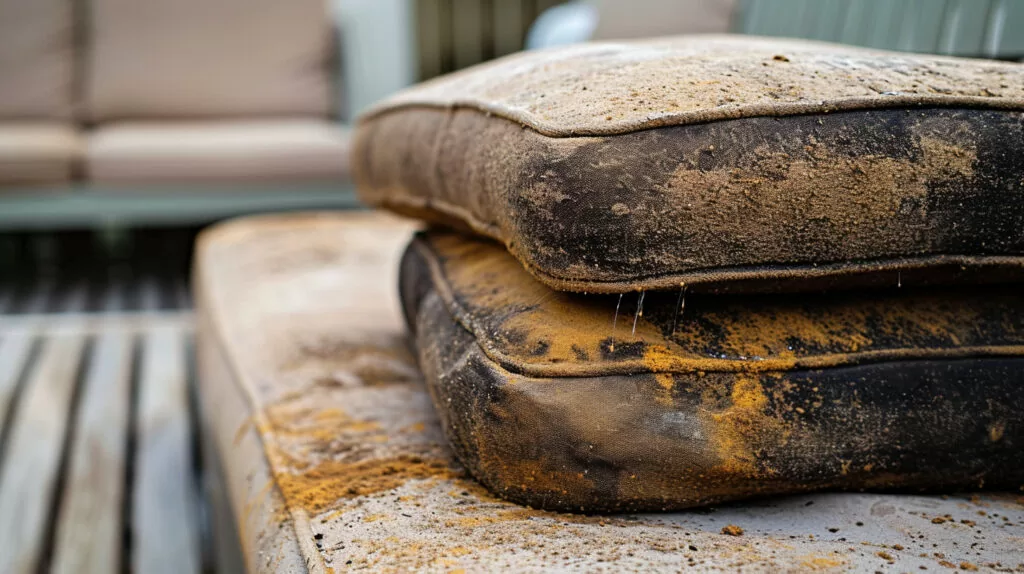
Removing existing mold promptly prevents it from spreading deeper into cushion fabric.
Credit: www.patioproductions.com
Final Thoughts
Preventing mold on outdoor cushions isn't complicated—it's consistent. The winning formula combines smart material choices, regular cleaning, proper storage, and swift action when problems appear.
Start by evaluating your current cushions. Are they made from absorbent fabrics? Do they dry slowly after rain? Consider upgrading to solution-dyed acrylic with quick-dry foam for future purchases. Then build a simple weekly routine: inspect, shake out, allow to air. Add monthly cleanings and seasonal waterproofing applications.
The small investment of time pays off in cushions that look great, smell fresh, and last for years. Your patio becomes a place to relax without worrying about what's growing in the cushions. That peace of mind is worth every minute of maintenance.
For more tips on making your home a healthier, more comfortable place, explore our blog for practical advice on improving your living environment.

Daniel Hart is a consumer product analyst who specializes in mattress technology, smart bedding, and home comfort innovation. Before joining Royal Comport, Daniel worked with several e-commerce research teams, testing and comparing sleep products for quality, value, and long-term performance. He brings data-driven insight and real-world testing to every review he writes.


