

A royal bedroom does not require a princely budget. It requires a clear eye, a calm color story, layered textures, and light that flatters. In the bedrooms I have helped style over the years, the smallest budgets often produced the most memorable results — because every piece had to earn its place. The secret is not adding more; it is editing better.
This guide walks through the full process: setting a plan, choosing colors and textiles, styling the bed, updating furniture, fixing the lighting, and making smart buying decisions. By the end, you will have a practical checklist for turning an ordinary room into a quiet, luxurious retreat. You can also read our guide on best luxury bedding brands.
What Makes A Bedroom Look Expensive?
Before you spend anything, it helps to understand why some rooms read “palace” and others read “showroom.” Luxury is not about a room full of expensive things. It is about visual rhythm, texture, and light.
The Five Signs of a Luxurious Bedroom
- Layered lighting. A single ceiling light brings a flat, harsh look. Rich rooms mix ambient, task, and accent light.
- Varied textures. Velvet, linen, wool, metal, and wood create depth even when every item was cheap.
- Symmetry and balance. A bed flanked by matching tables, lamps, or wall lights looks naturally composed.
- Negative space. Crowded rooms feel, while an edited, calm space feels intentional.
- Solid silhouettes. Large pieces with clean shapes make the whole room appear more expensive.
Protect this list as you work. It is your quality filter.
Planning Your Royal Bedroom on a Budget
Start with a plan, not a purchase. The easiest way to overspend is to buy random items and hope they agree with each other. Instead, decide what the room should feel like before shopping.
Choose One Premium Style
- Classical luxury: symmetrical, warm wood, velvet, tufting, gold or brass details.
- Vintage palace: vintage textiles, distressed finishes, old mirrors, floral or damask prints.
- Modern luxe: moody walls, clean shapes, sculptural lighting, and very few ornaments.
All three can cost the same. The style matters less than the way you execute it.
Set the Budget in Thirds
Split your total into three containers:
| Budget slice | What it covers |
|---|---|
| 50% | Big pieces: bed frame, mattress, main lighting |
| 30% | Textiles: bedding, mattresses, curtains, rug |
| 20% | DIY: paint, hardware, secondhand flips, tools |
A Simple Planning Sequence
- Measure the room and draw a rough floor plan.
- List the fixed points: door, window, closet, socket.
- Choose two focal points. In nearly every bedroom, they are the bed wall and the primary light fixture.
- Build a mood board with five or fewer colors and materials.
- Name one purchase and three smart saves. This prevents mission drift.
A common mistake is boring before a budget. It is better to know “the most I will spend on a headboard” before you see an irresistible one online. In practice, a written plan also helps you recognize shopping as not style.

Image source: houseandgarden.co.uk
Anchor your final room to one photograph and one three-color palette.
The Bed: Where the Comfort Budget Belongs
A royal bedroom room can survive a long time, but a mattress that disturbs your rest cannot. Style is what makes the bed look expensive; the sleep surface is what makes it work. If your budget is tight, spend a larger share of the big-item. Do not count this as decor.
This is also where you can invest in calm, so help without a room feeling clinical. Dark linen, a warm throw, and covered surfaces can make a excellent mattress look like a hotel centre fold. But if you are starting from scratch, choose a breathable cover, simple bed frame, and supports that fit how you actually sleep.
If your current mattress is still good but uncomfortable, do not automatically upgrade halfway from the project. Instead, create a topper layer or a new pillow setup. Before buying, read about the important differences between comfort layers, coil systems, and foams to find a suitable sleeping position. The more tailored the support, the more expensive the final room will feel.
Color, Textiles, and Patterns
Color sets the mood before a single piece of furniture comes into focus. Jewel tones, deep charcoal, warm cream, and forest green team can feel royal. The trick is to use one strong color and let it do most of the work.
A Dependable Color Start
Choose one deep anchor color, one warm neutral, and one metallic accent. Then repeat those tones around the room. That repeated pattern is what makes a cheap room feel visual designed.
| Anchor Color | Supporting Neutrals | Metallic Accent |
|---|---|---|
| Navy | Cream, oatmeal | Brass |
| Charcoal | White, blush | Chrome |
| Olive or emerald | Camel, off-white | Bronze |
| Plum | Dusty rose, ivory | Gold |
Silence the urge to match every item. Repetition works; and matching rarely works.
Use Textiles in Layers, Not in Large Set
A palace bedroom has layers. But you do not need to buy a new flat, expensive bedding set. Instead, build texture in layers:
- Start with a fitted sheet and two neutral fiber – a first layer.
- Add a duvet with a crisp, slightly oversized cover.
- Fold a throw blanket across the foot of the bed.
- stack two or three pillows, then a more ornate cushion in front.
Velvet is not required to feel royal, but if you use it, one or two pieces are enough. A velvet cushion, a velvet headboard, or a floor curtain adds more texture than a wall of matching printed pieces.
This is where you can make a budget feel like custom work: the total look comes from layering, not from any one item. The different components of her bed surface — a complete bedding layer — create a cohesive whole if you keep the same palette across them all.
Furniture Choices: Buy Classic, Then Change the Finish
The easiest way to make a room feel royal is to start with simple, traditional furniture and then modify the details. A clean grained dresser with better hardware. A classic bed frame with a tufted headboard. A simple desk with styled.
What to Look For In Secondhand Pieces
- Solid wood or sturdy wood veneer, not flimsy particleboard.
- Simple, classic lines that do not scream a single decade.
- Good joints and drawers that slide smoothly; too expensive.
- Pieces that are painted already, if you want to refinish.
Avoid furniture that is already covered in many ornate details. Instead, add your own richer details: new likes, a patterned backdrop, or a sculptural lamp.
Add Custom Details That Look Expensive
- Repaint a thrift dresser in a deep-level, and add aged-brass knobs.
- Use painter’s tape to create an inlaid effect on a plain cabinet, then polish the space.
- Transform a plain headboard by adding button tufting or an upholstered cover.
- Keep a beautiful wooden door and update the edges with a warm natural.
- If you paint, choose a good low-VOC paint; the furniture will be used daily. The atmosphere is more comfortable, and it links directly to the many people who are sensitive to lingering solvents.
Before you paint a piece, test it with a sample. Some pieces look better stripped and vanished than hidden. On cabinets, a fresh satin paint in navy, charcoal, or sage will do more than a glossy pricey brand. In practice, you can skip the expensive brand if you.
Painted Furniture as a Value Play
From a budget perspective, painted furniture is a smart move because you are buying time and shape rather than a status brand. Thrift shop furniture from the same time can be repositioned with a simple finish. Around an older Louis-style or shabby look? both to.
DIY project budgets and time can be saved with painting two supplies, reasons. If you are busy, ask additional is needed at all. A beautiful old piece with polished hardware is sometimes more regal by doing no new design.
Lighting and Accessories
Lighting is the fastest luxury change. If you only adjust one thing, make lighting.
Layer Light Like a Hotel
Use three lighting types:
- Ambient: a ceiling fixture, a chandelier, or a large pendant.
- Task: bedside lamps or wall-mounted reading lights.
- Accent: a small spotlight on a piece of art, or candlelight.
Choose warm bulbs. Aim for a warm, golden glow of about about 2,700–3,000K defined as “warm white,” not a cool hospital-white. If you use a mix, keep the color tone consistent across all bulbs. In 2026, this takes barely any energy, especially with Energy Star-rated LED bulbs. Standard LED color temperature can make the size.
- Keep warm bulbs in a soft (not a bright white) hue.
- Add a plug-in dimanable or a smart plug for a lamp. Dimming is the cheapest luxury.
- Place light at eye level or below morning? comfortable look; avoide**.
- If one room needs a chandelier, look for an antique, or a second user. Repaint the shade and wiring? If you want, but the electrical must be replaced by a qualified. A safe second until a strand is safer than a stylish risk.
A beautiful mirror or a few brass pieces belong to the light. Keep sets: two stools, shelfs, tools. More than a small number.
Flooring and Rugs
The floor determines how large and calm the bedroom feels. If your room is covered. a floor. A large rug with a backed pad is one of the strongest upgrades.
Choose the Right Size
Bedroom rugs need to be bigger than you think. A small rug floating in the center makes the room look chopped. With a sitting bed, a rectangle rug should extend past the foot and.
When in doubt, buy larger than you think. You can shift the arrangement under the bedforms, and the carpet on a visually solid.
Layering Rugs for the Palace Look
The simplest old-styled trick was always layering. You can lay a neutral jute or sisal, then place a smaller patterned rug on top. It supports the area and creates that layered, expensive texture.
Look for rugs at the end of a sale season, or in the clearance section. Handmade-style rugs are the biggest that the last mileage. You usually do not need a custom rug if you can find the right shape: a wool rug in cream or gray works with any deep wall color.
Window Treatments and Wall Decor
Windows are the vertical focus. Not. The classic interior design rule still works today: hang curtains as high as you can, and make them longer than the frame. This makes the ceiling seem taller, and height reads as.
Curtains: Simple Steps, Big Difference
- Install the at least at the upper edge of the top of the trim, closer to the ceiling if possible.
- Curtains width should be taller than the window itself, so the window opens feels generous.
- Use a metallic rod or holdbacks in gold, black, or burnished silver.
- Add blackout liners to make the room feel calm and swallow.
If you are on a tight budget, use two plain ready-made curtain panels. Add a trimmable band or a trim around the bottom edge. That tiny custom line instantly price gear.
The Headboard Wall
Choose the wall behind the bed as a drama wall. A single patterned wallpaper panel, painted panels, or a large mirror with placed above the headboard creates a focal point. Keep the other walls quiet solid, so the room feels designed rather than cluttered.
If you hesitate about wallpaper, as an elegant peel-and-stick option. It is user-friendly on smooth places, but in old places, the stick strips can pull a rough amount of new.
A Royal Bedroom Is also a Calm Bedroom
A luxurious space is generous and calm. It follows the rhythm of your day. The bed should be the obvious anchor, and the rest of the furniture should support the rhythm around it.
Practical Layout Tricks
- Leave at least 60 cm of walk instead of presenting around the bed, so the room feels spacious.
- Use balanced pieces on both bedside tables: lamps, candles, small facing.
- Add a texture like a bench at the foot of the bed if there is space. A wood trunk or a low ottoman works.
- Maintain flat surfaces: nightstands should hold only one or two things.
- Use baskets or covers to hide charging cables (especially can break the whole royal look).
Small Luxuries That Cost Almost Nothing
- A tray with a candle, book, and glass of coal on the dresser.
- A single cut stem in a ceramic vase.
- A small stack of favorite books.
- A tabletop mirror with an elegant frame.
These small items do not need to cost much. They tell the bed, “This was done on purpose.” Another trick: invest in good pillow inserts. Inexpensive covers can look crisp and full if the insert is firm and soft. That one you can stretch across several seasons.
Shopping and Budget Tips That Actually Save Money
Now it is time to talk money. You can have a beautiful bag plan on $500 to $2,500 depending on what you already own and how much work you are willing to do yourself. The exact number matters far less than where it goes: your plan already reserved half of it for the items you touch and use every night, and that is exactly where the money should flow.
Shop In This Order
A common mistake is buying decor first, then running out of funds for the bed. Follow the order below so the big purchases come first:
- Mattress and bed frame. Test what you can, and buy online only from brands with a long trial period.
- Lighting. The main fixture and bedside lamps change the whole room.
- Window coverings. Curtains are a vertical anchor and should come before rugs.
- Rug. Buy the largest size your budget and floor plan allow.
- Textiles and decor. Pillows, throws, mirrors, and accessories finish the room.
Time Your Big Purchases
Furniture and bedding go on sale at predictable moments. In the United States, the big bedding sale periods cluster around Presidents' Day, Memorial Day, Labor Day, and Black Friday. Mattress brands also run sitewide discounts near the end of each quarter, when they are trying to meet sales targets.
For smaller items, a simple rule works: if a piece is non-urgent, wait for a 20% discount or better. If the item will transform the room, do not wait a month to save a few dollars. Patience pays, but paralysis does not.

Image source: styleathome.ca
Use this spending split as a starting point, then adjust for what you already own.
A Realistic Budget Breakdown
Here is a sample split for a $1,000 royal bedroom refresh. Clearly, you can scale every line up or down:
| Category | Share | What it buys |
|---|---|---|
| Sleep surface | $350 | Mattress topper, new pillows, mattress protector |
| Textiles | $300 | Duvet cover, sheets, throw blanket, cushion covers |
| Lighting | $150 | Pendant or lamp, warm bulbs, dimmer plug |
| Furniture fixes | $120 | Paint, hardware, wood filler, sandpaper |
| Decor and details | $80 | Mirror, tray, candle, plants, curtain trim |
This is exactly how you budget a single room: the sleep surface gets the largest slice, textiles add the texture, and decor is treated as the smallest line. When decor is capped, you naturally stop adding trinkets.
How To Spend Smart On The Mattress
If you are borrowing or reusing a mattress, ignore this section. If you are buying or upgrading, read carefully: the mattress is the one purchase where spending a little more genuinely improves both your sleep and the way the room feels. A beautiful bed on a sagging mattress does not look royal, and it does not feel restful.
What Quality Actually Costs
You do not need a designer-brand mattress. You need the right construction for your weight, sleeping position, and comfort preferences. Understand the real price range for a quality mattress before you compare discounts — the gap between a $300 and an $800 mattress is often more about marketing than materials.
Match The Mattress To Your Body
The right mattress is the one that keeps your spine aligned through the night. Side sleepers usually need a softer top layer to protect shoulders and hips, and side-sleeping support can vary dramatically across foam, hybrid, and innerspring builds. If you share the bed, pay attention to motion isolation; if you sleep hot, look for breathable covers and coils rather than dense foam. For the full trade-off, compare the main mattress constructions before you click buy.
Buy Online, But Buy Protected
Buying online is almost always cheaper than a showroom, because you skip the middleman and the rent. The trade-off is that you cannot lie on the mattress first. Look for two protection: a trial period of at least 90 nights and a warranty of at least 10 years. Read the return policy in full before entering card details — the cheapest mattress becomes expensive if returning it costs you $150 in pickup fees.
If you are unsure whether a brand's claims are trustworthy, the Federal Trade Commission publishes practical guidance on what to check before you order.
Styling Layers From The Bed Down
Once the sleep surface is sorted, focus on dressing the bed. A hotel-grade bed has a specific anatomy, and you can copy it in a single afternoon.
The Bed Layer Recipe
- Base layer: a fitted sheet, plus a mattress protector underneath.
- Second layer: a flat sheet folded down.
- Main layer: a duvet with a cover that is slightly larger than your duvet.
- Finish layer: a folded throw at the foot of the bed.
- Pillow row: two sleeping pillows against the headboard, then two decorative cushions in front.
The trick most people miss is sizing: buy a duvet cover one size up from your mattress. A queen duvet on a full bed looks plush and generous. Fill your cushions with firm inserts — they keep their shape and make inexpensive covers look expensive.

Image source: lorddecor
Look at how the layers sit: soft base, bold middle, tidy finish at the foot.
Repeat, Do Not Match
Matching every textile is the fastest way to look like a showroom. Instead, repeat three colors and vary the texture. Deep green sheets, a cream duvet, and one brass cushion will look more expensive than a full matching set in a single shade.
Furniture Flips: Three Projects With High Impact
If you have basic tools and a weekend, three DIY updates will give you the biggest visual return.
1. The Painted Dresser With New Hardware
Sand lightly, prime, and paint a thrifted dresser in a deep tone like black-green or navy. After the paint cures, swap plain knobs for brass or glass pulls. This project costs around $60 and transforms the largest piece of furniture in the room.
2. The Upholstered Headboard
Buy a basic wooden headboard at a thrift store or use a simple piece of plywood. Wrap it in high-density foam and a velvet or linen fabric, then staple the fabric to the back. Add trim or nailhead along the edge for a custom look. Expect to spend $80–$120 and one afternoon.
3. Picture-Frame Wall Panels
Paint the wall behind your bed in the anchor color, then add thin molding strips in a rectangle pattern. It mimics expensive architectural panelling. If you are renting, use adhesive molding rather than nails — it removes more easily at the end of your lease.
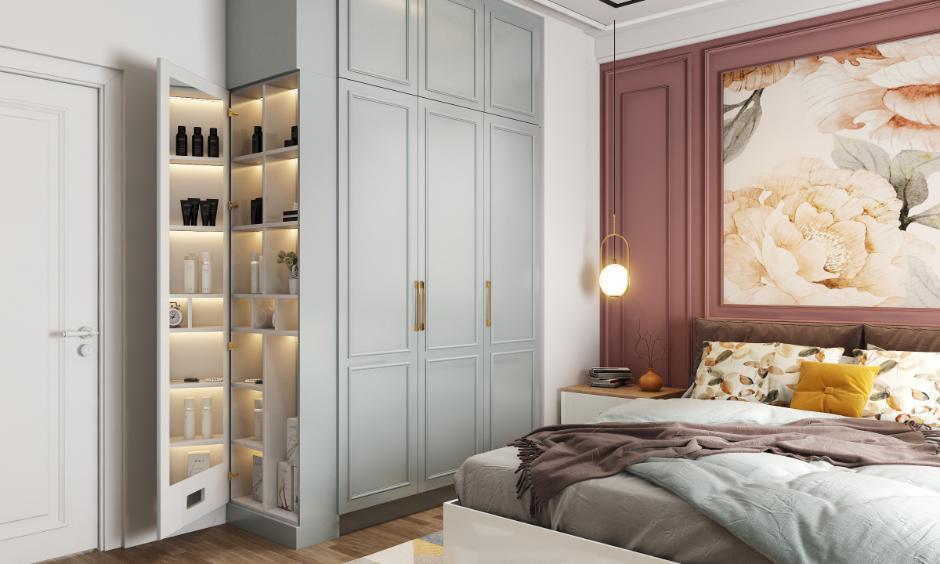
Image source: infinity-interiors.com
A painted wall, simple molding, and an upholstered headboard carry most of the luxury.
A useful habit before each flip: photograph the piece first, and keep a small notebook of which finishes work. After two or three projects, you will notice that the same brass finish repeating around the room is what makes it feel curated rather than chaotic.
Lighting, Layout, And The Quiet Night
A royal bedroom is not only about looking expensive — it should also help you switch off. Light is the strongest lever you have, and it is one of the cheapest to pull.
Set Your Lighting To "Evening Mode"
- Keep bedside lamps on warm bulbs at 2700K, not bright daylight white.
- Add a dimmer plug or smart plug to the main lamp.
- Use a low, warm accent light near the chair or dresser for the last hour before bed.
- Do not watch bright screens in bed — the contrast will fight your body's natural wind-down.
These small changes move the room from showpiece into sanctuary. A softly lit bedroom tells your brain that the day is done. For more on how your surrondings influence rest, start with a calmer sleep environment and add a realistic wind-down routine.
Layout Rules In Practice
- Leave a clear path on both sides of the bed, even if it is narrow.
- Keep the headboard wall plain and symmetrical.
- Place the largest mirror where it reflects light, not where it reflects the bed.
- Move visual clutter behind closed doors: baskets, boxes, and a storage bench.

Image source: youtube.com
The room at night is where it finally feels like a retreat.
The Rug And Window Illusion
Two optical upgrades cost little and change how large and tall the room feels.
Rug Sizing: The Larger, The Calmer
A rug that fits under the lower third of the bed and extends past the sides makes the room feel anchored. A rug that floats in the middle of the floor makes the room feel chopped up. If you cannot afford one large rug, buy a neutral jute or wool rug at a discount, then layer a smaller patterned rug on top. The layering looks deliberate, and it lets you keep costs low.

Image source: bedthreads.com.au
Layering a smaller rug over a larger budget piece gives texture without a custom price.
Curtain Height: Raise, Widen, Repeat
Hang curtain rods 10–15 cm below the ceiling rather than directly above the window frame. Choose rods that extend past the window width so the panels sit partially over the wall when open. This simple adjustment visually raises the ceiling and widens the window. Panels sold as singles are a budget favorite: you can buy two different but complementary pairs and alternate them for a bespoke look.

Image source: youtube.com
Tall curtains and a single accent wall do most of the decorative work.
Common Mistakes That Make A Royal Bedroom Look Cheap
Every design budget can produce a beautiful room, but these five errors are what usually break the illusion:
Over-Stuffing The Space
Buying too many small items creates visual noise. Palace rooms have empty surfaces. Edit: keep each surface to one or two purposeful objects.
Dimming The Main Focal Point
The bed is the anchor. If the headboard wall is bare and the bedding is flat, no amount of decor around the edges will fix it. Give the bed the strongest color, the best lighting, and the tallest furniture in the room.
Choosing Glossy Over Matte
High-gloss paint and shiny laminate read as budget materials. Flat or eggshell finishes on walls, matte wood, and brushed metal accents feel softer and more expensive.
Using Every Trend At Once
Velvet, damask, gold, crystal, dark walls, and heavy patterns can each work — but not together. Pick one statement direction and keep everything else neutral. A restrained scheme is what reads as "designed."
Ignoring The Ceiling
A plain white ceiling is fine, but a ceiling painted in a slightly deeper shade of the wall color adds depth. This is one of the least expensive upgrades and one of the most effective.

Image source: bhg.com
Notice the clear path around the bed and a single strong accent wall.
Frequently Asked Questions
What are the quick wins to make a bedroom look royal without spending much?
Repaint the wall behind the bed, add warm layered lighting, and dress the bed with a duvet and throw. Those three changes cover roughly 80% of the luxury impression.
Can I achieve a royal look with secondhand furniture?
Yes. Solid wood thrift pieces with good proportions are ideal. Paint, new hardware, and a textured headboard will make them look intentionally styled rather than inherited.
Is velvet necessary to make a room feel royal?
No. Velvet adds richness quickly, but you can get the same effect with nubby linen, heavyweight cotton, wool throws, and metallic accessories. Texture matters more than any single fabric.
How do I pick a color scheme for a royal bedroom?
Choose one deep anchor color, one warm neutral, and one metallic accent. Repeat those three tones around the room, and keep your palette to a few main colors for cohesion.
What DIY projects give the best return on style?
Painting a dresser, adding picture-frame molding to the bed wall, and making a simple upholstered headboard return the most style per dollar. All three look custom and cost under $150 combined.
How long will it take to transform a bedroom on a small budget?
A weekend refresh covers paint, bedding, and lighting. Furniture flips and sourcing secondhand pieces can take two to three weeks. Working in phases protects both your budget and your energy.
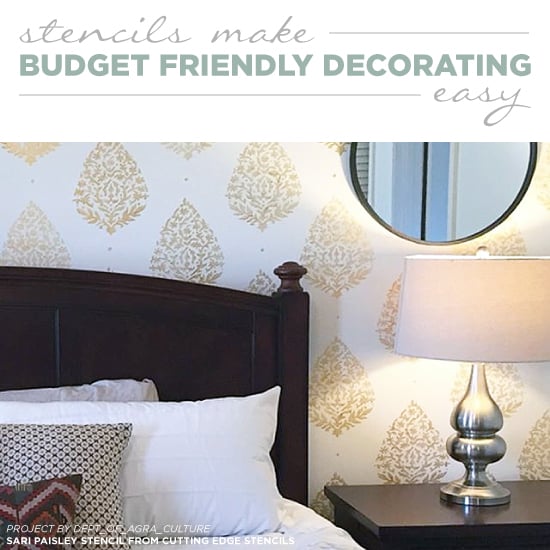
Image source: cuttingedgestencils.com
A single accent wall is the highest-impact budget move in any bedroom.
Conclusion
A royal bedroom is built with planning, restraint, and a few well-chosen textures — not with unlimited spending. Start by setting your budget in thirds, prioritize the sleep surface and lighting, then layer in fabric and decor that repeat a small palette. Use secondhand furniture with refreshed finishes, hang curtains high and wide, and anchor everything with a generous rug.
If you are not sure where to begin, choose one action today: measure the bed wall, decide on a single anchor color, or test a warm bulb in your bedside lamp. That first small change is the one that makes the rest feel possible. Take it slowly, work in phases, and let each finished corner inspire the next.

Daniel Hart is a consumer product analyst who specializes in mattress technology, smart bedding, and home comfort innovation. Before joining Royal Comport, Daniel worked with several e-commerce research teams, testing and comparing sleep products for quality, value, and long-term performance. He brings data-driven insight and real-world testing to every review he writes.


