
Your outdoor cushions can transform any patio or garden into a cozy retreat. But when mold starts to grow, it not only ruins their look but can also harm your health.
You don’t want to toss out cushions every season or deal with stubborn stains and odors. What if you could keep your cushions fresh, clean, and mold-free all year round? You’ll discover simple, effective ways to prevent mold on your outdoor cushions.
Keep reading to protect your investment and enjoy your outdoor space without worry.

Credit: www.parkwaydrycleaning.com
Causes Of Mold On Outdoor Cushions
Mold grows on outdoor cushions mainly because of certain environmental factors. Understanding these causes helps in preventing mold growth. Outdoor cushions face many challenges due to their exposure to the elements. Knowing what triggers mold can keep your cushions clean and safe.
Moisture And Humidity Effects
Moisture is the biggest cause of mold on outdoor cushions. Rain, dew, and spills make cushions wet. High humidity keeps cushions damp for longer. Damp cushions create the perfect place for mold to grow. Without enough air flow, moisture stays trapped inside the fabric.
Common Mold Triggers
Dirt and organic matter on cushions feed mold spores. Leaves, pollen, and food crumbs add to the problem. Poor cleaning routines allow mold to take hold. Mold spores float in the air and settle on cushions. Once moisture and dirt are present, mold starts to grow quickly.
Impact Of Weather Conditions
Weather changes affect mold growth on outdoor cushions. Warm, rainy seasons speed up mold development. Cold, dry weather slows mold but does not stop it. Cushions left outside during storms face more mold risk. Sunlight helps dry cushions and reduce mold chances.
Choosing Mold-resistant Cushions
Choosing the right cushions can help prevent mold on your outdoor furniture. Mold grows in damp, dark places. Cushions that dry quickly and resist moisture are less likely to grow mold. Selecting mold-resistant cushions protects your investment and keeps your space fresh.
Best Fabric Types
Some fabrics dry faster than others. Acrylic and polyester are top choices. These materials resist water and allow air to flow. Olefin fabric is strong and resists mold well. Avoid cotton, as it holds moisture and molds easily.
Protective Treatments
Cushions treated with mold inhibitors stay cleaner longer. Look for fabrics with anti-microbial coatings. These treatments block mold spores from growing. Waterproof sprays also help by keeping water out. Reapply treatments as needed to keep cushions protected.
Cushion Design Features
Design affects how well cushions resist mold. Cushions with quick-dry foam inside dry faster. Removable covers make cleaning easy. Ventilation holes or mesh panels improve airflow. Choose cushions that allow water to drain quickly to avoid mold buildup.
Proper Cushion Storage Techniques
Proper cushion storage is key to stopping mold on outdoor cushions. Storing cushions right keeps them dry and clean. This prevents mold and mildew growth. Follow simple steps to store cushions safely after use.
Drying Before Storage
Always dry cushions completely before storing. Wet cushions trap moisture and invite mold. Leave cushions in the sun or air dry indoors. Ensure all sides are dry, including seams and corners. Never store cushions damp or wet.
Using Storage Containers
Use breathable storage containers for cushions. Plastic bins with air holes work well. Avoid sealed plastic bags that trap moisture. Storage bags made for outdoor cushions are a good choice. Proper containers protect cushions from dirt and pests.
Ideal Storage Locations
Store cushions in a cool, dry place. Avoid damp basements or garages. A closet or storage shed with good airflow is best. Keep cushions off the ground to prevent moisture absorption. Proper location helps cushions stay fresh and mold-free.

Credit: fj-outdoors.com
Regular Cleaning Practices
Keeping outdoor cushions clean is key to stopping mold growth. Regular cleaning removes dirt and moisture that mold needs to grow. It also keeps cushions looking fresh and lasting longer. Follow simple steps to clean cushions often and protect them from mold.
Cleaning Frequency
Clean cushions at least once a month during wet seasons. Wipe them down after rain or heavy dew. If cushions are used daily, clean them every two weeks. Regular cleaning stops mold spores from settling deep in the fabric.
Effective Cleaning Solutions
Use a mild soap mixed with warm water to clean cushions. Avoid harsh chemicals that can damage fabric or colors. For stubborn mold, add a small amount of white vinegar to the solution. Gently scrub with a soft brush or cloth for best results.
Drying After Cleaning
Dry cushions thoroughly after cleaning to prevent mold growth. Place them in a sunny, airy spot. Avoid folding or stacking cushions while wet. Proper drying stops moisture from staying in the fabric, which keeps mold away.
Preventive Maintenance Tips
Preventing mold on outdoor cushions starts with regular care. Small steps can stop mold before it grows. Follow these simple maintenance tips to keep cushions fresh and clean all year.
Applying Mold Inhibitors
Mold inhibitors create a protective barrier on cushion fabric. Spray them evenly to block mold spores. Use products made for outdoor fabrics. Repeat application after heavy rain or every few months. This helps cushions stay dry and mold-free longer.
Using Cushion Covers
Use covers to shield cushions from moisture and dirt. Choose water-resistant, breathable covers for best results. Covers reduce direct contact with rain and dew. Wash covers regularly to remove dirt and mildew. Store cushions with covers in dry places during bad weather.
Routine Inspections
Check cushions often for early signs of mold or dampness. Look under cushions and in seams. Remove cushions from wet spots immediately. Clean and dry cushions if you spot mold early. Frequent inspections prevent mold from spreading and causing damage.
Quick Mold Removal Methods
Quick mold removal keeps outdoor cushions fresh and safe. Mold grows fast on damp cushions left outside. Acting fast stops mold from spreading and ruining your cushions. Use easy methods to clean and protect your cushions effectively.
Diy Cleaning Remedies
Mix equal parts water and white vinegar in a spray bottle. Spray the moldy areas and let sit for 10 minutes. Scrub gently with a soft brush or cloth. Rinse with clean water and dry cushions in the sun. Baking soda also works by sprinkling on mold, then brushing off after 15 minutes.
Commercial Mold Removers
Choose mold removers made for outdoor fabrics. Follow the label instructions carefully. Test a small hidden spot first to avoid damage. Spray or apply the product on moldy areas. Wait the recommended time, then rinse and dry cushions fully. These products kill mold quickly and prevent return.
When To Replace Cushions
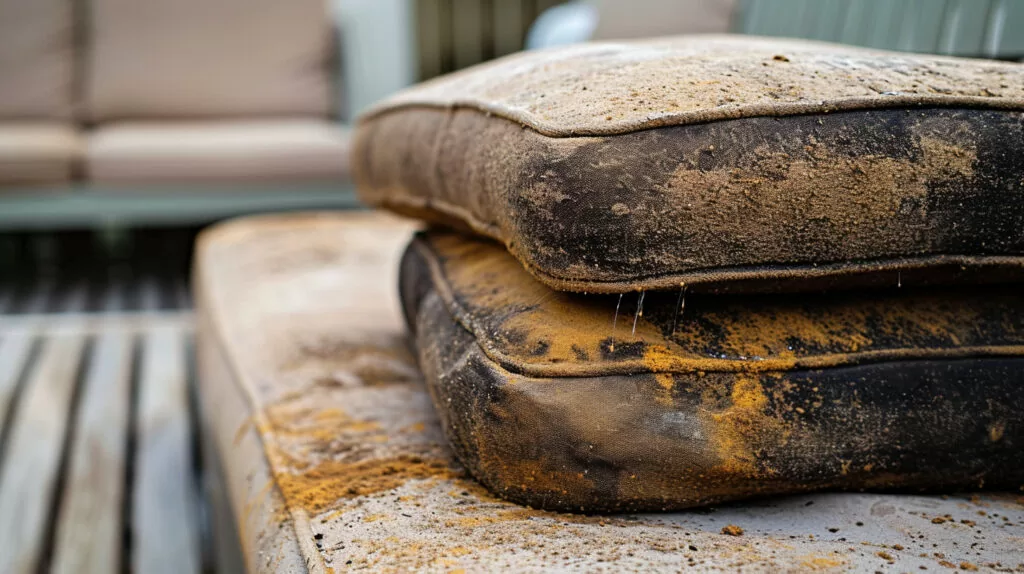
Some cushions get mold stains that won’t come out. Mold inside cushions may cause bad smells and health risks. If cushions stay damp or crumble easily, replacement is best. Replace cushions with mold-resistant or quick-dry materials. This saves money and keeps your outdoor space clean.
Credit: www.patioproductions.com
Frequently Asked Questions
How Can I Keep Outdoor Cushions Mold-free?
Keep cushions dry and clean. Store them in a dry place when not in use. Use water-resistant covers and regularly air them out to prevent mold growth.
What Cleaning Solutions Prevent Mold On Cushions?
Use a mixture of water and white vinegar or mild soap. These solutions kill mold spores without damaging fabric. Clean cushions regularly to maintain freshness and prevent mold.
How Often Should I Clean Outdoor Cushions?
Clean cushions every 1-2 weeks during humid seasons. Frequent cleaning removes dirt and moisture, reducing mold risk. Regular maintenance extends cushion life and keeps them mold-free.
Can Sunlight Help Prevent Mold On Cushions?
Yes, sunlight kills mold spores and dries cushions quickly. Place cushions in direct sunlight for a few hours regularly. Avoid prolonged exposure to prevent fabric fading.
Conclusion
Preventing mold on outdoor cushions takes regular care and attention. Keep cushions dry and clean to stop mold growth. Store them in a dry place when not in use. Use covers that protect from rain and moisture. Check cushions often for any signs of mold or mildew.
Clean small spots immediately to avoid bigger problems. These simple steps keep your cushions fresh and lasting longer. Enjoy your outdoor space without worrying about mold damage. Small efforts bring big results in mold prevention.

Daniel Hart is a consumer product analyst who specializes in mattress technology, smart bedding, and home comfort innovation. Before joining Royal Comport, Daniel worked with several e-commerce research teams, testing and comparing sleep products for quality, value, and long-term performance. He brings data-driven insight and real-world testing to every review he writes.


