
Measure the width, depth, and thickness—record in inches for a perfect replacement.
I’ve measured hundreds of outdoor cushions for friends and clients, so I know what works. This guide shows you exactly how to measure replacement outdoor cushions step by step. You’ll learn which tools to use, how to handle odd shapes, and how to avoid common mistakes. Follow these simple steps and you’ll order cushions that fit well and last.
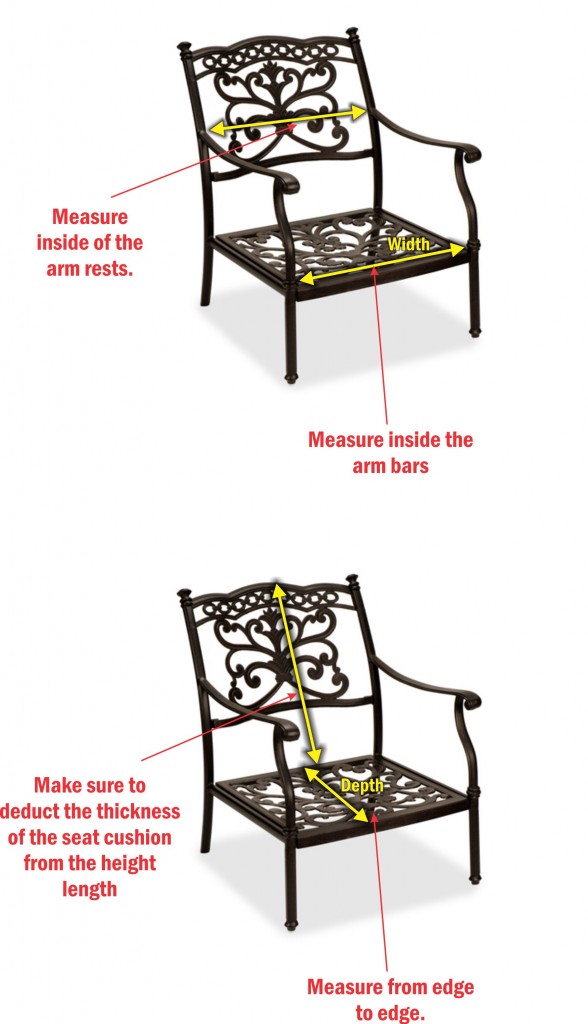
Why accurate measurements matter
A cushion that fits looks tidy and lasts longer. Wrong sizes can gap, slide, or wear unevenly. Knowing how to measure replacement outdoor cushions saves money and time. It also ensures comfort and a clean look for your patio or porch.

Tools you need
- Tape measure
Use a soft tape measure for curved edges and tight spots. - Straight edge or ruler
Helpful for square and rectangular cushions to check straight lines. - Pen and paper or phone notes
Record measurements clearly. Label each piece. - Masking tape or tags
Mark cushions and match them to notes. - Camera
Take a photo of the cushion in place to help the maker match shape.
Knowing how to measure replacement outdoor cushions starts with good tools. I always keep a small kit in my truck when I help friends swap cushions.

Step-by-step measuring guide
Follow these steps to measure common cushion types. Repeat measurements twice to avoid errors.
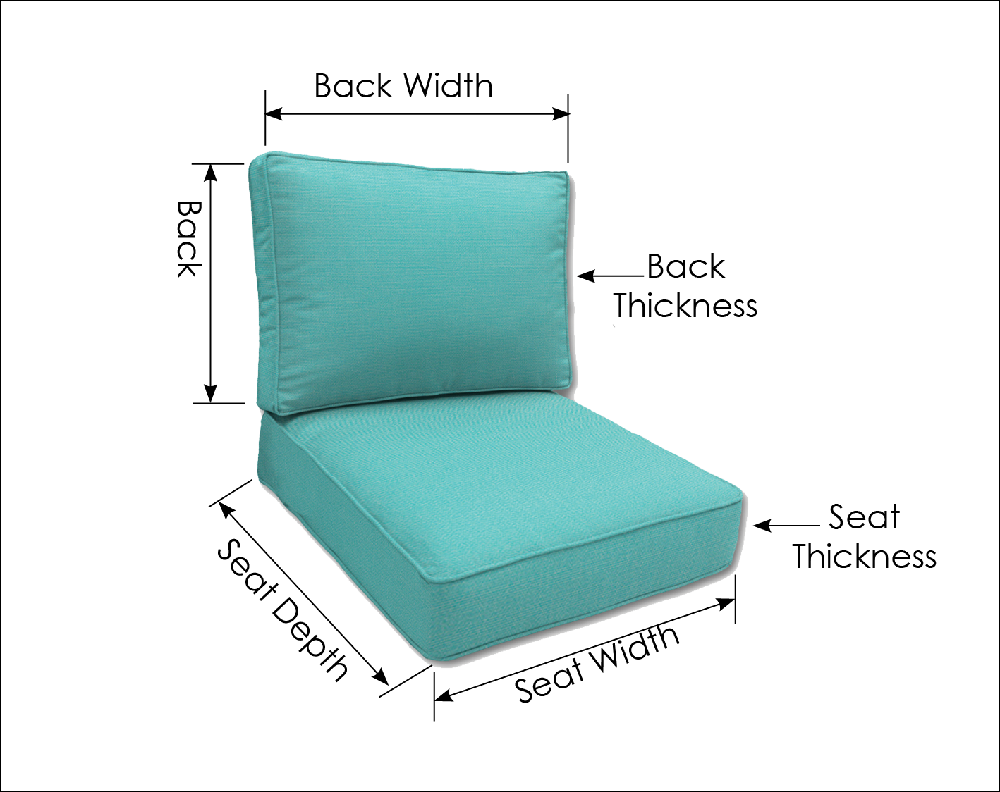
H3 Seat cushions (box-style)
- Measure the width across the front edge from side to side.
- Measure the depth from the front edge to the back edge.
- Measure the thickness from top to bottom at the center.
- If the cushion has a flange or welt, measure the exposed top surface width and the flange size.
H3 Back cushions
- Measure the width at the widest point.
- Measure height from top to bottom.
- Measure thickness, usually at the center.
- Note if the back cushion has a taper or angled top.
H3 Round and bolster cushions
- For round cushions, measure the diameter across the center.
- For bolsters, measure length and diameter.
- For replacement outdoor cushions with piping, note the piped edge diameter too.
H3 Corner and wedge cushions
- Measure both sides that form the corner.
- Measure the angle if possible or take a photo.
- Measure the seat depth and thickness.
H3 Tufted or irregular cushions
- Count and note tuft points.
- Measure the finished top size, not stretched size.
- Photograph the tuft pattern and where buttons sit.
Pro tip: For cushions that sit in frames, measure inside the frame where the cushion will fit. For cushions with covers that zip off, measure the insert dimensions if you plan to replace only the insert.
Common cushion shapes and how to measure them
- Square cushions
Measure width and depth, then thickness. - Rectangular cushions
Measure long side, short side, and thickness. - Round cushions
Measure diameter and thickness. - Wedge or triangle cushions
Measure base, height, and hypotenuse length if visible. - Custom shapes (L-shape, arc)
Trace the cushion on paper and measure the trace. Photo the trace for the maker.
When you order replacements, include whether the size is interior cover size or finished size. Many vendors ask for finished dimensions. That matters when you learn how to measure replacement outdoor cushions.

Choosing thickness, fill, and fabric
- Thickness choices
Measure current cushion depth. Note if you want firmer or softer fill. Thicker cushions change seat height and may affect cushions that tuck under tables. - Fill types
Foam, fiber, and down blends behave differently. Foam holds shape; fiber feels softer. Consider quick-dry foam for outdoor use. - Fabric and edge details
Outdoor fabrics come in many weights. Note whether the cushion has piping, flanges, or exposed zippers. These add to finished size.
My experience: switching to quick-dry foam solved mold problems on a lakeside set. The fit was perfect because I measured twice and stated the finished thickness when ordering.
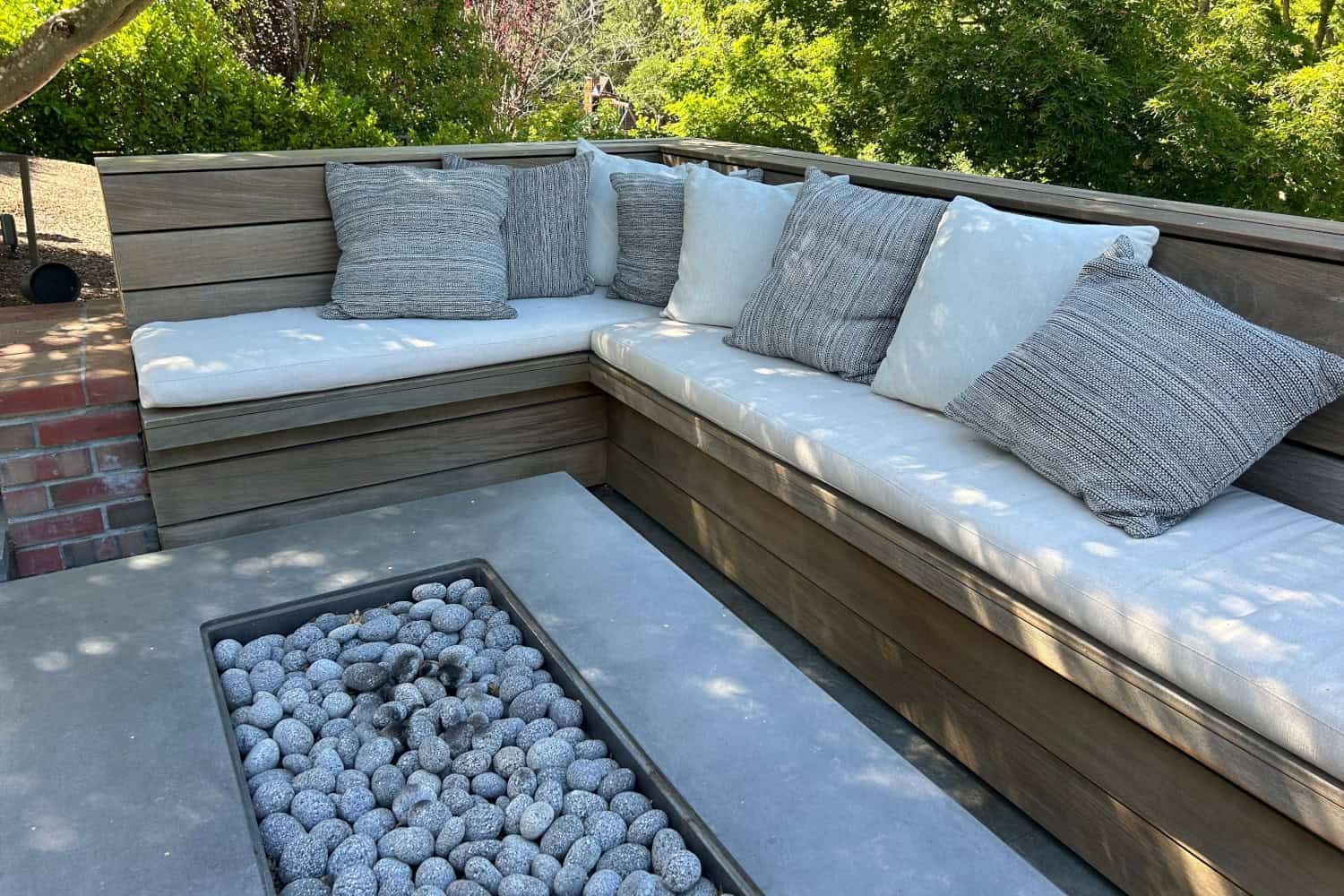
Ordering tips and mistakes to avoid
- Always double-check measurements. Measure twice, write once.
- Label each cushion when you have multiple pieces. Take photos for reference.
- Specify finished dimensions. Tell the maker if measurements are for the cover or insert.
- Ask about seam allowance. Some makers add 1/2 inch for seams. Know if your measurements include that.
- Consider zippers and closures. Where the zipper sits affects fit.
- Match fabric direction. Note nap or stripe orientation when ordering pattern fabric.
Common mistake: measuring the outside of a frame instead of the inside. That adds size and leads to loose cushions. Avoid this by always measuring the space the cushion will occupy.
Care, fit checks, and final adjustments
- Test-fit before final fastenings
When new cushions arrive, place them in the frame right away. Check for overhang or gaps. - Trim or adjust covers
If covers are slightly large, ask the maker about minor adjustments. Never cut foam unless you know what you’re doing. - Fastenings and anti-slip
Add Velcro or non-slip pads if cushions shift. Ties and straps help secure cushions in windy areas. - Maintenance tips
Store cushions in dry place when not in use. Clean per fabric instructions to extend life.
When I fitted a deep settee, I ordered cushions 1/2 inch smaller in depth. That tiny change let the cushions tuck in neatly and reduced sliding.
Frequently Asked Questions of How to measure replacement outdoor cushions
How do I measure cushion depth accurately?
Measure from the front edge to the back edge along the top surface. For frames, measure inside the frame where the cushion will sit.
Should I measure the cover or the foam?
Provide finished dimensions for the cover unless you are buying just an insert. Makers need the finished size to sew the cover correctly.
How much extra should I allow for seams?
Ask your vendor; many add 1/4 to 1/2 inch for seam allowance. Specify if your measurements include seams to avoid surprises.
How do I measure angled or curved cushions?
Trace the cushion on paper or take a clear photo. Measure key points on the trace and include photos with your order.
What thickness is best for outdoor seat cushions?
Standard thickness ranges from 2 to 6 inches. Choose firmer foam for structured seats and thicker fills for deep lounge seating.
Can I replace just the foam insert?
Yes. Measure the insert dimensions and foam density. Replace with quick-dry foam for outdoor durability.
How do I ensure cushions won’t slide?
Add non-slip pads, hook-and-loop fasteners, or ties. Measure and place fastenings where they won’t be seen.
Conclusion
Measuring replacement outdoor cushions is simple when you follow clear steps. Measure width, depth, and thickness. Label each piece, photograph odd shapes, and double-check measurements before you order. With care, your new cushions will fit well, look great, and last longer. Now take out your tape measure and measure one cushion today — then order with confidence. Leave a comment if you want help with a tricky shape or to share your experience.

Daniel Hart is a consumer product analyst who specializes in mattress technology, smart bedding, and home comfort innovation. Before joining Royal Comport, Daniel worked with several e-commerce research teams, testing and comparing sleep products for quality, value, and long-term performance. He brings data-driven insight and real-world testing to every review he writes.


