

There's something deeply satisfying about making your own box cushions. You get the perfect fit for that awkward bay window seat, the exact fabric you've been eyeing for months, and the quiet pride of saying "I made that" every time someone sits down. Whether you're reupholstering a dining nook or building cushions from scratch for a new bench, this guide walks you through the entire process — from measuring and cutting to sewing and finishing — with the kind of hard-won tips that come from actual experience.
I've made plenty of box cushions over the years, and I've made plenty of mistakes too. The good news? Most of them are completely avoidable with the right preparation. This guide shows you exactly what to do, what not to do, and how to get professional-looking results on a home sewing machine. You can also read our guide on how to protect outdoor cushions.
What Exactly Is a Box Cushion?
Before you cut into that beautiful fabric, it helps to understand what you're building. A box cushion is a padded seat with three distinct sections: a top panel, a bottom panel, and a side strip that wraps around the perimeter to give the cushion its characteristic height and shape.
Unlike flat seat cushions, box cushions have that structured, tailored look you see on quality sofa cushions and window seats. The sides give them body, which means they hold their shape better and look more polished. Once you understand the basic anatomy, the whole process becomes much less intimidating. For more on this, see our guide on how to make couch cushions softer.
Materials and Tools You'll Need
Gathering the right supplies upfront saves you from mid-project frustration. Here's the complete list I recommend:
Fabric
- Upholstery-weight fabric for the top, bottom, and sides — cotton duck, linen blends, canvas, or performance fabrics all work well
- Fabric amount: Calculate roughly 1 yard per seat cushion, plus extra for pattern matching and mistakes (plan for 15-20% overage)
- Piping cord (optional but recommended) for that professional finished edge
Foam and Padding
- High-density foam (1.8-2.0 lbs density for seating) — measure your seat dimensions first
- Polyester batting (1-2 inches thick) to wrap the foam for softer, rounded edges
- Foam adhesive spray or upholstery cement if you're bonding layers
Hardware and Notions
- Zipper — 2 inches shorter than your seam length for a hidden installation
- Upholstery thread — polyester or bonded nylon in a color matching your fabric
- Heavy-duty sewing machine needle (size 90/14 or 100/16)
- Walking foot for your sewing machine — this is non-negotiable for thick layers
Cutting and Measuring Tools
- Fabric scissors or rotary cutter with a sharp blade
- Cutting mat and clear ruler
- Measuring tape
- Tailor's chalk or fabric marker
- Straight pins or binder clips (clips are better for thick layers)
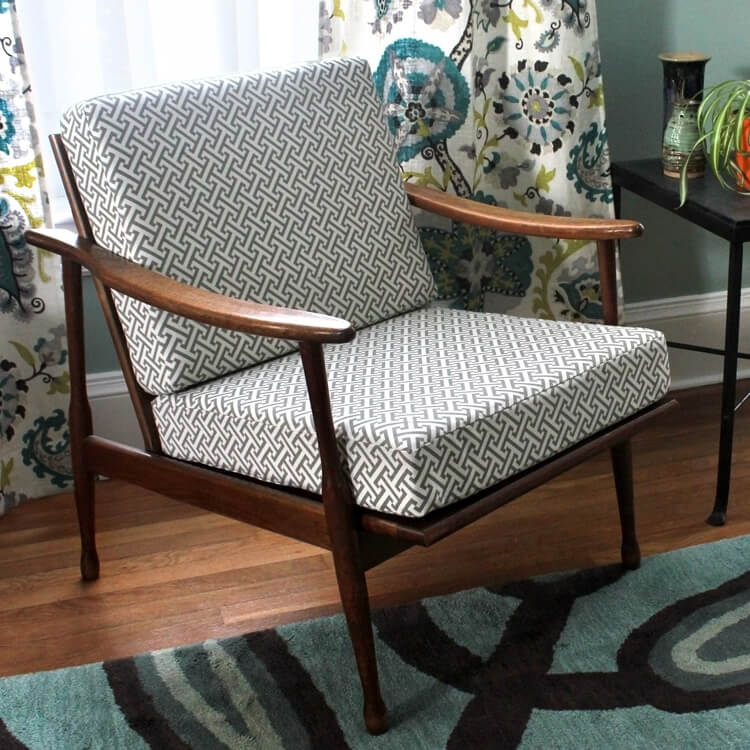
Image source: onlinefabricstore.com
Gather all your materials before you start — a walking foot and quality foam make the biggest difference.
A quick word on fabric: I once made the mistake of buying fabric based purely on color, only to discover it was too flimsy for upholstery work. The seams pulled within months. Stick with fabrics specifically labeled for upholstery use — they're woven tighter and designed to handle the wear and tear of daily sitting. For outdoor spaces, you'll want outdoor-rated fabric that resists UV fading and mildew.
Choosing the Right Foam: A Complete Guide
Your foam determines both the comfort and the lifespan of your cushion. This is where you shouldn't skimp.
Foam Density and Firmness
| Application | Density | Firmness (ILD) | Recommended Thickness |
|---|---|---|---|
| Indoor seating | 1.8-2.0 lbs | 30-40 ILD | 4-6 inches |
| Outdoor seating | 1.8-2.0 lbs (outdoor-rated) | 35-45 ILD | 4-6 inches |
| Decorative bench | 1.5-1.8 lbs | 24-30 ILD | 3-4 inches |
| Window seat (occasional use) | 1.5-2.0 lbs | 28-35 ILD | 4-5 inches |
Higher ILD numbers mean firmer foam. A 30-40 ILD range works well for most adults — supportive enough to sit comfortably for hours but not so hard it feels like concrete. For more on this, see our guide on how to make outdoor cushions waterproof.
Where to Buy Foam
You have three main options:
- Fabric and craft stores — convenient but often pricier and limited in selection
- Online foam suppliers — best selection of density options and sizes (significant savings on large orders)
- Upholstery supply shops — if you have one locally, they can cut custom sizes and offer expert advice
Pro tip: Order your foam slightly larger than your finished dimension — about 1/4 to 1/2 inch oversized. You can always trim it down, but you can't add foam back once it's cut too small. Dressmaker's shears or an electric carving knife work beautifully for cutting foam to size.
Planning and Measuring Your Box Cushion
Accurate measurement is the foundation of a good cushion. Get this wrong and everything else — the fitting, the sewing, the final look — suffers. For more on this, see our guide on how to make sofa cushions firmer.
Step 1: Measure Your Space
Measure the area where the cushion will sit. Record three dimensions:
- Length: front to back
- Width: side to side
- Height: how tall you want the cushion to be
For bench seats, measure at several points along the length — wood isn't always perfectly straight, and you want the narrowest measurement to ensure a good fit.
Step 2: Calculate Your Fabric Panels
Here's where the "box" in box cushion comes together. You'll need:
- Top panel: Length + seam allowance × Width + seam allowance
- Bottom panel: Same as top panel
- Side strip: (2 × Length) + (2 × Width) + seam allowance for the length, and Height + seam allowance for the width
Worked example:
For a cushion measuring 18" × 18" × 4" with 1/2" seam allowances:
- Top and bottom panels: 19" × 19" each
- Side strip: (36 + 36 + 1) = 73" long × 5" wide
Step 3: Account for Foam Compression
This is the step most tutorials skip, and it makes a real difference. When you wrap foam in batting and fabric, the cushion compresses slightly. Add 1/4 to 1/2 inch to your panel measurements to accommodate this. The exact amount depends on your foam density and how much batting you're using.
My rule of thumb: For foam up to 4 inches thick, add 1/4 inch. For thicker foam, add 1/2 inch. Your cushions will come out plumper and more professional-looking.

Image source: sailrite.com
Take your measurements twice and write everything down — this step prevents costly fabric mistakes.
Expert tip: If you're covering an existing foam insert, measure the actual foam rather than the seat. Fabric-covered foam is always slightly smaller than the raw seat dimensions.
Cutting Your Fabric: Precision Makes Perfect
With your measurements ready, it's time to cut. This is where careful attention pays off.
Preparing Your Fabric
Pre-wash your fabric — this prevents shrinkage after your cushions are finished. For outdoor fabrics, follow manufacturer instructions (some aren't meant to be washed).
Press out all wrinkles — smooth fabric cuts more accurately.
Check the grain — fabric has a directional weave, and panels should align with it. Run your fingers across the fabric; the grain runs perpendicular to the selvage (finished edges).
Cutting Technique
- Lay fabric flat on your cutting surface, right side down
- Align panels with the grain — this prevents twisting and distortion
- Use a rotary cutter and clear ruler for straight, accurate cuts (scissors work but are slower and less precise)
- Mark all seam lines and notches with chalk before removing fabric from your workspace
Pro tip: Apply fray check or staystitching to the cut edges of woven fabrics that fray easily. This prevents the fabric from unraveling while you're handling and sewing the pieces.
Sewing Your Box Cushion: Step-by-Step
Now for the fun part. Take your time with each step — rushing causes the puckering and misaligned seams that scream "homemade" (in the bad way).
Step 1: Prepare Your Sewing Machine
- Install a size 90/14 or 100/16 needle designed for heavy fabrics
- Attach your walking foot — this feeds all fabric layers evenly from both top and bottom
- Thread with upholstery-weight thread
- Test on a fabric scrap — adjust tension until your stitches are balanced (no loops on either side)
Step 2: Create the Side Strip Loop
- Fold your side strip in half lengthwise, right sides together
- Pin or clip along the short ends
- Sew with a 1/2-inch seam allowance
- Press the seam open — this creates a clean, flat base
Step 3: Install the Zipper (For Removable Covers)
This step is optional, but highly recommended. Removable covers are dramatically easier to clean.
- Cut the side strip into two pieces — leave two-thirds as one piece, split the remaining third in half
- Insert the zipper between the two halves of the split section
- Baste the zipper in place by hand first — this ensures it stays flat through machine sewing
- Machine stitch both sides of the zipper, using a zipper foot close to the teeth
- Open the zipper partially before continuing — you'll need to turn the cover right side out through this opening later
Step 4: Attach the Side Strip to the Top Panel
- With right sides together, pin or clip the side strip to the top panel
- Match the seam allowance lines precisely at corners and along edges
- Clip corners on the seam allowance to help the fabric curve smoothly
- Sew slowly around the entire perimeter, removing clips as you go
A common mistake: Rushing this step causes the fabric layers to shift, creating puckered corners. Go slowly and keep your seam allowance consistent.
Step 5: Attach the Bottom Panel
If you've installed a zipper, make it accessible and attach the bottom panel the same way.
For a permanently sewn cushion:
- Attach the bottom panel as you did the top
- Leave a 12-inch opening along one side — this is where the foam goes in
- Mark both sides of the opening with chalk before sewing
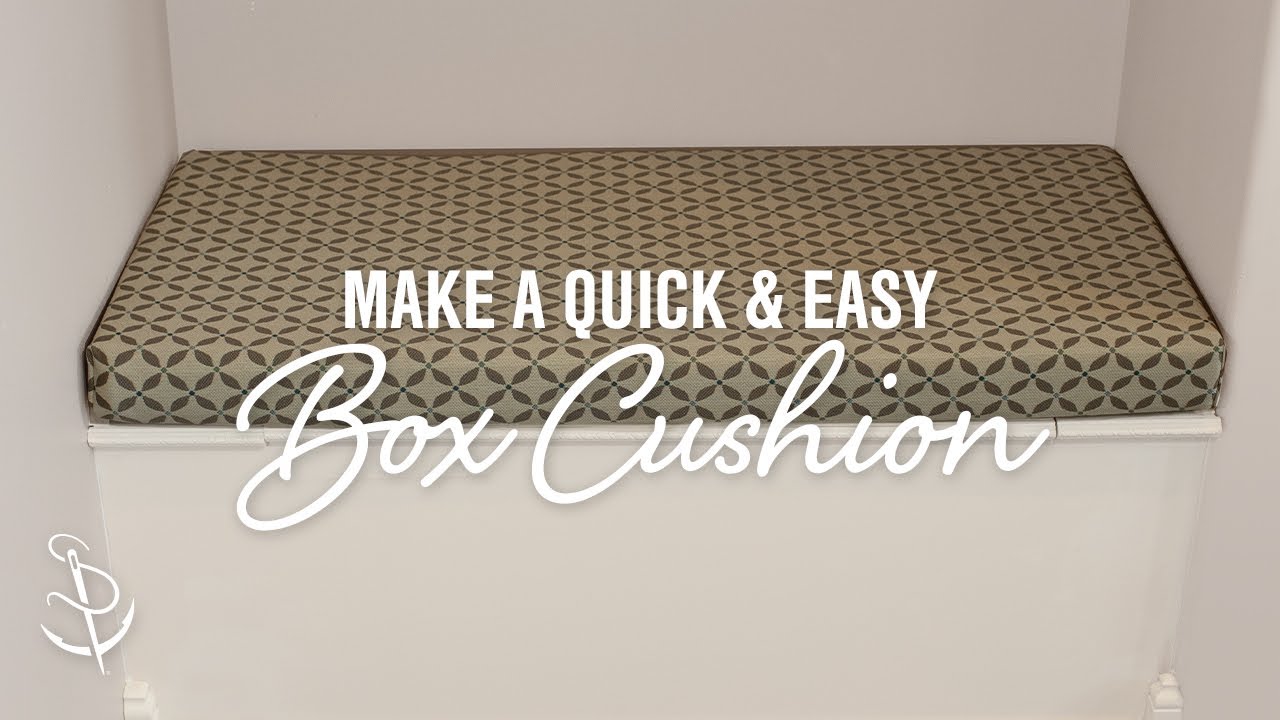
Image source: youtube.com
Sew the side strip to the top panel slowly and use clips to hold thick fabric layers together.
Step 6: Create Sharp Corners
This step separates decent cushions from great ones:
- Trim seam allowances at corners to 1/4 inch
- Clip the corners diagonally — this removes bulk that causes lumps
- Press all seams — use a pressing cloth between the iron and fabric to prevent shine
- Turn right side out through the zipper opening or the gap you left
- Push out corners with a point turner (a chopstick or knitting needle also works) — be gentle to avoid puncturing the fabric
Step 7: Insert the Foam
- Wrap the foam in batting if you're using it — this softens edges and gives a more professional finished look
- Insert the foam through the opening or zipper
- Smooth out any wrinkles in the fabric
- For sewn covers: hand-stitch the opening closed with small, invisible stitches (ladder stitch works beautifully)
My honest advice on batting: Yes, it's an extra step, but it makes a visible difference. The difference between a foam-only cushion and a batting-wrapped one is like the difference between a $50 cushion and a $200 cushion. The batting fills out the corners and gives that plump, inviting look.
Adding a Zipper: Removable Covers Made Easy
Since zipper installation trips up so many beginners, here's a more detailed walkthrough.
Choosing the Right Zipper
- Length: the full length of your panel minus about 2 inches (easier to work with and allows for the seams)
- Type: upholstery zippers are stronger than dressmaker zippers — they have a more robust coil or teeth
- Color: match the zipper tape to your fabric where possible
Standard Installation Method
- Plan the zipper panel: your side strip should be divided into three sections — a main piece and two shorter pieces that accommodate the zipper
- Sew the zipper pieces to the zipper with a 5/8-inch seam allowance
- Press the seam open from the right side
- Topstitch 1/4 inch from the seam on both sides — this holds everything flat and reinforces the installation
- Open the zipper fully before attaching the side strip to your panels
Common zipper problem: The zipper pulls and puckers when sewn into thick fabric. The fix is always the same — baste it in place by hand first. It takes extra time, but it prevents the frustration of wavy zipper seams that can't be unpicked easily from such a small space.
Stuffing and Finishing: Bringing It All Together
The final steps transform your cover from a fabric shell into a comfortable cushion.
Choosing Between Foam and Fiber
For most box cushions, high-density foam is the right choice — it holds its shape and provides real support. Fiberfill cushions look plush but flatten quickly with regular use.
If you do use fiberfill:
- Use polyester fiberfill specifically labeled for cushions
- Stuff in small handfuls to distribute evenly
- Use a chopstick to reach corners
- Over-stuff slightly — fiber compresses with use
Final Fitting
Once your cushion is assembled:
- Test it on the furniture
- Check for looseness — fabric slipping over the foam suggests you need more batting or a slightly smaller pattern
- Check for tightness — if you struggled to insert the foam and the fabric is strained, the seams may be too tight; you can sometimes let out a seam allowance if you caught it early
The pillow trick: If your cushion looks deflated in the corners, push a small amount of extra batting into each corner from the zipper opening. This gives that crisp, filled-out appearance without rebuilding the cushion.

Image source: housebythebaydesign.com
A plump, well-finished cushion with sharp corners and smooth fabric is the goal of every DIY project.
Troubleshooting Common Problems
Even experienced sewists run into issues. Here's how to fix the most common ones:
Puckered Seams
- Cause: Fabric layers feeding unevenly through the machine
- Fix: Use a walking foot, slow down your sewing speed, and test tension on scraps first
Bulky Corners
- Cause: Too much fabric bunched at the corner seam
- Fix: Trim seam allowances to 1/4 inch and clip diagonally before turning. Then press before turning.
Foam Too Big or Too Small
- Cause: Incorrect foam measurement
- Fix: Remeasure both foam and fabric panels. Trim foam with an electric carving knife or adjust seam allowances on your next attempt.
Fabric Slipping During Sewing
- Cause: Slippery or stretchy fabric not held firmly
- Fix: Use binder clips instead of pins — they grip more surface area and don't distort the fabric
Zipper Misalignment
- Cause: Zipper not basted before sewing
- Fix: Pin the zipper in place, hand-baste it, then machine sew. This extra step guarantees a straight, aligned result.
When things go wrong: Don't be afraid to unpick and start over. I've debugged more cushion projects than I care to count, and it's almost always a seam or zipper issue. The seam ripper is your friend.
Image source: sailrite.com
Take the time to fix problems as they appear — small adjustments now prevent bigger disappointments later.
Care and Maintenance: Making Your Cushions Last
Proper care doubles the life of your cushions and keeps them looking fresh.
Daily and Weekly Care
- Fluff cushions daily — this redistributes filling and prevents flat spots
- Vacuum regularly using the upholstery attachment to remove dust
- Spot clean stains immediately with mild soap and cold water — never rub, blot instead
- Avoid direct sunlight on colored fabrics to prevent fading
Deep Cleaning
- Removable covers: Unzip and machine wash on a gentle cycle with cold water. Air dry or tumble dry on low.
- Non-removable covers: Professional cleaning is your best option. I made the mistake of trying to hand-wash a non-removable cushion once, and it warped beyond recognition.
Long-Term Maintenance
- Rotate cushions regularly so they wear evenly
- Replace foam every 3-5 years depending on use — you'll feel it when the support goes
- Replace batting anytime you replace the cover — it's cheap and transforms the feel
DIY vs. Professional: What to Consider
Before you start, it's worth being honest about which approach fits your situation.
DIY Cushion Pros:
- Cost-effective: Save 40-60% versus professional upholstery
- Customization: Choose any fabric and size
- Satisfaction: There's genuine pride in a handmade piece
- Skill building: Once you learn this skill, you can apply it to future projects
DIY Cons:
- Time investment: First project takes 4-6 hours
- Equipment needs: A quality sewing machine and walking foot are essential
- Learning curve: Your first attempt won't be perfect
- Tool costs: Initial investment in foam cutter, clips, and specialty feet
When Professional Makes Sense:
- Complex shapes (circular or curved benches)
- Heirloom-quality fabric that can't be replaced
- Time constraints without margin for mistakes
For most rectangular cushions, though, DIY is absolutely achievable — and the learning experience is worth it.
Conclusion
Making box cushions is one of those projects that looks intimidating from the outside but becomes completely manageable once you understand the structure. Measure carefully. Cut precisely. Sew slowly. The difference between a homemade-looking cushion and a professional one comes down to the details — trim your corners, press your seams, and baste your zippers.
Start with a small cushion if you're nervous. Build your confidence with a seat pad or a simple bench cushion before tackling the full sofa set. Before long, you'll be looking at every flat surface in your home and wondering what might look better with a custom cushion on it.
Ready to start your project? Download our free printable cushion pattern template to use as your measurement guide on your first try. You'll also want to browse our latest sewing tutorials for more upholstery inspiration and techniques to expand your skillset.
Frequently Asked Questions
What fabric works best for box cushions?
Upholstery-weight cotton, linen, canvas, and denim are ideal. Look for fabrics labeled "upholstery grade" — they're designed to withstand daily wear. For outdoor cushions, choose UV-resistant and water-repellent performance fabrics. Avoid lightweight quilting cotton or fashion fabrics with loose weaves that won't stand up to stress.
How thick should foam be for seat cushions?
For chairs and sofas, 4-6 inches of high-density foam (1.8 lbs density or higher) provides good support. Window seats and occasional-use benches work well with 3-4 inches. If you're unsure, choose firmer foam for seating — softer foam feels comfortable briefly but sags quickly.
What's the best way to attach a zipper to a box cushion?
Install a zipper across the side strip (not the top or bottom) for a hidden look. Split your side strip into three sections — one long piece and two shorter pieces — then sew the zipper between the two shorter sections. Always baste the zipper by hand first for straight, professional results.
Can I add piping or trim to my box cushion?
Absolutely. Piping adds a polished, professional edge. Attach corded piping to the top and bottom panels before sewing the side strip in place. Use a zipper foot to get close to the cording. For trim like fringe or welting, plan extra seam allowance and position it carefully before sewing.
Is it possible to make box cushions without a sewing machine?
Yes, but it's significantly harder. You can hand-sew using strong thread and a backstitch, but you'll spend hours on a single cushion and the seams won't be as strong. For thick upholstery fabric, a sewing machine with a walking foot is vastly superior — I'd strongly recommend borrowing or renting one if you don't own one.
How do I clean outdoor box cushions?
Use outdoor cushions with removable covers that can go in the washing machine. Spot clean with a mixture of mild soap and water, and use a soft brush to remove ground-in dirt. Allow foam to air dry completely before putting covers back on. Many outdoor fabric manufacturers offer specific cleaning guidance — check the care label first.

Daniel Hart is a consumer product analyst who specializes in mattress technology, smart bedding, and home comfort innovation. Before joining Royal Comport, Daniel worked with several e-commerce research teams, testing and comparing sleep products for quality, value, and long-term performance. He brings data-driven insight and real-world testing to every review he writes.


