

Few seating annoyances are more common than a cushion that slides away the moment you sit down. Modern cushion designs have improved — many now include non-slip bases, ties, or grippy fabrics — but older furniture and most standard cushions still need a simple fix. The good news? You don’t need to be handy. You can solve most sliding problems in under an hour with an inexpensive pad, a strip of tape, or a pair of straps. Let’s look at why cushions slip, then cover the exact fixes that actually work.
Why Seat Cushions Slip
Cushions don’t move randomly. They move because of one or more of these factors:
- Smooth chair surfaces. Wood, plastic, leather, and metal have low friction. They give the cushion nothing to grip.
- Slippery cushion fabric. Silk, satin, and some polyester weaves are smooth to the touch and slide on almost anything.
- Poor fit. An oversized cushion gets pushed around; an undersized cushion shifts whenever you move.
- Worn filling. Flat foam no longer fills the cushion cover, so the cover wrinkles and creeps forward.
The quickest fix is to address the surface between cushion and chair: increase friction, add a mechanical anchor, or improve the fit. The same surface-matching logic applies to your bed. If the mattress and foundation don’t work together, you feel it all night. That’s why construction details matter so much when choosing a new mattress. For more on this, see our guide on how to keep outdoor cushions from sliding.
Start With the Right Cushion
The easiest way to keep a cushion in place is to start with one that fits. It sounds obvious, but a surprising number of sliding problems come down to the wrong size or fabric.
Material Matters
Fabric choice is half the battle. Tightly woven, textured materials such as cotton canvas, twill, microfiber, suede, and wool blends grip the seat below them. Sleek fabrics — silk, satin, nylon, and untreated polyester — slide. Test a fabric by rubbing it against the actual chair surface. If it glides easily, it will glide under you. For more on this, see our guide on how to keep couch cushions from sliding.
The filling matters too. Dense high-resilience foam and memory foam add weight and hold their shape, which prevents the cover from shifting. Soft, low-density foam collapses at the edges and encourages movement. Look for cushions with a non-slip backing or a quilted bottom.
Size and Shape Fit
Measure first, buy second.
- Measure the seat from front to back and across the widest point.
- Choose a cushion that matches those dimensions within 1–2 inches.
- Check seat depth: a cushion that is too deep pushes you forward.
- Match the shape to the chair. Square cushions suit square and rectangular seats; round cushions suit round or curved seats; contoured or L-shaped chairs need a specific cut.
In practice, a cushion that is 2 inches too large is worse than one that is exactly right. It bunches at the edges and slips whenever you stand up. Many people solve the problem simply by buying a better-sized cushion instead of adding tape. For more on this, see our guide on how to keep outdoor cushions clean.
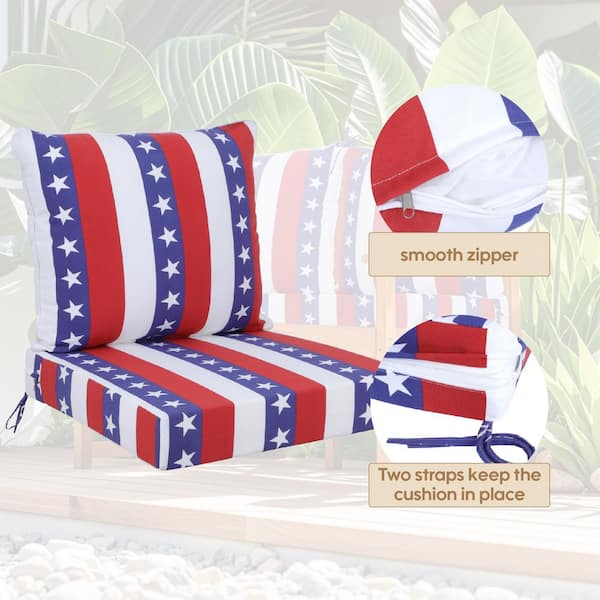 Outdoor cushions with built-in ties remove the need for separate grip aids. Credit: www.homedepot.com
Add Non-Slip Pads for Instant Grip
Non-slip pads are the fastest, least messy way to stop sliding. They work by adding friction between the cushion and the seat.
Types of Non-Slip Pads
| Pad Type | Best For | Notes |
|---|---|---|
| Rubber mesh shelf liner | Most chairs and sofas | Affordable, breathable, easy to cut |
| Rug gripper / carpet pad | Larger cushions | Strong grip, use full-size strips |
| Silicone matting | Outdoor furniture | Durable and weather-resistant |
| Felt pads | Smooth indoor surfaces | Softer hold; use a larger area |
| Foam gripper pads | Fabric chairs | Often has an adhesive side |
Rubber mesh shelf liner tends to be the best overall choice. It grips well on wood, plastic, and metal, and it doesn’t need adhesive. Cut it slightly smaller than the cushion so it doesn’t peek out from the edges. For more on this, see our guide on how to clean seat cushions.
Placement Tips
- Wipe the chair seat and cushion bottom with a damp cloth to remove dust and oils.
- Let both surfaces dry completely.
- Cut the pad to match the base of the cushion, leaving a small border.
- Place the pad on the chair, then set the cushion on top.
Avoid placing small pads only at the corners. If the center is unsupported, the middle of the cushion can still slide. For long cushions, run strips across the full width. Check the pad every few months and replace it once it hardens or loses grip.
Secure Cushions With Velcro Strips
If you want a stronger, semi-permanent hold, hook-and-loop tape — often called by the brand name Velcro — is a reliable choice. It works well on dining chairs, outdoor furniture, and office chairs where you still want to remove the cushion for cleaning. For more on this, see our guide on narrow living room layout ideas that actually work.
Choosing the Right Hook-and-Loop Tape
Look for strips with a strong, fabric-safe adhesive backing. Choose a width of at least 1 inch; wider strips distribute pressure and hold longer. Industrial-strength tape with outdoor-rated adhesive is worth the extra few dollars for patio cushions.
How to Attach It
- Clean both surfaces with rubbing alcohol and let them dry.
- Stick one side of the hook-and-loop strip to the bottom of the cushion.
- Stick the matching side to the chair seat, aligned with where the cushion will sit.
- Press firmly for 30 seconds.
- Wait 24 hours before sitting on the cushion so the adhesive can cure.
For fabric seats, you can also sew or staple the hook side to the cushion cover and the loop side to the chair. This makes a stronger, machine-washable connection.
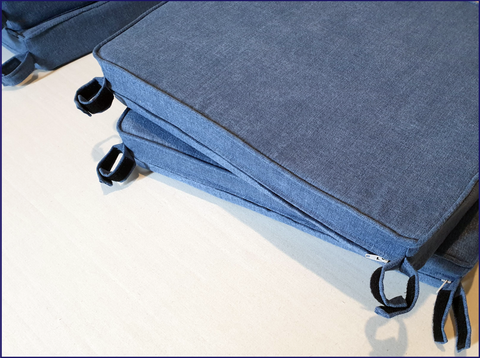 Fabric tabs and straps fasten around the chair frame for a clean, secure finish. Credit: sewversatile.co.uk
A common mistake is applying hook-and-loop tape to a dusty surface. It sticks at first, then lifts within a few days. Take the extra minute to wipe the area with alcohol before attaching.
Try Elastic Bands or Straps
Elastic bands are one of the simplest retrofits. They hold the cushion against the chair frame, so even glossy wood or metal seats stay stable.
Finding the Right Band
Look for:
- Elastic that is 1–2 inches wide (wider is better).
- Strong stretch with a firm return.
- A secure fastener: hook, clip, or built-in hook-and-loop.
Measure how far the band needs to reach from one side of the chair seat to the other, going underneath. Add a few inches for adjustment. If the cushion has fabric loops, choose straps with clips that attach through the loops. Without loops, choose a continuous band that wraps around the chair seat and cinches tight.
Installing the Band Properly
Lay the cushion on the chair. Slip the band over the back of the cushion, pull it around the chair frame, and attach the hooks underneath. Adjust the tension so the cushion stays put but still looks plump. You should be able to slide the cushion slightly by hand; if there is zero give, the band is too tight and will create a visible edge on the foam.
For bench seats or L-shaped cushions, use two straps — one toward the front and one toward the back. That prevents both sideways and forward movement. Elastic straps are easy to remove for washing, which is a big advantage over adhesive options.
Use Double-Sided Tape as a Temporary Fix
Double-sided tape is not just for craft projects. It can secure a cushion for weeks at a time, especially on smooth, clean surfaces. It is also the least visible option.
Best Tape Options
- Carpet tape — strong, wide, and designed for fabric-to-floor bonding.
- Upholstery or fabric tape — holds on cloth without damaging it.
- Outdoor double-sided tape — formulated to handle heat, humidity, and sunlight.
- Removable mounting tape — less sticky but leaves little residue.
Skip office tape and washi tape; they won’t hold the weight of a person.
Applying and Removing It Safely
Wipe both surfaces, press the tape onto the cushion bottom, peel off the backing, and lower the cushion onto the chair. Sit down slowly for the first minute to help the adhesive bond. When removing, peel at a 45-degree angle rather than straight up. If residue remains, use a dab of rubbing alcohol or cooking oil.
One trade-off: double-sided tape can lose its hold in heat and dampness. Outdoors, treat it as a temporary fix rather than a permanent one.
DIY Options and Quick Fixes
If you don’t want to buy anything new, you likely already have something that works.
Silicone Caulk or Hot Glue Dots
Apply a thin line of clear silicone caulk or three hot-glue dots to the bottom of a cushion. Let it dry completely. It forms small grippy bumps that hold surprisingly well. This works on outdoor cushions and cushion covers you don’t mind treating. Do not use it on leather or delicate fabric.
Shelf Liner
Cut a piece of rubber shelf liner to the size of your seat and place it between cushion and chair. It clings by friction and needs no adhesive. This is the classic quick fix.
Yoga Mat Scraps
A cut-up yoga mat has one grippy rubber side and one soft foam side. Use it as a no-slip layer under the cushion.
Cushion Ties You Already Have
Some cushions come with ties hidden in the seams. Thread them through chair slats or around the frame and tie securely. If the original ties are too short, extend them with shoelaces or paracord.
 A short tutorial can show exactly how to tuck straps through different chair frames. Credit: www.youtube.com
Quick Fixes for Specific Seats
Different chairs need slightly different approaches.
- Dining chairs: Hook-and-loop strips on the seat are invisible and hold well.
- Patio furniture: Outdoor-rated Velcro, ties, or elastic straps handle humidity best.
- Sofas and loveseats: A full-size rubber shelf liner under the seat cushions works better than tape.
- Car seats: Cut a piece of silicone matting to fit the seat base. It stays put through temperature swings.
- Bench seats: Use two elastic straps, one near the front and one near the back.
Weight and Pressure: Work With Your Body
The way you sit affects how much your cushion moves. A lightweight person on a soft, thick cushion can create more sliding force because the cushion deforms around their weight. A heavier person often pushes the cushion firmly into place. You can use both effects to your advantage.
Choose a Cushion With More Density
If your cushion feels light, swapping to a denser foam construction adds weight, which dramatically reduces movement. Memory foam and high-resilience foam not only feel better, they also stay put because of their mass and compression profile. If you don’t want a new cushion, place a heavyweight, non-flexible base under the cushion.
Sit in the Center and Use the Back Support
Spread your weight evenly. If you always sit on the front edge, the cushion will keep sliding forward. Lean back enough to use the seat back; that reduces the shear force on the cushion. Keep your feet flat on the floor and adjust your position regularly so you don’t slowly slide down.
Stable seating is also good for posture. For a plain-language overview of posture and its effect on your body, the MedlinePlus health portal is a reliable starting point. The same thinking applies at night. If mornings often begin with a stiff back, our tips for reducing back strain at night explain how your mattress can help.
Maintenance and Cleaning
Cushions that are cared for are less likely to shift. Two routines make the biggest difference.
Regular Checks
Once a month, lift the cushion and look underneath:
- Are the non-slip pads still covering the whole area?
- Are the hook-and-loop strips still firmly attached?
- Is the elastic band stretched out or frayed?
- Are the bottom seams of the cushion cover worn?
Catching wear early means replacing one strip instead of the whole cushion. It also prevents a cushion from becoming a fall hazard when you rock forward.
Cleaning Cushion Covers and Grip Layers
Dust and body oils reduce grip. Vacuum cushion covers and wipe grip pads with a damp cloth. Clean cushion covers according to the fabric label; many have zip-off covers that can be machine washed on a gentle cycle. Let the cover dry completely before replacing it, because damp fabric slides on a smooth seat.
If dust makes you sneeze when you sit down, your cushions may be a hidden source of allergens. The same dust collects in bedding, and those triggers can disrupt sleep. Understanding common allergy triggers in the bedroom is worth the time.
For general textile and fabric care, the University of Minnesota Extension publishes practical home-maintenance guidance that applies to upholstery and removable covers.
When to Fix vs. Replace
Sometimes no amount of tape can save a cushion. If you’ve tried the steps above and the cushion still slides, check for these signs:
- The foam has broken down or crumbles.
- The cover is stretched out and no longer holds its shape.
- The cushion is too small for the seat and cannot be anchored.
- The chair seat itself is slanted or broken.
In those cases, replacing the cushion or repairing the chair is the better long-term move. If the cushion is still in good shape, the cheapest permanent fix is a fresh layer of non-slip material or a set of straps.
The same “repair or replace” logic applies to your mattress. Before buying a new one, it’s worth checking whether a pad, topper, or protector could solve the issue. Our guide to extra mattress support covers everything that’s worth adding.
Frequently Asked Questions
Why do seat cushions always slide forward?
Because of a combination of smooth seat surfaces, slick cushion fabric, and the forward force created when you sit down. Adding friction or a physical anchor fixes it.
What is the best material to stop cushions from sliding?
Rubber and silicone. A mesh rubber shelf liner is inexpensive, easy to cut, and works on wood, metal, and plastic. On fabric chairs, hook-and-loop tape with adhesive backing works best.
Will Velcro damage my chair?
Peel-and-stick hook-and-loop tape can leave residue on some finishes, especially wood. Use a removable adhesive version or choose a strap that wraps around the chair frame instead. Elastic straps are the best no-damage option.
Can I use double-sided tape on outdoor cushions?
Yes, but check that the tape is labelled for outdoor use. Heat and humidity can soften regular tape and cause it to release.
Do heavier people have more trouble with sliding cushions?
Usually the opposite. More body weight pushes the cushion into the seat and creates more friction. The bigger issue is a lightweight cushion on a slick surface, which tends to slide regardless of body weight.
The Bottom Line
Keeping seat cushions in place comes down to three principles: increase friction, improve fit, or add an anchor. Start with the cheapest fix — a rubber shelf liner or a cushion that actually fits. If that doesn’t hold, move up to straps, hook-and-loop tape, or elastic bands.
A stable cushion is about comfort, but it’s also about safety. Sliding cushions can cause you to lose your balance when you sit down quickly. Once your seating area feels solid, look at your bedroom surroundings too — a calmer, better-organised space supports rest. And if you want to build better sleep habits from there, our step-by-step guide is a great place to start.

Daniel Hart is a consumer product analyst who specializes in mattress technology, smart bedding, and home comfort innovation. Before joining Royal Comport, Daniel worked with several e-commerce research teams, testing and comparing sleep products for quality, value, and long-term performance. He brings data-driven insight and real-world testing to every review he writes.


